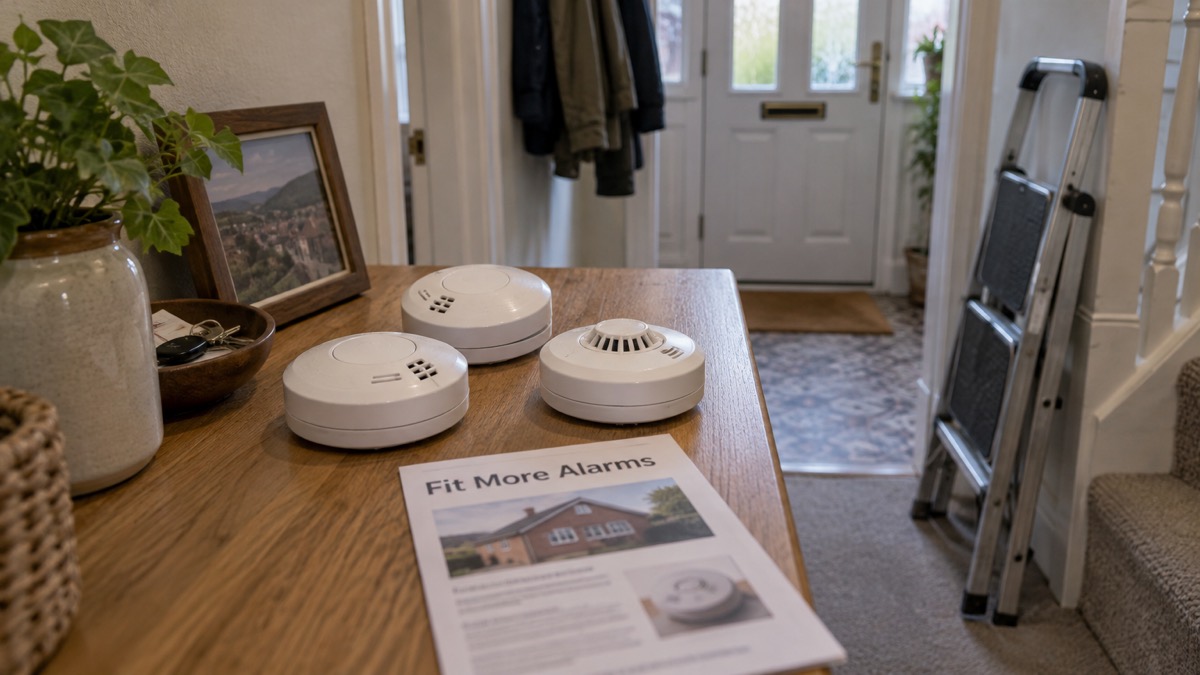
The Fire Kills national advertising launched on 17 November and ran for four weeks, according to a Fire Kills briefing document for January 20261. That document says the 2025/26 advertising marks a change of emphasis: for over 20 years the advertising had encouraged people to test their smoke alarms and check they were working, but the new advertising encourages people to have sufficient coverage of smoke alarms in their home1.
Campaign resources, including 30 second, 15 second and 6 second videos, posters and social media images, were made available to fire and rescue services in a partner pack circulated to all services on 14 November1. The campaign calendar was circulated on 5 November1.
The briefing document sets out the figures behind the message. It says latest fire statistics show a person is around 11 times more likely to die in a fire if there is no working smoke alarm in the home, and that smoke did not reach a smoke alarm in more than a third of fires in the home, despite the majority of homes (93%) having at least one working smoke alarm1. The most common reason a smoke alarm failed to activate was that the fire was outside its range1.
The same document gives further guidance attributed to the campaign: the ideal position is on the ceiling, in the middle of a room or on a hallway or landing; additional alarms can be considered in other rooms where there are electrical appliances and near sleeping areas; and alarms should not be put in or near kitchens and bathrooms where smoke or steam can set them off by accident1. It says alarms, whether battery operated or wired to the mains, should be replaced every ten years to work at their best, and that smoke alarms should be tested at least every month1. It also says: "Do not ignore a neighbour's beeping smoke alarm."1
| Point | Detail given in the briefing document1 |
|---|---|
| Campaign run | Launched 17 November, four weeks |
| Main message | Sufficient smoke alarm coverage, not only testing |
| Risk figure | Around 11 times more likely to die in a fire without a working smoke alarm |
| Fires where smoke did not reach an alarm | More than a third of fires in the home |
| Homes with at least one working alarm | 93% |
| Most common reason an alarm failed to activate | Fire was outside its range |
| Replacement interval | Every ten years, battery or mains |
| Testing interval | At least every month |
Why it matters for households
The change of message concerns households that already have one working alarm as well as those without any. The document states that one alarm is not enough, and that homes should have at least one on every level and in or near rooms with particular risks1. It also asks carers and people with less able family members to check that those homes have enough working smoke alarms in the right places, and to complete the online home fire safety check with the person they care for1. It says new resources to promote that check, an NFCC tool that complements in-person home fire safety visits, are being developed and will be circulated for local use shortly1. The document also carries winter fire safety messages, including that portable heaters should not be used to dry clothes even after torrential rain, and that heaters should be kept safe and away from materials that might burn1.
What happens next
The Association of Manufacturers of Domestic Electrical Appliances (AMDEA) is running Register My Appliance Week from Monday 19 to Friday 23 January, with a toolkit due in the week beginning 15 December and a template press release expected in the week beginning 5 January 20261. The document also includes a template press release for local fire and rescue services asking people how many smoke alarms they have1. No further national advertising dates beyond the four week run are given1.
Households wanting to work out what coverage they need can read the guide on how many smoke alarms a house or flat needs, and the home emergencies hub covers related household planning.
Sources (1)
- Fire Starts when your attention stops, nfcc.org.uk
 How Many Smoke Alarms