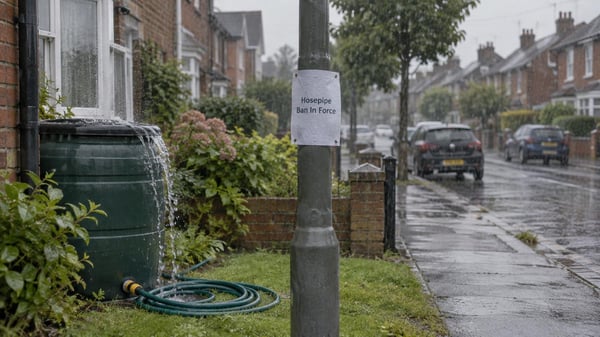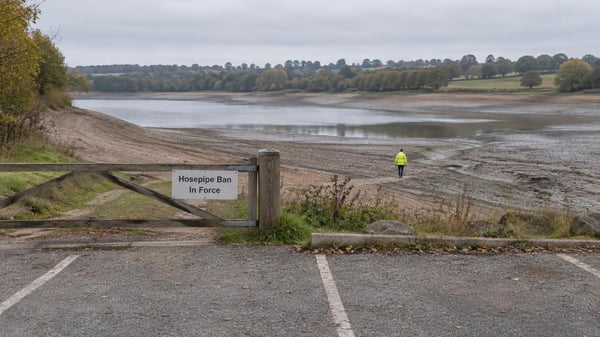
Essex and Suffolk Water's Essex water resource zone (WRZ) moved into drought level DL3a on 2 November 2026, the Environment Agency reported in its weekly drought summary covering 30 October to 5 November 20261. All other Essex and Suffolk Water zones remained at DL21. Temporary use bans (TUBs) remain in place for all the company's customers1.
Water companies report their drought response using operational drought levels, from DL1 escalating to DL4, and the Environment Agency states it expects companies to follow their drought plans and act early to ensure there are sufficient supplies1. The agency's summary records no change to its own area drought status that week1. Severe drought remains in parts of Cornwall, Devon, Dorset, Somerset, and East and West Sussex1.
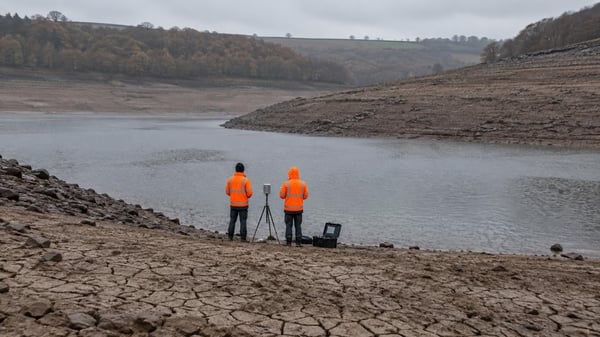
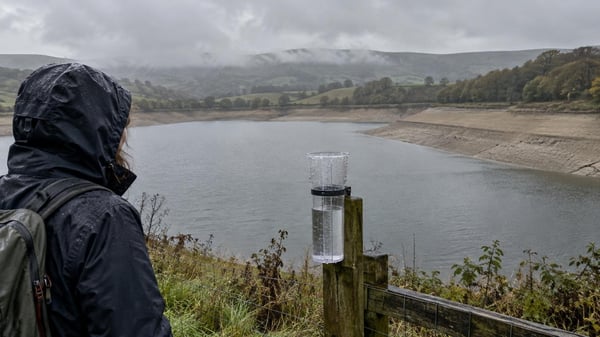
The summary describes a very dry week nationally, with England receiving an average rainfall of 2mm1. River flows decreased at all reporting sites, with 34 sites (62%) classed as below normal, eight (15%) notably low, four (7%) exceptionally low and nine (16%) normal for the time of year1. Total reservoir storage for England rose to 60.1% as of 3 November, which remains 17% below average for the time of year1. Hanningfield reservoir, operated by Essex and Suffolk Water, is among eight reservoirs or reservoir groups classed as exceptionally low1.
"Essex and Suffolk Water's Essex WRZ has moved into DL3a on 2 November."
The agency states that at least 120% of average rainfall over the next six months is needed for the entire country to be out of drought by next spring1. It also reports continuing concerns about farmers' ability to refill water storage reservoirs over winter, with some irrigation reservoirs at historic lows and greatest concerns in the south-west, south-east and eastern parts of England1. Confirmed incidents caused by drought and dry weather total 425 for 20261.
| Drought level or status | Detail reported |
|---|---|
| Essex and Suffolk Water, Essex WRZ | DL3a from 2 November 20261 |
| Essex and Suffolk Water, all other WRZs | DL21 |
| Essex and Suffolk Water customers | TUBs remain in place1 |
| Hanningfield reservoir | Classed as exceptionally low1 |
| England reservoir storage | 60.1% as of 3 November, 17% below average1 |
Why it matters for households
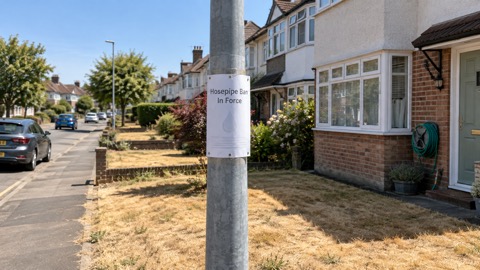
Households supplied by Essex and Suffolk Water in the Essex zone are now in an area at DL3a, a step above the DL2 level that applies across the company's other zones1. TUBs remain in place for all the company's customers, so the restrictions already applying to households in its supply area are unchanged by the move1. The Environment Agency's summary does not set out what further measures, if any, DL3a brings for households in the Essex zone; those would be a matter for the company's drought plan, and no additional restrictions are reported in the summary1. The agency's guidance is that companies should follow their drought plans and act early to ensure sufficient supplies1. The summary also notes that sustained recovery in river flows and above average winter rainfall will be needed to support reservoir refill1.
What happens next
The official reservoir refill season started on 1 November1. A drought permit covering the River Test expired on 31 October, and abstractors are expected to revert to the timeframes and conditions specified on their abstraction licence1. The summary records that one company applied to the Secretary of State for a drought order on the River Test and a Non-Essential Use Ban drought order on 31 July1. The Environment Agency publishes weekly updates on the water resources situation, and further changes to company drought levels have not been reported beyond the Essex zone move1. For the national picture, see England's 2026 drought: where restrictions apply and how drought is declared in England and what each stage means; the agency's four stages of drought response are set out in its own guidance1.
 England 2026 Drought Areas
 Drought Stages in England
 Household Guide to Drought