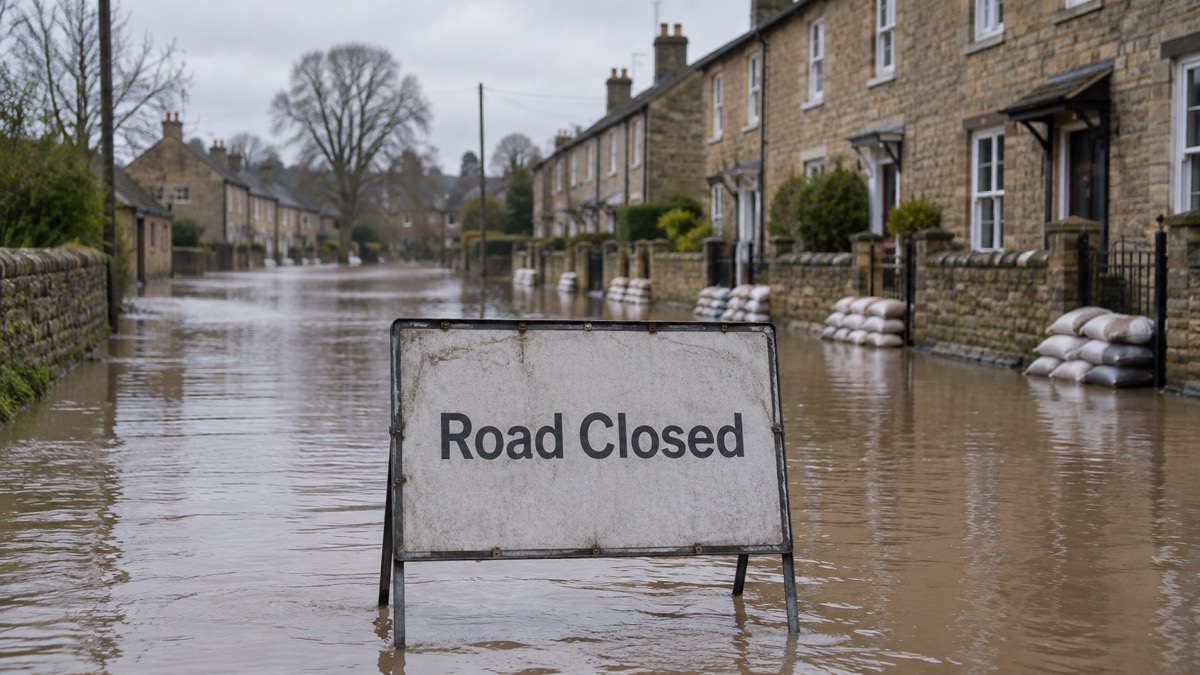
Emergency Alerts were issued to assist with evacuations during acute flooding on the River Soar in January 2025, according to the UK Government Resilience Action Plan published in July 20251. The plan, published by the Cabinet Office, records the Soar alerts alongside earlier use of the system during flooding on the Rivers Roe and Ive in May 20241.
The document sets out the government's strategic approach to resilience and covers the Emergency Alerts system among a wider programme of work. It states that a second public national test of the Emergency Alerts system will take place on 7 September, and that, as with the first test in April 2023, the message will be sent to every compatible phone nationwide1.
"Emergency Alerts were issued to assist with evacuations during acute flooding on the River Soar (Jan 2025) and Rivers Roe and Ive (May 2024)"
The plan also gives figures on flood risk and investment. It states that 6.3 million properties in England are in areas at risk of flooding, and that the total could increase to 8 million by the middle of the century, or around one in four properties2. It sets out £4.2 billion for flood and coastal erosion resilience over the first three years, with £4.2bn for flood defences to build and maintain defences protecting communities across England1. A new 10-year flood and coastal erosion investment programme is to launch in April 20261. The plan also cites £2.65 billion total investment for 2024/25 and 2025/26, which it says is better protecting over 52,000 properties across England through new or improved flood defences2.
| Item | Detail | Date |
|---|---|---|
| Emergency Alerts, River Soar | Issued to assist evacuations during acute flooding | January 20251 |
| Emergency Alerts, Rivers Roe and Ive | Issued to assist evacuations during acute flooding | May 20241 |
| Second national Emergency Alerts test | Sent to every compatible phone nationwide | 7 September1 |
| Flood and coastal erosion investment programme | New 10-year programme | Launching April 20261 |
Why it matters for households
The plan confirms that the Emergency Alerts system has been used to support evacuations in England during river flooding, most recently on the River Soar in January 20251. For households in areas at risk, the alerts form part of the warning arrangements that operate alongside the Environment Agency's flood warnings. The plan states that 6.3 million properties in England are in areas at risk of flooding, with the total potentially rising to 8 million by the middle of the century2.
The second national test on 7 September will reach every compatible phone in the UK, as the April 2023 test did1. The plan does not give a time of day for the test, and no further operational detail on the test has been reported in these documents.
The plan frames resilience as a shared responsibility. In his foreword, the Chancellor of the Duchy of Lancaster, Pat McFadden, writes that for the average person this "may involve looking out for vulnerable neighbours and stocking up on some basics like bottled water and a torch"2. The plan also states that consequences of emergencies "do not fall evenly across our society", and that assessing and planning for people who are vulnerable in different types of emergencies is core to the plan2.
What happens next
The second public national test of the Emergency Alerts system is scheduled for 7 September1. The new 10-year flood and coastal erosion investment programme is due to launch in April 20261. The plan also states that the national exercise for 2025 will be a pandemic preparedness exercise, described as the first of its kind in nearly a decade and set to be the biggest in UK history2.
For background on how warnings are graded, see Flood Alerts, Flood Warnings and Severe Flood Warnings. For the phone warning system itself, see Emergency Alerts: How the UK Phone Warning System Works and Will Your Phone Receive Emergency Alerts?. Household planning for flooding is covered in Flooding: A Household Guide.
Sources (2)
- data.parliament.uk, data.parliament.uk
- UK Government Resilience Action Plan (HTML) - GOV.UK, gov.uk
 Flood Alerts and Flood Warnings