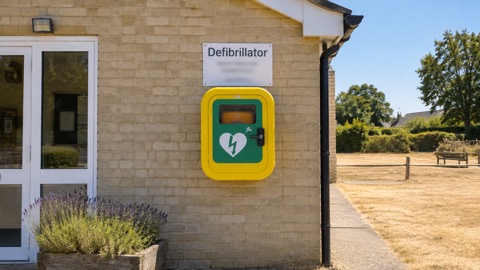
In January 2023 the Department for Education rolled out 21,000 defibrillators to 17,000 schools in England, according to the British Heart Foundation1. The rollout formed part of a £19 million programme, announced by the UK Government in July 2022, to ensure that all state-funded schools in England had access to a defibrillator by the end of the 2022/23 academic year1.
The British Heart Foundation, which reported the figures in an October 2026 review of CPR policy, said the school programme could strengthen preparedness within education settings and improve access across local communities where the devices are accessible and known about. Its analysis found that around 33 per cent of out of hospital cardiac arrests occur within 300m of schools1. The charity reports that there are more than 40,000 out of hospital cardiac arrests in the United Kingdom each year, and that the overall survival rate is less than one in 10. It says bystander CPR and early defibrillation can increase a person's chances of surviving a cardiac arrest by up to 50 per cent1.
"In January 2023, the department for education rolled out 21,000 defibrillators to 17,000 schools in England."
The charity also reports progress on registering devices so that ambulance services and members of the public can locate them. The Circuit, the national defibrillator network, is delivered through a partnership between the British Heart Foundation, the ambulance services, Resuscitation Council UK and NHS England1. Its 100,000th defibrillator was registered in 2024, and 124,000 defibrillators are registered today, the charity says1. It states that ensuring all defibrillators are registered and kept up to date on The Circuit is essential to maximise the impact of investment in their provision and strengthen the emergency response system1.
The charity also sets out related measures across the UK. CPR education was introduced into the national curriculum in England in 2021 following its campaign, and CPR and defibrillator awareness became compulsory at Key Stage 3 in Northern Ireland in the 2022/23 academic year. Scotland and Wales support schools to deliver CPR education through national programmes and curriculum resources1. CPR-related questions were introduced into the driving theory test in 20261.
| Measure | Detail | Date |
|---|---|---|
| Defibrillators to schools in England | 21,000 devices to 17,000 schools | January 20231 |
| School defibrillator programme announced | £19 million, all state-funded schools in England by end of 2022/23 academic year | July 20221 |
| The Circuit registrations | 100,000th device registered | 20241 |
| The Circuit registrations | 124,000 devices registered | As reported October 20261 |
Why it matters for households
The devices were placed in schools, but the charity says the benefit can extend to local communities if the defibrillators are accessible and known about, noting that around a third of out of hospital cardiac arrests happen within 300m of a school1. For households, the practical point the charity makes is that a defibrillator is only useful in an emergency if it can be found: it states that registration and up to date details on The Circuit allow ambulance services and members of the public to locate registered devices1. The charity says every step of the chain of survival matters, from recognising a cardiac arrest and calling 999 to starting CPR quickly and accessing a defibrillator as soon as possible1. Our guide to defibrillators and how to use one explains what the devices do, and the first aid hub covers related skills.
What happens next
The British Heart Foundation says that, five years after CPR education was introduced, it is seeking to understand how well the policy is working in practice and where further support may be needed for schools to play their full role. It says it is continuing to promote access to defibrillators by encouraging registration of all accessible devices, including those installed in schools, on The Circuit1. No further dated announcements on the school programme are reported in the source. Our UK preparedness hub covers how the UK plans for and responds to emergencies.
 Defibrillators (AEDs)