Navien is a maker of gas boilers for the home. In the UK its range centres on condensing combi boilers, which supply both central heating and domestic hot water from a single wall-hung unit, with no need for a separate hot water cylinder. The range is approved for use in the UK and Ireland only; Navien states that using the boiler in any other country will void the manufacturer's warranty1.
A Navien boiler is a gas appliance, and that shapes most of what a household needs to know about living with one. Installation and servicing must be carried out by a Gas Safe registered installer, service agency or the gas supplier1. The boiler needs electricity to run, so it stops in a power cut along with the rest of the home's heating2.
This page sets out what Navien makes, how its boilers work in a UK home, what to do when something goes wrong, and where to get help. For the wider picture of coping without heating or hot water, see our guide to gas and heating failures and to heating and cooking without mains power or gas.
What Navien makes for UK households
Navien's UK product line is gas boilers. The two models described in the maker's own manuals are the NCB300 combi and the NCB500, and the range also includes the NCB700. All are wall-hung condensing boilers designed to be connected to a wet central heating system: radiators or underfloor heating fed by water the boiler heats.
The NCB500 series is described by the maker as a fully modulating gas condensing combi boiler with a built-in circulation pump and air vent, providing central heating and domestic hot water3. "Fully modulating" means the boiler adjusts its flame to match the demand rather than simply switching on and off, which affects how smoothly it holds a temperature. The NCB300 combi covers the same job in a smaller package, and its manual states it is for use with natural gas or LPG, with an LPG conversion kit included with the boiler1. The NCB500 is the same on fuel: natural gas or LPG, conversion kit included3.
Navien states clearly what these appliances are for. The NCB500 is designed to generate heat for domestic hot water and to be connected to central heating systems; the maker adds that any other use will be considered unsuitable use and the user will be liable for the damage3. In practice that means a Navien combi is not a device for heating one room, feeding a swimming pool or any improvised use: it is a whole-house heating and hot water appliance.
The boilers are approved for use in the UK and Ireland only, and using one in any other country voids the warranty1. Both manuals list the electrical power supply as 230V/50Hz, the standard UK mains1. The NCB300 carries a NOx classification of Class 6, the maker states, which places it in the lowest band of nitrogen oxide emissions in its class1.
If you are preparing your household for emergencies generally, a boiler you already own is part of that picture: it is the appliance that fails when the power or the gas supply fails. Our getting started guide covers the basics, and backup power explains the options for keeping essential equipment running.
Navien gas boilers: what they do for a home
A combi boiler does two jobs at once. When you turn on a tap, it heats water on its way to the tap rather than drawing on a stored cylinder. When the room thermostat calls for heat, it heats water and circulates it through the radiators. One appliance, two services, which is why a combi failure in winter is felt so quickly: you lose both together.
The NCB500's heating water temperature is adjustable across a range of 40 to 90°C, with a maximum heating temperature of 90°C3. The NCB300 offers the same adjustable heating temperature range of 40 to 90°C1. Your installer sets the flow temperature to suit your system; a lower flow temperature is normal for a condensing boiler, since condensing happens most efficiently when the returning water is cool.
Fuel matters when choosing or checking a boiler. Both the NCB300 and NCB500 run on natural gas or LPG, and both ship with an LPG conversion kit included1. The conversion itself is a job for the installer, not the householder: on the NCB300, selecting LPG (G31) involves setting DIP switches on the front panel, with switches 1 and 2 both ON1. If your home is off the gas grid and runs on LPG, make sure whoever services the boiler knows which fuel it is set to, because the settings differ.
| NCB300 combi | NCB500 | |
|---|---|---|
| Type | Gas condensing combi boiler | Fully modulating gas condensing combi boiler with built-in circulation pump and air vent3 |
| Fuel | Natural gas or LPG, conversion kit included1 | Natural gas or LPG, conversion kit included3 |
| Heating temperature range | 40 to 90°C1 | 40 to 90°C, maximum 90°C3 |
| Electrical supply | 230V/50Hz1 | 230V/50Hz3 |
| NOx classification | Class 61 | |
| Approved for | UK and Ireland only1 |
For model-by-model fault finding, see the product pages for the NCB300, the NCB500 and the NCB700.
Navien water heaters: hot water and how it is supplied
In a Navien combi, hot water is supplied directly by the boiler rather than by a separate water heater. The NCB500 is designed to generate heat for domestic hot water as well as running the central heating3, so when the boiler stops, the hot water stops with it. There is no stored reserve in the house unless you have fitted one yourself.
That has a practical consequence for preparedness. A household on a combi boiler has no cylinder of hot water to draw on in an outage, so a power cut or a gas outage means cold taps only. Our water guide covers how much water to keep stored for drinking and washing, and heating and cooking covers ways to heat water and food without the boiler.
It also means the boiler's hot water performance depends on the gas and electricity supplies being healthy. The electrical supply is 230V/50Hz3, and the gas supply must be at the pressure the appliance was set up for. If you ever move from natural gas to LPG or back, the change must be made by a Gas Safe registered installer using the conversion kit supplied with the boiler1.
Navien heating controls and accessories
Navien offers accessories that control and dress the boiler. For the NCB300 the maker lists the Smart Plus Controller, a wireless communication module and room thermostat, together with a pipe cover and a stand off kit1. The Smart Plus Controller is one of five ways the boiler can be told when heating is demanded: the NCB300's control options are Smart Plus (Navien), the panel itself, OpenTherm, a CH thermostat, or a switched live1.
What this means for a household is flexibility in how the heating is controlled. OpenTherm is a communication standard that lets a compatible thermostat modulate the boiler's output rather than simply switching it on and off; a basic CH thermostat or a switched live is the simpler arrangement. Your installer will have set one of these when the boiler was fitted, and it is worth knowing which, because it determines what you can change at the wall.
The room thermostat's position matters to how the whole system behaves. It senses the temperature where it sits, so a thermostat in a cold hallway or a sunny living room will call for heat at the wrong moments. If your heating seems to run oddly, the thermostat location and its setting are the first things to check before assuming a boiler fault.
Accessories like the pipe cover are cosmetic: they hide the pipework beneath the boiler. They do not affect operation, but they must not block the boiler's ventilation or access for servicing. Any work that involves opening the boiler, including fitting accessories around it, stays within the Gas Safe rules below.
What happens to your heating and hot water in a power cut
A Navien boiler needs mains electricity to run, so in a power cut it stops, along with the rest of the home's heating. The government's Be Ready guidance is blunt about this: gas ovens, boilers, heat pumps and your home internet will not work without power, and the mains water supply could also be disrupted during and after power cuts2. Essex Prepared lists the impact of an electricity failure as loss of heating, lighting and refrigeration for homes and businesses4.
The knock-on effects can reach further than the house. In a national power outage, the UK Chief Medical Officers' broadcast scripts warn that the loss could extend to mobile and internet telecommunications, water, sewage removal and treatment, fuel, gas, and the ability to make electronic payments5. In a heatwave, power cuts and water shortage can occur together, and after a power cut you should dispose of any food in the fridge or freezer that may have become wet or warm6.
What to do when the power goes and the boiler stops:
- Check whether it is a power cut or a boiler fault. If the lights and neighbours' houses are out too, it is the supply.
- Leave the boiler alone. It will restart itself when power returns; there is nothing to reset while the supply is down.
- Keep warm with layers and blankets rather than any improvised heater. Our power cuts and heating and cooking guides set out the safe options.
- After the supply returns, dispose of any food in the fridge or freezer that may have become wet or warm6.
- If anyone in the household depends on the heating for health reasons, plan ahead using our extra help guide.
One point worth knowing: the boiler has built-in freeze protection. The NCB300's freeze protection parameter has a setting range of 6°C to 10°C with a default of 10°C, and it runs the pump to protect the appliance when temperatures fall1. That protection needs electricity, so a power cut in hard frost is the combination to guard against, and insulating exposed pipework is the household's part of the job, as covered below under frozen condensate.
Keeping a Navien appliance safe to use
The maker's own manuals carry the safety instructions, and they are worth reading in the maker's words. For the NCB300:
"Do not store or use petrol or other flammable vapours and liquids in the vicinity of this or any other appliance."1
The NCB500 manual repeats the same warning and adds practical detail: keep all flammable products far away from the boiler and store them in approved containers, keep the containers closed tightly and out of the reach of children and pets3. In a UK home this usually means the shed or garage, not the cupboard under the stairs next to the boiler.
Everyday cleaning is the householder's job and is simple, but it has rules. The maker's advice for the NCB500 is to clean the outside of the boiler with a damp cloth with a little detergent, and not to use abrasive products3. Before cleaning, make sure the boiler is turned off and the power supply is disconnected, and wait until the boiler has cooled down to prevent burns1.
Beyond the boiler itself, the same room-safety habits apply to any heating appliance. Warwickshire Fire and Rescue Service advises that carbon monoxide alarms should be installed, ideally near bedrooms and living areas7, and to look out for the smell of gas, a distinctive sulphur-like odour, or hissing sounds near gas appliances or gas meters7. The Met Office advises fitting a carbon monoxide alarm that meets the relevant European standards alongside keeping your home warm in winter8.
If you smell gas
This is the emergency every gas household should know by heart. The NCB500 manual gives the maker's own instruction:
"Do not try to light any appliances. Do not touch any electrical switch; do not use any phone in your building. Immediately call the National Gas Emergency Helpline on 0800 111999 or your gas supplier from a neighbour's phone."3
Buckinghamshire Council's advice adds the first steps: open doors and windows12. Greater Manchester's resilience guidance says if you smell gas, open a window if you can, leave the property immediately, call the National Gas Emergency Helpline on 0800 111 999, and do not smoke or use naked flames until you are sure there is no leaking gas13. The reason for not touching electrical switches, including light switches, is that a spark could ignite gas in the air.
After the leak has been stopped, Wiltshire and Swindon Prepared is clear that any work on appliances such as cookers, boilers or fires has to be carried out by a Gas Safe registered engineer14. Do not attempt the repair yourself, and do not let a handyman who is not on the Gas Safe register touch the appliance. Our home emergencies guide covers gas leaks, carbon monoxide and burst pipes together.
A frozen condensate pipe in cold weather
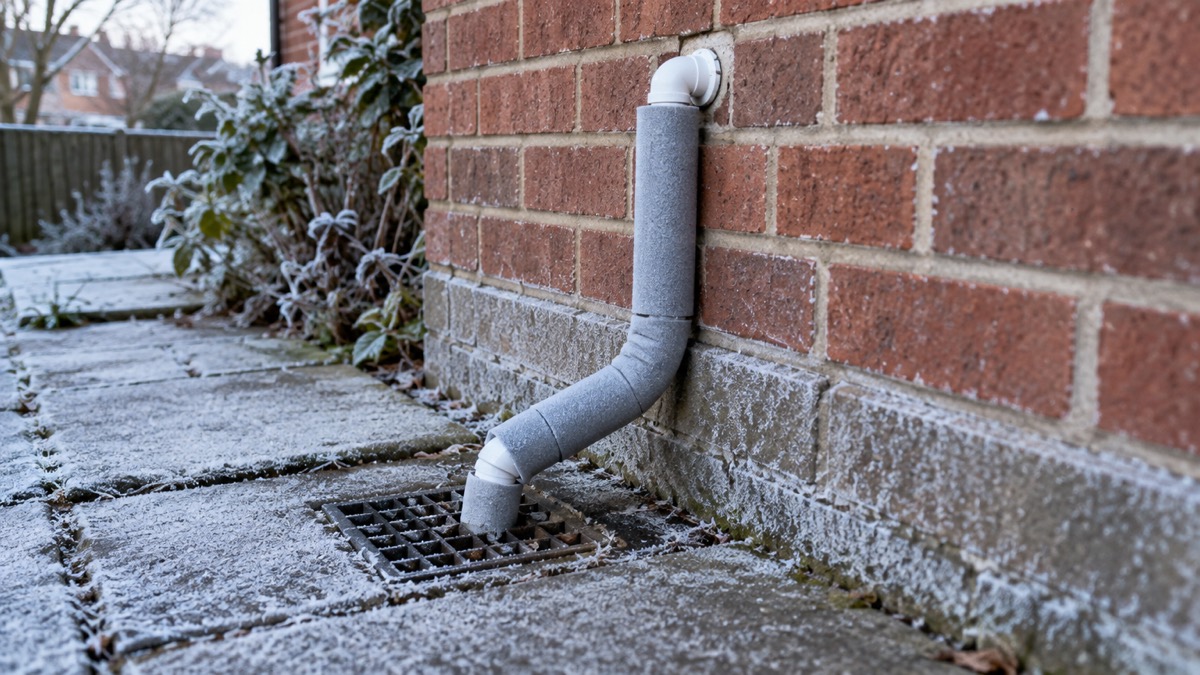
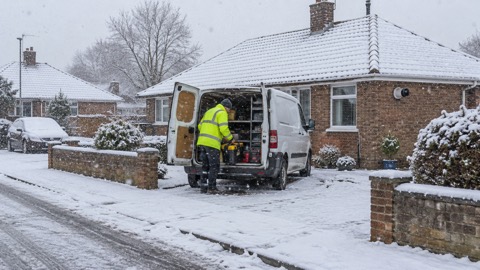
Condensing boilers produce a small amount of condensate water, which runs away through a plastic pipe to a drain. If any part of that pipe runs outside, it can freeze in hard weather, and a frozen condensate pipe shuts the boiler down. Navien's NCB300 manual specifies a minimum internal diameter of 19 mm for internal pipe sections1 and warns installers to advise the householder that even with protective measures this type of installation could freeze, possibly involving a chargeable engineer call-out1.
WaterSafe's winter advice is to insulate the pipe with foam insulation15. If your boiler's condensate pipe runs outdoors, that insulation is worth arranging before the first hard frost, and our storms, snow and ice guide covers the wider cold-weather checks. The NCB300's built-in freeze protection, with a setting range of 6°C to 10°C and a default of 10°C, protects the appliance itself but does not prevent an external condensate run from freezing1.
Safety notices and recalls: how to check yours
No Navien recall is in force according to the material available, but the way to check any appliance is the same, and fire and rescue services across the UK push it hard. The single most useful step is registration: register your appliances so that you can be notified if your product is recalled16. Register your appliance so you can be contacted easily if there is a safety recall for your product17, and it is strongly recommended that you register your appliances, as if a safety issue comes to light, the company can contact you18.
Registration can be done directly with the manufacturer or by using the Association of Manufacturers of Domestic Appliances' Register My Appliance service19. Registering your electrical items with the manufacturer means you will be informed of any safety recalls20, and registering your product with the manufacturer brings safety updates, recalls and warranties21.
Alongside registration, check periodically:
- The Government's product safety alerts, reports and recalls list, published by the Office for Product Safety and Standards. Manchester Fire and Rescue Service advises checking your appliances are not subject to a product recall via the OPSS alerts and recalls page22, and London Fire Brigade's e-bike guidance likewise points to recall notices issued by the OPSS and to contacting the retailer where you purchased the product23.
- Electrical Safety First's online product checker, which Manchester Fire and Rescue Service recommends using to see if any of your appliances have been recalled24.
- The manufacturer's own website. London Fire Brigade's Total Recalls campaign advises regularly checking whether your appliances have been recalled, using the Government's product recall site, the manufacturer's website or Electrical Safety First's recall register25, and Cheshire Fire and Rescue Service advises checking for recalls or safety notices on the Electrical Safety First website26.
- Peterborough Trading Standards notes it is strongly recommended to register your appliances so that if a safety issue comes to light, the company can contact you27.
For a Navien boiler, the practical version of this is: register the appliance when it is installed, keep the model number to hand, and check the maker's UK website, www.navien.co.uk, which hosts its technical support section28. The same habits protect every other appliance in the house, from white goods to portable heaters, and the advice is to periodically check for any product recalls or safety notices related to your specific models29.
Servicing and repairs: who can work on a gas appliance
The rule is absolute and comes from the maker and the regulator alike. Navien's manuals state that installation and service must be performed by a Gas Safe registered installer, service agency or the gas supplier1. The Health and Safety Executive, which regulates gas safety in the home, requires that anyone employed to work on gas appliances in domestic premises must be a Gas Safe registered engineer and competent in that area of gas work30. The Greater London Authority puts it plainly for tenants: when it comes to gas work you must use a Gas Safe registered engineer to fit, fix and service appliances31.
How often: the Fire Kills campaign advises that gas appliances should be serviced annually by a Gas Safe registered engineer, and notes this is a legal requirement for landlords32. nidirect, the Northern Ireland government service, likewise advises households to regularly get your appliances serviced33. The arrangements are the same in practice across England, Scotland and Wales: one register, Gas Safe, covers the whole UK, and you can check an engineer's registration and what work they are qualified to do before letting them start.
What the householder may and may not do:
- You may clean the outside of the boiler with a damp cloth and a little detergent, with the power off and the boiler cool1.
- You may check the display for error codes and note them before calling for help.
- You may reset the boiler where the manual says a code is cleared by a manual reset, such as E003 ignition failure or E012 flame loss on the NCB3001.
- You must not open the casing, adjust the gas supply, change fuel settings or attempt any repair. The Fire Kills campaign is explicit: never attempt DIY repairs on gas appliances or electrical installations32.
If a fault appears, the NCB500 manual sets the order of calls: contact your installer first, as their professional assessment is the recommended first step; if you cannot reach them, phone Navien Service on 0344 332 2323 or visit www.navien.co.uk3.
Warranty: what to check and keep
Navien's warranty, as stated in the maker's own documentation, is that Navien undertakes to rectify any manufacturing defect that occurs within 10 years of the installation date3. That is a long period by any standard, and it is conditional on the appliance being used and maintained as the manual requires, which in practice means the annual service by a Gas Safe registered engineer described above.
The document that matters is the Benchmark Checklist. The maker states that the completed Benchmark Checklist will be required in the event of any warranty work and may be required by the local Building Control Inspector3. The checklist is filled in by the installer at installation and records that the work was done properly. Keep it with the manual, along with the installation date and the installer's details.
To protect the warranty:
- Keep the completed Benchmark Checklist and the user manual together somewhere you can find them3.
- Record the installation date; the 10-year period runs from it3.
- Keep the annual service records from your Gas Safe registered engineer32.
- Remember that use outside the UK and Ireland voids the manufacturer's warranty1.
- For warranty service, always contact the Technical Helpdesk first, as the NCB300 manual instructs, rather than arranging your own repair1.
Where to get help with a Navien appliance
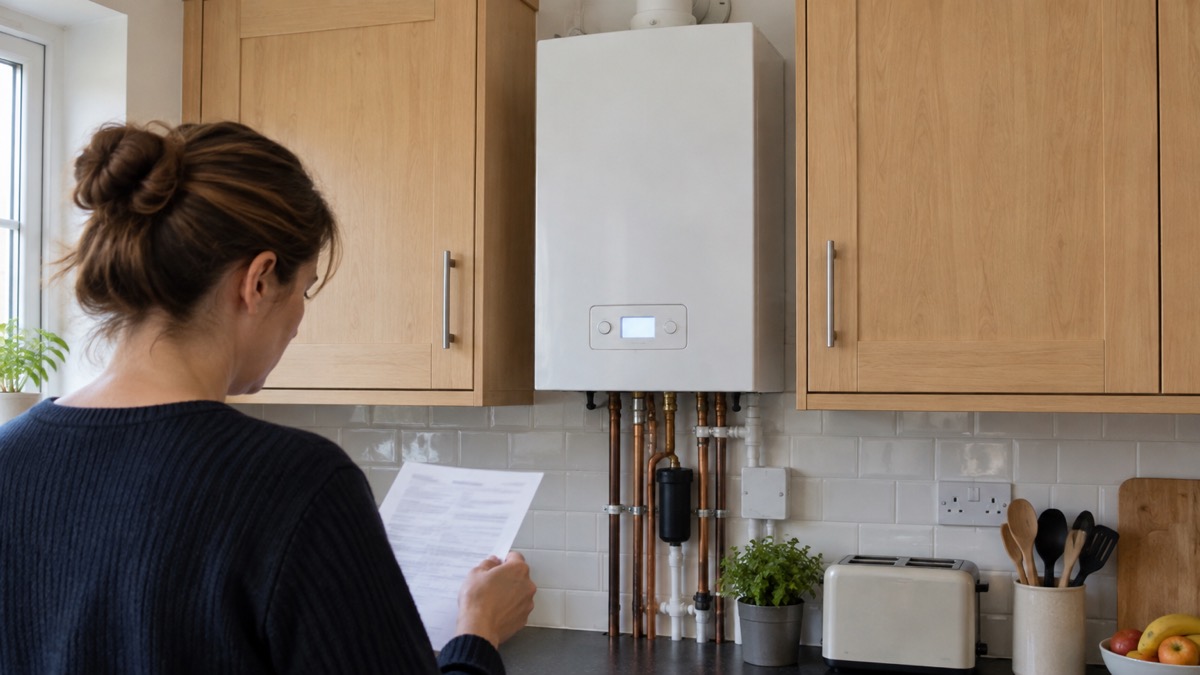
For a fault, the maker's stated order is: your installer first, then Navien Service on 0344 332 2323, or the technical support section of Navien's website at www.navien.co.uk3. For warranty service, always contact the Technical Helpdesk first1. Have the model number and, if you can see one, the error code on the display ready before you call.
Reading the display helps the conversation. On the NCB500, a level 1 error makes the front panel display flash red with a flashing error icon, but the boiler keeps running and the error clears automatically when the problem is resolved3. On the NCB300, codes include E003 ignition failure and E012 flame loss, both cleared by a manual reset, E004 false flame detection, which resets automatically, and E615, abnormal operation of the input and memory (MCU), which needs a manual reset1. A code that keeps returning is a reason to call, not to keep resetting.
For the wider household picture, our guides to gas and heating failures, home emergencies and staying informed cover what to do before, during and after the heating goes off.
Sources (33)
- NCB300 Combi Installation and Operation Manual, Navien, 2026-01
- Power cuts: be informed about hazards, Be Ready campaign (UK government), 2026-10-21
- NCB500 Combi Service Manual, Navien, 2025-03
- Power outages (electricity failure), Essex Prepared, 2026-10-29
- Keeping warm or cool in extreme weather: scripts for broadcast media, UK Chief Medical Officers / GOV.UK, 2025-12-16
- Heatwave: protect yourself, Lancashire Prepared, 2026-10-29
- Safe home heating, Warwickshire Fire and Rescue Service, 2026-10-29
- Keeping your home warm in winter, Met Office, 2026-10-26
- Carbon monoxide safety, Manchester Fire and Rescue Service, 2026-10-29
- Smoke alarms and CO detectors, Warwickshire Fire and Rescue Service, 2026-10-29
- What is available from the Telecare service, Isle of Anglesey County Council, 2026-10-29
- Gas supply issues: prepare for adverse weather, Buckinghamshire Council, 2026-10-29
- Prepare yourself, Greater Manchester Combined Authority, 2026-10-29
- What you might need in a gas outage, Wiltshire and Swindon Prepared, 2026-10-29
- Winter advice, WaterSafe, 2026-10-29
- Electrical fire safety, Cheshire Fire and Rescue Service, 2026-10-29
- Register your appliance, Cornwall Fire and Rescue Service, 2026-10-29
- Electrical items: white goods, London Fire Brigade, 2026-10-25
- Product recalls, Bath and North East Somerset Council, 2026
- Electrical fire safety: recalls, Warwickshire Fire and Rescue Service, 2026-10-29
- White goods safety, Mid and West Wales Fire and Rescue Service, 2026-10-29
- Maintain appliances and recalls, Manchester Fire and Rescue Service, 2026-10-29
- Registering your e-bike or e-scooter for safety alerts and product recalls, London Fire Brigade, 2026-10-25
- Stay fire safe, Manchester Fire and Rescue Service, 2026-10-29
- Total Recalls: making white goods safer, London Fire Brigade, 2026-10-25
- White goods electrical fire safety, Cheshire Fire and Rescue Service, 2026-05-20
- Product safety campaigns, Peterborough City Council Trading Standards, 2026-10-29
- 20051189BNCB700_Combi_CE_GB_Users_Information_Manual_Eng_241007-1.pdf, Navien LTD
- Electrical fire safety, Warwickshire Fire and Rescue Service, 2026-10-29
- Gas safety: domestic frequently asked questions, Health and Safety Executive, 2026
- Gas safety for tenants, Greater London Authority, 2026-10-25
- Fire safety prevention advice, Fire Kills campaign (UK government), 2026-03-25
- Gas safety and carbon monoxide, nidirect (Northern Ireland government), 2025-11-24
 Navien NCB300 Combi Boiler: Faults, Cold-Weather Breakdowns and What to Do
 Navien NCB500 Boiler, Combi and System: Faults and Breakdown Steps
 Navien NCB700 Boiler: Faults, Cold-Weather Breakdowns and What to Do