
Vango is a camping equipment brand whose tents, sleeping bags and folding gas stoves are the kind of kit many UK households already own, or can buy, and that doubles as emergency equipment. A tent gives you shelter if you ever have to leave your home. A sleeping bag keeps you warm when the heating goes off, which official guidance warns can make homes cold very quickly1. A camping stove lets you cook food and heat water during a power cut, which Food Standards Scotland guidance specifically lists as an option2.
This page sets out what Vango makes for households, what each type of kit can and cannot do in an emergency, how to use it safely, and where to find spare parts and recall information. One Vango product, two styles of folding gas stove with hose, was recalled from end users in June 2024 because the gas hose may degrade over time, leading to a gas leak and possible hose ignition3, so if you own one of those, start with the safety notices section below.
What Vango makes for UK households
Vango's range covers the three things a household needs most in an emergency that takes away heating, power or the home itself: shelter, warmth and a way to cook. Its tents, such as the Galaxy 300, provide covered sleeping space and a porch for storing equipment4. Its sleeping bags, such as the Atlas Junior Adventure, are rated by season and temperature so you can match them to conditions5. Its camping stoves, such as the Folding Stove with Windshield and Piezo, fold to a compact size for storage and transport and run on gas for cooking away from mains power6.
For a household building an emergency kit, this matters because the same kit serves both camping trips and emergencies. Official preparedness guidance tells households to keep blankets, sleeping bags and warm clothing because homes can become cold very quickly when the heating goes off1, and to be ready to leave home with suitable clothes if evacuation is ever needed8. A tent, sleeping bags and a stove cover the shelter, warmth and cooking parts of that in one set of purchases you can also enjoy in ordinary times.
What Vango kit does not do is provide power or lighting. For those parts of a household plan you will need torches, battery candles and a mobile phone power pack, which the Met Office lists as power cut essentials9, and which our emergency lighting and backup power guides cover in full. Vango's contribution is the shelter, warmth and cooking side, and this page takes each in turn.
Tents: shelter if you have to leave home
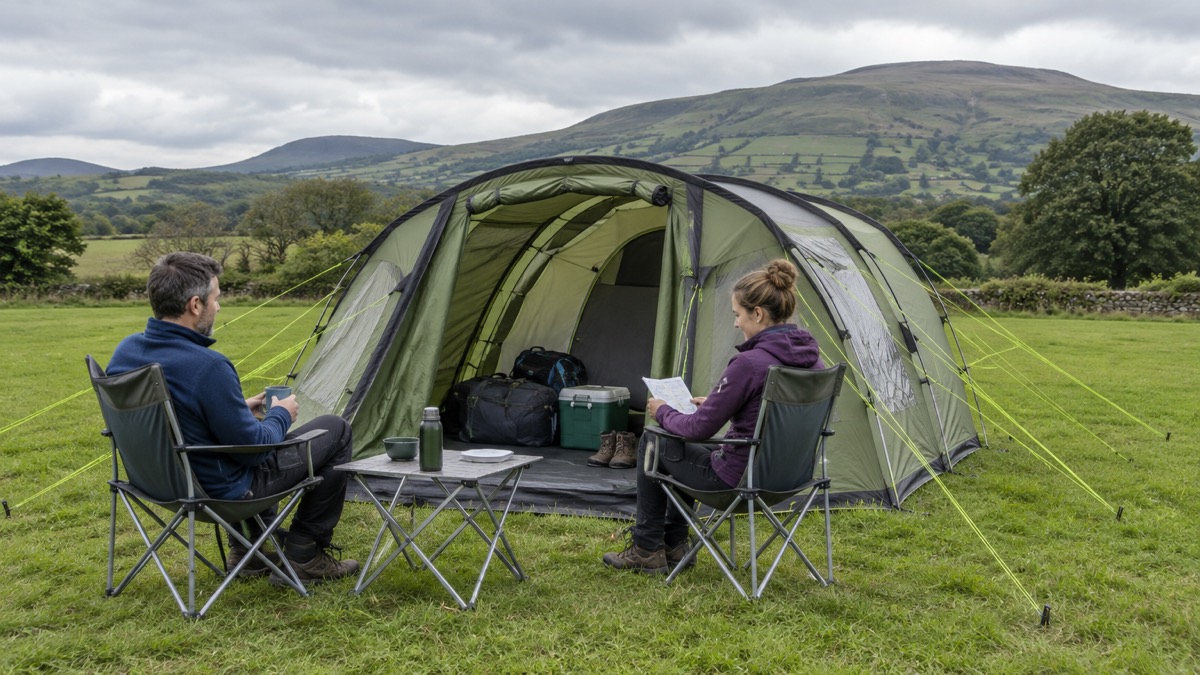
A tent is the piece of kit most households hope never to need in an emergency, but it is the one that matters if you are ever asked to leave your home. Somerset Council guidance says that if you are asked to evacuate, you can go to relatives, friends, a community place of safety or a local authority Rest Centre10, and Warwickshire County Council guidance adds that if your home is uninhabitable you should seek temporary shelter with family, friends or an emergency accommodation centre11. A tent is not a substitute for those options, but it is a fallback if organised shelter is unavailable or full, and it is useful knowledge that your camping kit can serve this purpose.
The Vango Galaxy 300 is a 3-man tunnel tent with a low sleeping area designed to maximise warmth and an extra-large porch for storing equipment4. Two of its features matter if you are using it in poor conditions. The first is the TBS II tension band system: a proprietary Vango internal bracing system using adjustable tension bands to form a rigid structural triangle, reducing sideways deformation in shifting crosswinds, which can be stowed away in calm conditions4. The second is the bathtub groundsheet, which extends 10cm up the inner tent wall, creating a barrier against rain, pooling water and saturated ground4. The maker states the tent is rigorously tested and certified to the EN ISO 5912 standard and is engineered to reliably withstand heavy rain4.
The tent can also be pitched in a lighter configuration: the inner tent stays clipped to the flysheet, but for lightweight or fast-and-light missions the flysheet can be pitched independently to serve as a streamlined, standalone shelter4. In an emergency that speed matters if you are setting up in failing light or bad weather.
Fire safety in and around a tent is the one thing to get right before you ever need it. Fire and rescue services across the UK give the same advice: have an escape plan and be prepared to cut your way out of the tent if there is a fire. Devon and Somerset Fire and Rescue Service12, Manchester Fire and Rescue Service13, Mid and West Wales Fire and Rescue Service14 and Cumbria Fire and Rescue Service15 all phrase it in almost identical terms. Devon and Somerset also advise placing your stove or barbecue well away from your tent, as tents easily catch fire12, and the Northern Ireland Fire and Rescue Service says that if there is a fire, get out, stay out and call the Fire and Rescue Service immediately16. Never smoke inside a tent16.
If you are away from home in a storm rather than a fire, Met Office advice for lightning is that if you hear thunder while you are outside, find a safe, enclosed shelter, such as your car9. A tent is not that shelter; a car is.
Sleeping bags and mats: staying warm without heating
When the power or heating fails, official guidance is blunt about how fast a home cools. The government's Prepare campaign advises that homes can become cold very quickly when the heating goes off, so keep blankets, sleeping bags and warm clothing ready1. Greater Manchester Combined Authority advises keeping warm by using blankets and layered clothing, and shutting the curtains and doors of unused rooms to keep the heat in17. Scottish Borders Council's resilience advice adds that having additional blankets or duvets to hand can help keep you warm sitting or in bed18. A Vango sleeping bag is a strong version of that blanket layer, and a sleeping mat underneath it insulates you from the cold floor.
Vango rates its bags by season and by suggested usage temperatures, and the Atlas Junior Adventure shows how to read those figures. It is a 2 Season bag with a suggested usage minimum of 10°C and a maximum of 20°C, and a tog rating of 8.55. The suggested minimum is the figure to plan around: it tells you the coldest conditions the maker expects the bag to be comfortable in, so for winter use or an unheated house in a prolonged power cut you would look for a bag rated below that, and for children you would check the junior sizing. The West Midlands Ambulance Service NHS Foundation Trust advises that outside, you should wrap up warm by wearing several layers of clothing, a hat, gloves and a scarf, and keep dry to prevent loss of body heat19; the same layering principle applies inside a sleeping bag.
| Specification | Vango Atlas Junior Adventure |
|---|---|
| Season rating | 2 Season5 |
| Suggested usage | 10°C to 20°C5 |
| Tog rating | 8.55 |
| Shape | Junior5 |
| Fill | 30% single hole siliconised hollow fibre, 70% polyester5 |
| Insulation | ThermoLock, high loft insulation that retains warmth even when wet5 |
| Stitching | Insulation Lock, S-stitching holds insulating fibre in place for even distribution across the body5 |
| Hood | Ergonomically shaped to prevent heat loss; junior models are elasticated for safety5 |
| Zip | Two-way, can be unzipped from the top or bottom to increase ventilation5 |
| Lining | Polair, a 190T brushed polyester microfibre5 |
Two of those specifications matter beyond the campsite. ThermoLock insulation is high loft insulation that the maker states retains warmth even when wet5, which is the condition you are most likely to face in a flood or storm evacuation. The two-way zip can be unzipped from the top or bottom to increase ventilation5, which lets you manage temperature without getting out of the bag, useful when a room cools overnight. The junior hood is elasticated for safety5, a design choice aimed at children's sleeping.
If you use other warming methods alongside a bag, follow the fire and rescue services' advice on heated wheat bags: cool them on a non-combustible surface, for example the kitchen sink, as Manchester Fire and Rescue Service advises20, and Cheshire Fire and Rescue Service likewise says to place the bag on a non-combustible surface while cooling21. Our heating and cooking without mains power guide covers the wider options.
Camping stoves: cooking when the power is out
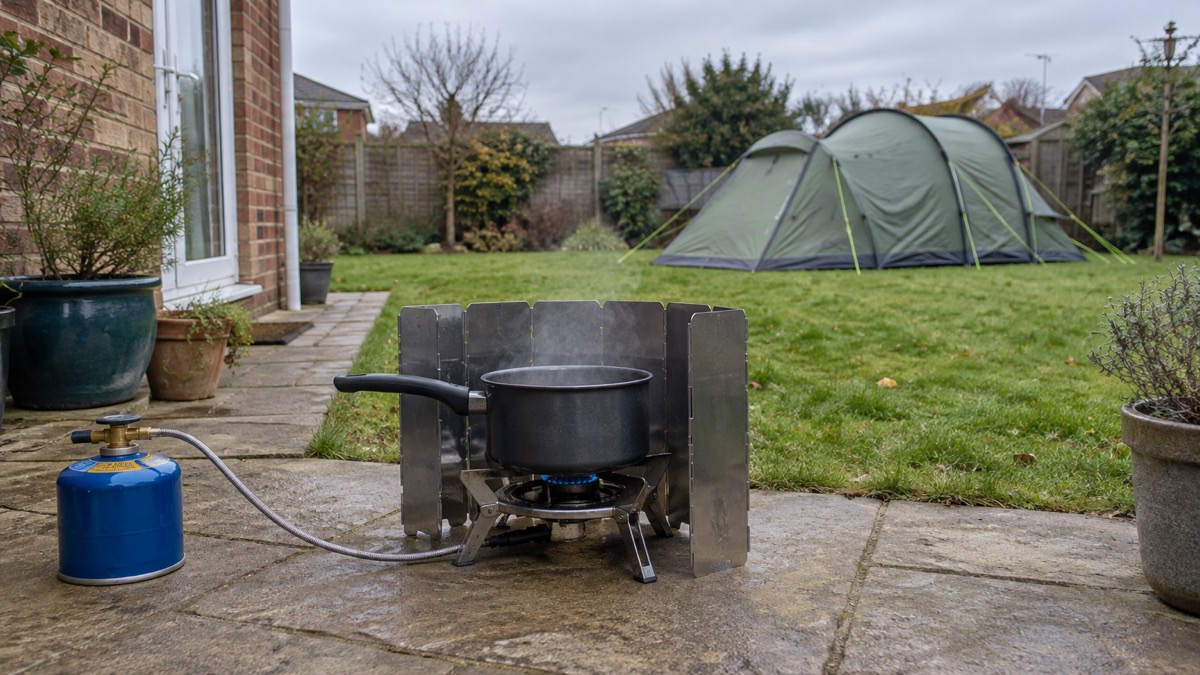
A camping stove is the piece of Vango kit with the clearest emergency use. Food Standards Scotland guidance on power cuts states that you can cook food and heat water for food preparation and cleaning using a camping stove, barbecue, or bottled gas stove, checking the manufacturer's instructions for safe use2. That is official confirmation that this is a legitimate part of a household power cut plan, not just camping gear.
The same guidance carries a food safety warning worth acting on: cooking with these appliances can take longer than your usual ways of cooking, so you need to make sure that food is steaming hot and cooked all the way through2. A stove that seems slow is not faulty; it is behaving as expected, and the answer is patience and a check that food is steaming throughout rather than turning up the heat in an unsafe spot.
The Vango Folding Stove with Windshield and Piezo is rated at 2600W6, folds to a compact size for easy storage and transport6, and comes with a storage box6. It has a high quality Piezo ignitor6, which lights the stove without matches, and a width of 17.4cm6. The windshield is the feature that earns its place in British weather: it shields the flame, which matters when you are cooking outdoors in the wind that so often accompanies the storms and power cuts you are cooking through.
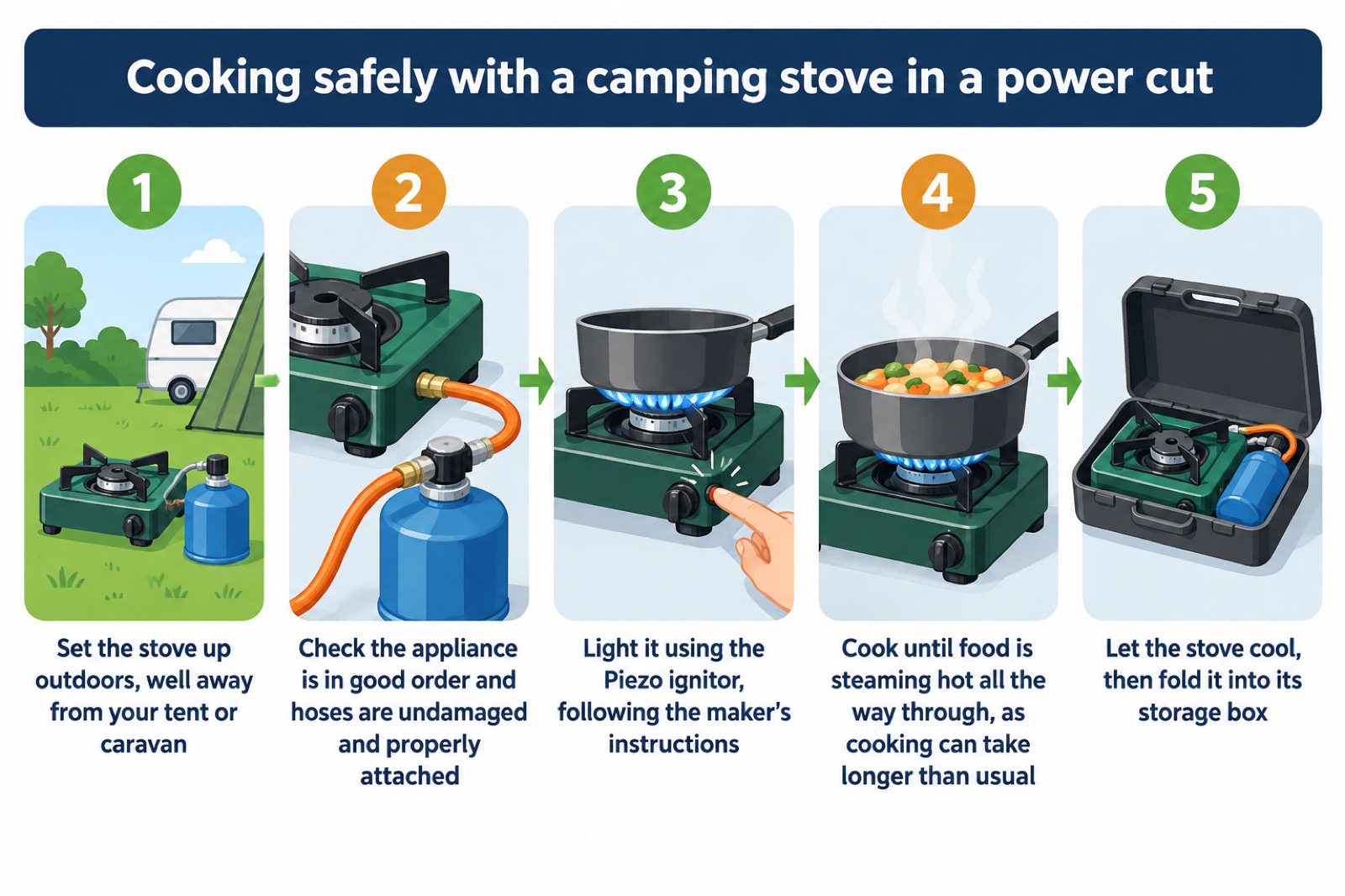
Before using any gas stove, check it. nidirect guidance on carbon monoxide dangers when camping says to check that the appliance is in good order, undamaged and that hoses are properly attached and undamaged; if in doubt, get the hoses replaced or do not use it22. That instruction applies at home before an emergency as much as at the campsite, and it is the single most important check on a stored stove. Our emergency food and water guides cover what to cook and how to store water for cooking and cleaning.
Lighting and camp furniture for a power cut
Vango's tents and stoves get the emergency attention, but the same brand's broader camping range points to a category every household needs in a power cut: lighting and somewhere to sit and eat when the house is dark. The Met Office's power cut essentials are battery candles, torches and batteries, and a mobile phone power pack9, and nidirect advice for storms and heavy rain adds keeping a supply of candles23. Neath Port Talbot Council's emergency kit checklist likewise advises keeping a torch, battery or wind-up, at home8. None of that is Vango-specific, but a household that camps with Vango kit will often already own lanterns and camp furniture that serve the same purpose.
The practical point is to check what you have before an emergency. If your camping lanterns take batteries, keep spare batteries in the house kit. If you own wind-up torches, wind them occasionally. Camp chairs and tables seem like comfort items until the family is eating a hot meal cooked on the stove in an unheated, darkening house, at which point a table to work at and a chair to sit in become part of coping. Our emergency lighting and power cuts guides set out the full household plan for this, including what to keep where and how to stay informed during an outage.
Where a camping stove or heater must never go
This is the section to read twice, because it is where camping kit turns dangerous. Every fire and rescue service that has published on the subject gives the same instruction, and it applies to Vango stoves exactly as to any other.
The reason is carbon monoxide. It is not a slow risk: Cumbria Fire and Rescue Service's warning is that levels can kill very quickly in enclosed spaces including tents and awnings15. The stoves that are safe outdoors, cooking, become lethal indoors, heating, because a stove used for warmth runs longer and in a space with no ventilation. Mid and West Wales Fire and Rescue Service states it plainly: never use fuel-burning devices, for example disposable barbecues, camping stoves, camping heaters, lanterns and charcoal grills, inside a tent14, and the Northern Ireland Fire and Rescue Service says the same16.
Barbecues carry their own version of the rule. Eden District Council advises that a lit or smouldering barbecue should never be taken into a tent, tent awning, camping pod, caravan or camper van24, and North Wales Fire and Rescue Service says never to use a barbecue, lit charcoal or disposable barbecue inside a tent, caravan or other enclosed space25. A barbecue that seems out can still be producing carbon monoxide, which is why the word smouldering matters. Devon and Somerset Fire and Rescue Service also advises not using stoves or BBQs inside or too close to your caravan26, and never using a cooker or heater while a caravan is moving27.
The rule for households is simple: a Vango stove cooks, outdoors, away from the tent. It never heats a room, a tent, a caravan or a camper van. If you need heat without mains power, our heating and cooking and home emergencies guides cover the safe options, and the extra help page explains the Priority Services Register for households that depend on heating for health.
Storing camping kit so it works in an emergency
Emergency kit that fails when you finally need it is worse than no kit, because you planned around it. Two habits keep Vango kit reliable.
The first is storing it where you can reach it and check it. Neath Port Talbot Council's emergency kit checklist advises keeping a torch, battery or wind-up, at home, and keeping a blanket and warm clothes in your car in the event of an emergency8. The same logic applies to tents and sleeping bags: know which cupboard or loft box they are in, and keep the stove with its hose and storage box together rather than scattered. The Vango Folding Stove is designed for exactly this, folding to a compact size for easy storage and transport and coming in a storage box6.
The second is checking it periodically. For gas appliances, nidirect's instruction is to check that the appliance is in good order, undamaged and that hoses are properly attached and undamaged; if in doubt, get the hoses replaced or do not use it22. Check the sleeping bags are dry before they go back into storage, since damp insulation loses warmth, and check that each stove is back in its storage bag, which the maker includes to protect it in your kit bag4. A useful pattern is to check the kit when the clocks change, alongside the smoke alarm check most households already do.
Support, spare parts and warranty
Vango publishes spare parts information on its product pages, which is where to start if a pole bends or a part goes missing. For the Galaxy 300 tent, the maker lists replacement front, centre, rear and porch poles available via CampingSpares4: specifically a replacement centre pole, a replacement rear pole, and a replacement porch pole in a quantity of two4. That matters for emergency planning because a tent with a missing pole is not shelter, and a pole replaced before the storm season is. Check the spare parts listing on the product page for your own item, since the range of parts varies by product.
For the stove, the maker's product page is the source for specifications and usage instructions, including the 2600W rated output, the Piezo ignitor and the storage box6. Follow the manufacturer's instructions for safe use, as Food Standards Scotland's power cut guidance directs2; the maker's own instructions are the authority on how its product is meant to be used.
On registration and recalls, Cheshire Fire and Rescue Service's electrical safety guidance gives advice that applies to any appliance: register your appliance so manufacturers can contact you about faults or recalls, and check for recalls or safety notices on the Electrical Safety First website28. Registering a newly bought gas stove with the maker is what makes a recall notice reach you, and it costs nothing but a few minutes.
Safety notices and recalls
One Vango product has been the subject of an official recall, and if you own one you should act on it.
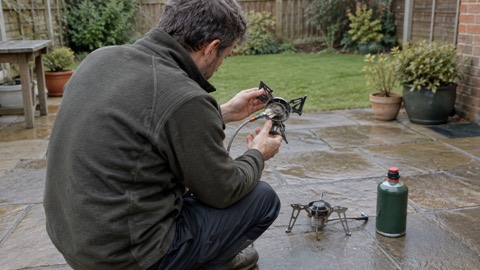
In June 2024, the UK government's product safety system published a recall notice, PSD number 2405-0054, covering two styles of Vango branded folding gas stoves with hose3. The stoves are gas appliances and components, notified by Local Authority Trading Standards, with country of origin China3. The hazard is serious: the stoves present a risk of fire, explosion and burns, as it has been identified that the gas hose may degrade over time, leading to a gas leak and possible hose ignition3. The corrective action is a recall of the product from end users3.
"The stoves present a risk of fire, explosion and burns as it has been identified that the gas hose may degrade over time, leading to a gas leak and possible hose ignition."
If you own a Vango folding gas stove with hose, stop using it and follow the instructions in the recall notice3. The hose degradation at the heart of this recall is the same failure mode that nidirect's general advice guards against when it says to check hoses are undamaged and properly attached, and to get them replaced or not use the appliance if in doubt22. That advice is worth applying to any gas stove of any brand: a hose that has sat in a shed for years is exactly the hose most likely to have degraded.
For current and future notices, Cheshire Fire and Rescue Service advises checking for recalls or safety notices on the Electrical Safety First website28, and registering appliances so manufacturers can contact you directly28. If you are preparing a household kit more broadly, our getting started and emergency kit guides set out the full checklist, and the storms and snow and flooding guides cover the emergencies in which camping kit is most often pressed into service.
Sources (28)
- Get prepared for emergencies, UK government Prepare campaign, accessed 2026-10-21
- Food safety in the kitchen: power cuts, Food Standards Scotland, accessed 2026-10-25
- Product recall: Vango Folding Gas Stoves, PSD 2405-0054, Office for Product Safety and Standards, 2024-06-06
- Vango Galaxy 300 tent product page, Vango, accessed 2026-10-25
- Vango Atlas Junior Adventure Sleeping Bag product page, Vango, accessed 2026-10-25
- Vango Folding Stove with Windshield and Piezo product page, Vango, accessed 2026-10-25
- Stay warm safely this winter, Devon and Somerset Fire and Rescue Service, accessed 2026
- NPT Prepared emergency kit checklist, Neath Port Talbot Council, accessed 2026-10-29
- Stay safe in lightning, Met Office, accessed 2026-10-25
- Preparing for emergencies, Somerset Council, 2026-09-17
- Evacuation plans and dealing with the aftermath of a fire, Warwickshire County Council, accessed 2026-10-29
- Camping and caravanning safety, Devon and Somerset Fire and Rescue Service, accessed 2026
- Camping safety, Manchester Fire and Rescue Service, accessed 2026-10-29
- Camping safety advice, Mid and West Wales Fire and Rescue Service, accessed 2026-10-29
- Safety outdoors, Cumbria Fire and Rescue Service, accessed 2026-10-29
- Fire and summer safety advice, nidirect, Northern Ireland government, 2026-07-03
- Loss of essential services, Greater Manchester Combined Authority, accessed 2026-10-29
- Be more resilient in 30 simple ways in 30 days, Scottish Borders Council, accessed 2026-10-29
- Cold weather advice, West Midlands Ambulance Service NHS Foundation Trust, accessed 2026-05-20
- Wheat bags heating safety, Manchester Fire and Rescue Service, accessed 2026-10-29
- Heated wheat bags, Cheshire Fire and Rescue Service, 2026-05-20
- Carbon monoxide dangers if camping, caravanning or boating, nidirect, Northern Ireland government, 2026-04-02
- Strong winds and heavy rain warning: information and advice, nidirect, Northern Ireland government, 2026-01-27
- Barbecue safety for campers and caravanners, Eden District Council, accessed 2026-10-23
- Barbeque safety, North Wales Fire and Rescue Service, accessed 2026-10-29
- Caravans and mobile homes fire safety, Devon and Somerset Fire and Rescue Service, accessed 2026
- Caravan safety advice, Mid and West Wales Fire and Rescue Service, accessed 2026-10-29
- White goods electrical fire safety, Cheshire Fire and Rescue Service, 2026-05-20
 Folding Gas StoveSome units recalled