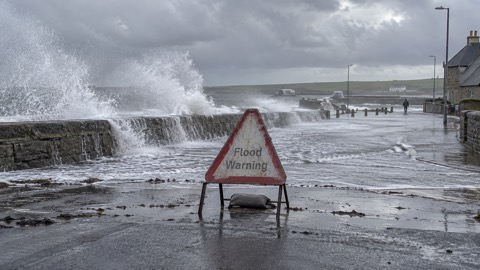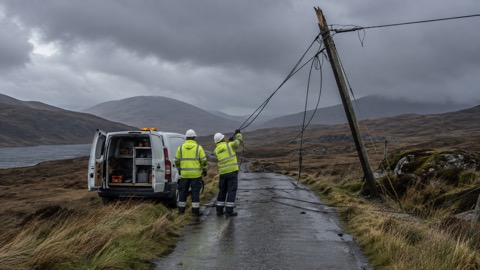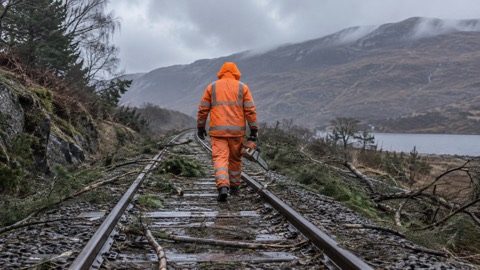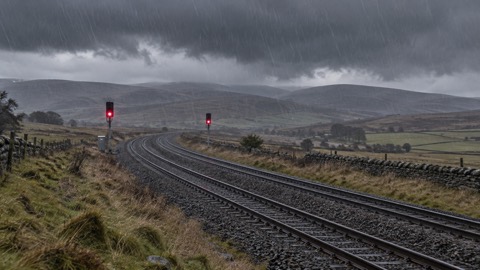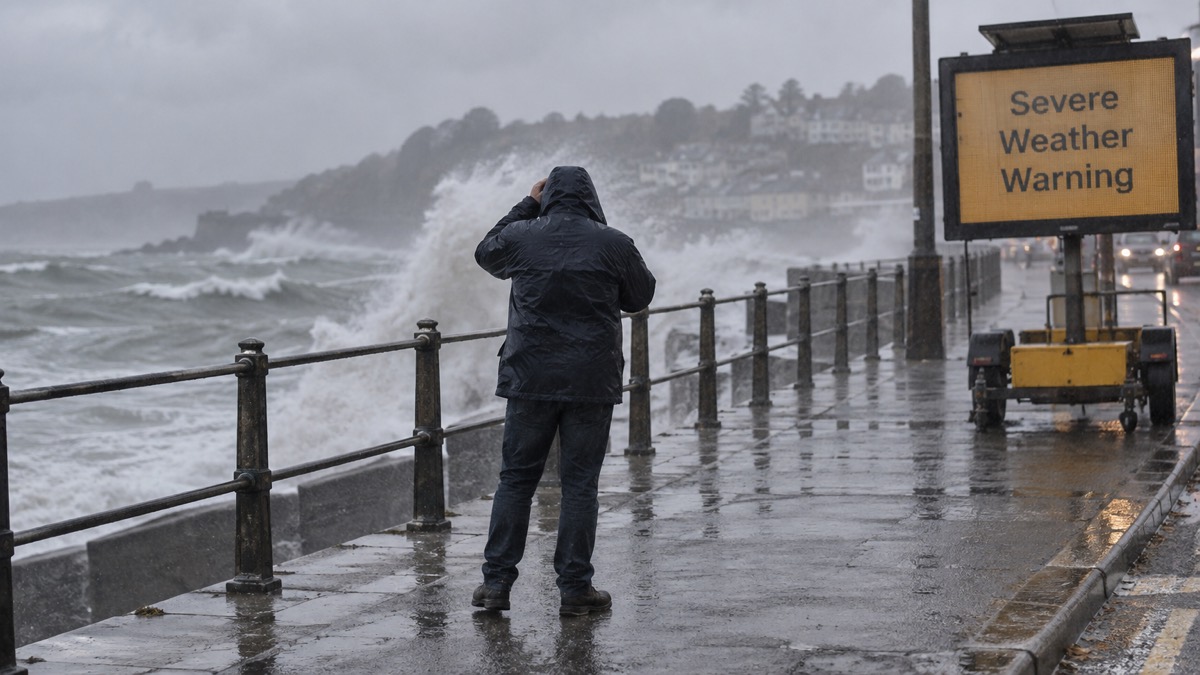
The Met Office named Storm Chandra on 26 January 2026, warning that a deep area of low pressure would bring strong winds and heavy rain from Monday night into Tuesday1. Amber and yellow weather warnings for strong winds and heavy rain were in place, with injuries or danger to life from flying debris, large waves at coasts, travel disruption, building damage, flooding, fallen trees and power cuts possible, according to nidirect3.
The Met Office said an amber warning for wind covered eastern Northern Ireland, where gusts of 60 to 70 mph were likely and 75 mph possible near the coast, adding that easterly winds of this strength are unusual and could have widespread impacts1. A separate yellow wind warning covered Cornwall, southwest Wales and parts of northern Devon1. An amber warning for rain was in place for south Devon, much of Dorset, southern Somerset and southeast Cornwall, with 30 to 50 mm expected widely and 60 to 80 mm possible over higher ground such as south Dartmoor1. Further north, the system was expected to meet colder air and fall as hill snow across Scotland and northern England1.
| Warning | Area | Expected conditions |
|---|---|---|
| Amber, wind | Eastern Northern Ireland | Gusts of 60 to 70 mph, 75 mph possible near the coast1 |
| Yellow, wind | Cornwall, southwest Wales, parts of northern Devon | Strong winds1 |
| Amber, rain | South Devon, much of Dorset, southern Somerset, southeast Cornwall | 30 to 50 mm widely, 60 to 80 mm over higher ground such as south Dartmoor1 |
The Met Office said Storm Chandra's strongest winds were expected to affect exposed southwestern areas of England and Wales before pushing north through the Irish Sea1. It described heavy rain falling onto already saturated ground1. A later Met Office assessment recorded that over 50 mm of rain fell widely in the worst affected areas, with up to 100 mm across high ground, and that the storm brought widespread flooding across south-west England, particularly Devon, Cornwall and Dorset4. Devon County Council reported over 80 properties flooded across more than 30 locations, over 50 schools across Devon were reported to have closed, and a section of the A30 was closed in east Devon near Exeter Airport4. About 10,000 properties were reported to have lost power in Northern Ireland, with 350 schools closed, one person injured in County Fermanagh when a tree fell on a car, and flights at Belfast City Airport and ferry services cancelled4.
"With Storm Chandra now officially named, communities across the UK are preparing for another spell of disruptive weather early this week."
Why it matters for households
The warnings covered travel, power and flooding risk from Monday night into Tuesday1. The Met Office advised households to check their property's flood risk status, prepare a flood plan and assemble an emergency flood kit with medication, copies of important documents, warm clothing and a phone charger1. It advised turning off gas, water and electricity supplies if water enters a property, and said anyone trapped by rising water should go to the highest safe level but avoid attics, as rising water can quickly cut off exits, calling 999 if in danger1. Drivers were advised not to attempt to drive through water flowing across a road, and to slow down and use main roads where conditions are more predictable1. The Met Office advised checking outdoor space and securing anything that could blow away, including bins, plant pots, garden furniture, trampolines and shed doors1. It advised staying well back from breaking waves, checking local tide times and keeping dogs on leads near cliffs, and asking for the Coastguard on 999 in an emergency1. It also advised checking in with neighbours, particularly older people, those with medical conditions or anyone living alone, and contacting NHS 111 with concerns about someone's health1.
nidirect listed emergency numbers for Northern Ireland, including the Flooding Incident Line on 0300 2000 100, available 24 hours a day, and Northern Ireland Electricity Networks on 03457 643 6433. It advised not approaching damaged electricity equipment or broken power lines, being careful around fallen trees that often take poles and wires with them, and reporting anything dangerous to NIE Networks3. It advised people to ask themselves if they can put off a journey until conditions improve, and said forests, country parks and nature reserves should not be visited until the weather warning has ended3. On power cuts, it advised knowing where household fuses and trip switches are, keeping batteries for torches and radios, keeping phones charged, and checking on elderly or vulnerable neighbours3. It warned that using kerosene heaters, charcoal grills or portable generators indoors can cause carbon monoxide poisoning, and that only equipment designed for indoor use should be brought inside, with good ventilation and a carbon monoxide alarm3.
The National Fire Chiefs Council said Storm Chandra had brought flooding and disruption to communities across the UK and called on the Government to consult on a statutory duty for fire and rescue services in England to respond to flooding incidents which pose a risk to life2. It said England remains the only UK nation where fire and rescue services do not have such a duty, with provisions in Scotland since 2005, Northern Ireland in 2012 and Wales in 20172. The council cited Environment Agency estimates that 6.3 million properties in England are at risk of flooding, including 2.4 million from rivers and the sea and 4.6 million from surface water, a 43 per cent increase in surface water flood risk compared with the previous national assessment, with the number possibly rising to around 8 million by 20502.
What happens next
The Met Office assessment, last updated 6 February 2026, recorded that January 2026 was provisionally the wettest January on record in both Cornwall and County Down, and in the top five wettest Januarys for the east of Northern Ireland, north-east Scotland and many southern coastal counties4. No decision on the fire chiefs' call for a consultation had been reported.
The Met Office explains how storms are named in its guide to how the Met Office chooses storm names, and its advice on whether to travel is set out in should I delay my journey in bad weather. Further guidance is in the storms and snow section.
Sources (4)
- Getting WeatherReady for wind and rain as Storm Chandra approaches - Met Office, metoffice.gov.uk
- Fire chiefs call for government action on flooding as Storm Chandra hits UK - NFCC, nfcc.org.uk
- Strong winds and heavy rain warning - information and advice | nidirect, nidirect.gov.uk
- metoffice.gov.uk, metoffice.gov.uk
 How Storms Are Named
 Delaying Journeys in Bad Weather