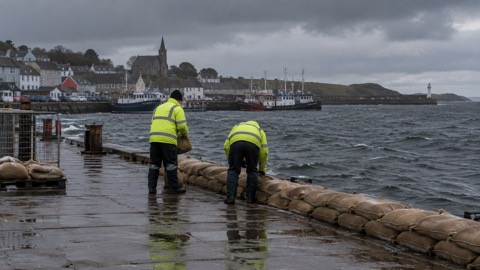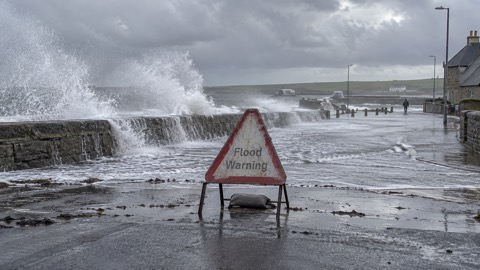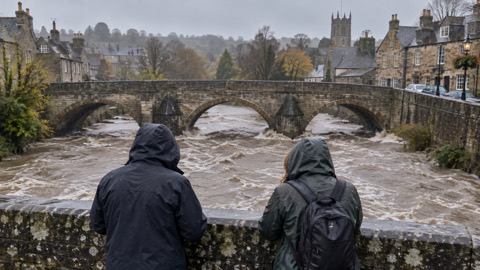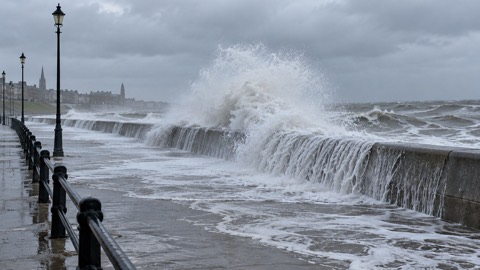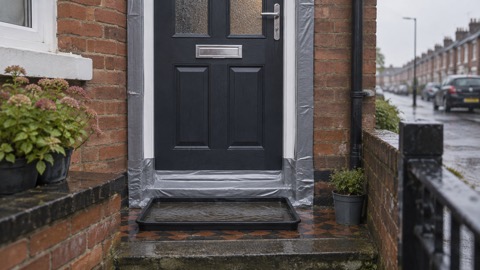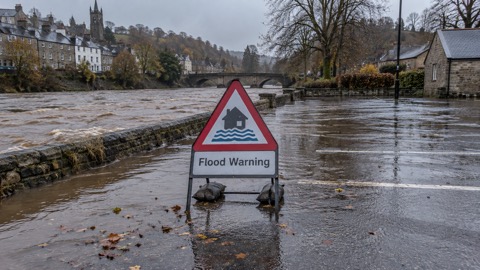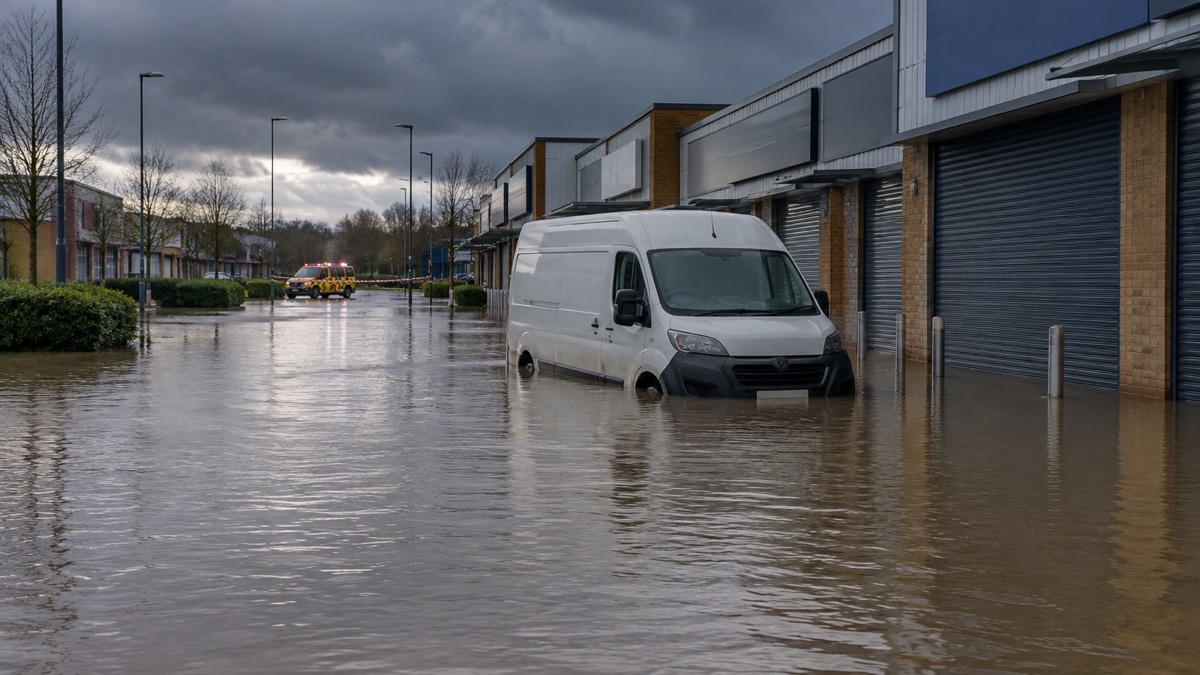
Flooding in Northamptonshire and West Yorkshire resulted from Storm Bert in November 2024, according to the National Fire Chiefs Council (NFCC), which published photographs of the response in both counties1. The images were issued with an NFCC statement on 3 February 2025 on the UK's preparedness for climate change1.
One photograph shows a volunteer from Northamptonshire Search and Rescue, who assist emergency services during incidents such as flooding, and was taken during flooding in Northamptonshire resulting from Storm Bert1. A second shows personnel from West Yorkshire Fire and Rescue Service responding to flooding resulting from Storm Bert1. No casualty figures, property damage totals or number of properties affected by the Storm Bert flooding are given in the statement1.
The NFCC said fire and rescue services are on the frontline of responding to extreme weather but lack access to long-term forecasting mechanisms and sustainable funding to adapt1. It said eight of the risks in the UK Government's National Risk Register are climate change related extreme weather events predicted to become more frequent and extreme as global temperatures rise1. Its figures on flooding incidents attended by fire and rescue services in England show a 7% rise from 2020/21 to 2021/22 and a further 12% from 2021/22 to 2022/231. In the five years ending March 2019 there were 13,854 such incidents on average each year, compared with an average of 16,411 in the following five-year period, an increase of 18% and over 2,500 additional incidents per year1.
The statement also sets out Met Office projections that by 2070 winters will be up to 4.5°C warmer and 30% wetter than in 1990, while summers may be up to 6°C warmer and 60% drier, with regions in the south of England projected to experience temperatures reaching 40°C and increased rainfall by up to 25%1.
"The UK is not yet adequately prepared to tackle the growing impact of climate change, the National Fire Chiefs Council (NFCC) said today, Monday 3rd February."
Ben Brook, Chief Fire Officer for Warwickshire and NFCC Lead on Environment and Climate Change, said fire and rescue services form part of local resilience forums and work with partners to plan for and respond to extreme weather events, but that services and forums do not have access to accurate data analysis mechanisms and expertise for longer-term forecasting and risk management planning, and that local resilience forums are under-resourced and lack clarity on their climate change resilience role1.
Why it matters for households
The NFCC's recommendations are addressed to the UK Government and devolved administrations, not to households1. They cover longer-term forecasting and risk assessment at national, regional and local level to support Community Risk Management Plans and Local Resilience Forum emergency plans, long-term capital investment for fire and rescue services, integrated climate policy across government departments, a review of the Civil Contingencies Act 2004 and/or the UK Government Resilience Framework, and adaptation of the built environment so it can withstand climate change impacts without compromising fire safety1. For households, the statement identifies flooding as one of the extreme weather events fire services respond to, and records that the number of flooding incidents they attended in England rose in each of the two years to 2022/231. Local resilience forums, which include fire and rescue services, local authorities, the NHS and the Environment Agency among Category 1 Responders under the Civil Contingencies Act, are the multi-agency partnerships that plan for and respond to such events; there are 38 in England and four in Wales, with three Regional Resilience Partnerships in Scotland and Emergency Preparedness Groups in Northern Ireland1. The NFCC statement gives no advice to households on preparing for flooding1. Practical guidance for households is set out in the site's flooding guide and sewer flooding guide, with further material in the flooding hub and storms and snow hub.
What happens next
The NFCC's Climate Change position statement was approved at Chiefs Council in November, and the council is urging the UK Government and devolved administrations to act on its recommendations1. No timetable for government response is given1. The statement notes that at Cop29 in November 2024 the Prime Minister announced new climate goals, including reducing emissions by 81% on 1990 levels by 20351.