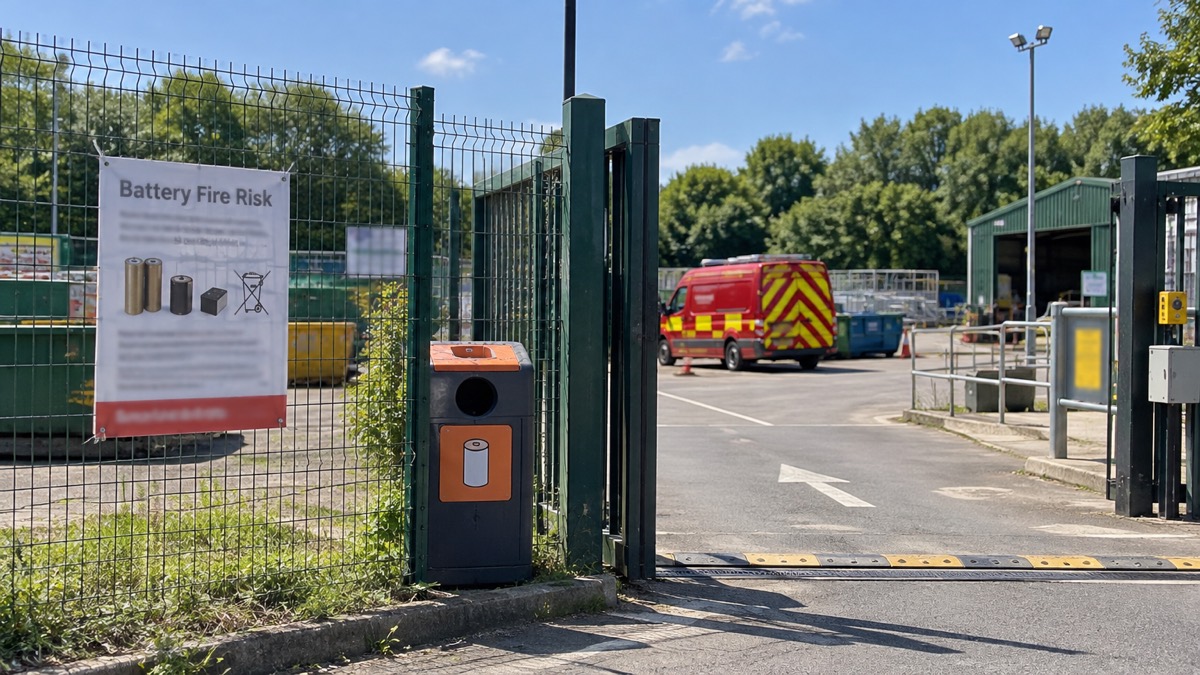
Recycle Your Electricals and the National Fire Chiefs Council (NFCC) launched a Stop Battery Fires campaign on 10 May 2024, raising awareness of electricals and battery recycling after over 1,200 fires in the waste system in the last 12 months, compared with 700 in 20221. The NFCC describes this as an increase of 71%1.
A survey of local authorities across the UK found that 94% of them said fires caused by batteries in the waste stream were an increasing challenge1. Research for Recycle Your Electricals, conducted by Opinium among a nationally representative sample of 4,000 UK adults between 2 and 5 April 2024, found that 6bn batteries were thrown away in the last year, over 3,000 a minute, including over 1.1bn electricals containing hidden lithium-ion batteries and 260m vapes1. UK adults admitted that on average they had binned at least 24 batteries, including fifteen electricals containing batteries and 9 loose batteries, and nearly half did not know or had not heard that electrical items containing chargeable built-in batteries can catch fire if crushed or damaged1.
The NFCC says lithium-ion batteries are hidden inside many everyday household electricals, from laptops, mobile phones and tablets to electric toothbrushes, vapes and earpods, and can become crushed or damaged in bin lorries or waste sites if they are not recycled1. It says such fires can lead to explosions and chemical exposure, and that the batteries create their own oxygen, which means they can keep reigniting, prolonging incidents with smoke and fumes affecting neighbouring areas and communities for periods of up to a week1.
Phil Clark, Emerging Energy Technologies Lead for the NFCC, said:
"Fires involving the incorrect disposal of lithium-ion batteries are a disaster waiting to happen."
The campaign also sets out the wider costs. Professor Frank Kelly of the School of Public Health at Imperial College London found that fires at waste sites in Herne Hill and Brentford contributed to the local pollution burden, with the Herne Hill fire clearly leading to exceedances of the WHO health based guideline for PM2.5, affecting thousands of residents who were advised to close windows1. James Nicholson, Chief Claims Officer at Zurich UK, said the insurer has seen some cases cost in the region of up to £20 million1. One fire in Herne Hill, South London, took 5 hours to get under control and burned for 4 days, requiring 15 fire engines and roughly 100 firefighters, and Hertfordshire Fire Service reported a recent waste fire, where lithium-ion batteries were suspected to have played a significant contributory role, which required over 24 hours of fire service resources1.
Why it matters for households
The campaign concerns what households put in their rubbish. Recycle Your Electricals says batteries of all kinds, whether loose or hidden in electricals, should never be binned and always recycled1. Its advice is to remove batteries from electricals where possible and recycle the batteries and electricals separately at a local recycling centre, supermarket or other battery recycling point, and, if the batteries cannot be removed, to recycle the electricals at the nearest electrical recycling point1. It directs people to its Postcode Locator to find the nearest electrical and battery recycling point1. Professor Kelly advised residents to avoid opening windows while local air pollution concentrations are elevated and said everyone should wear a mask if they absolutely must venture outside while a fire is burning, with local air quality status available at www.londonair.org.uk1. Households can find general preparation guidance in the home emergencies hub.
What happens next
No further dates or stages for the campaign have been reported.