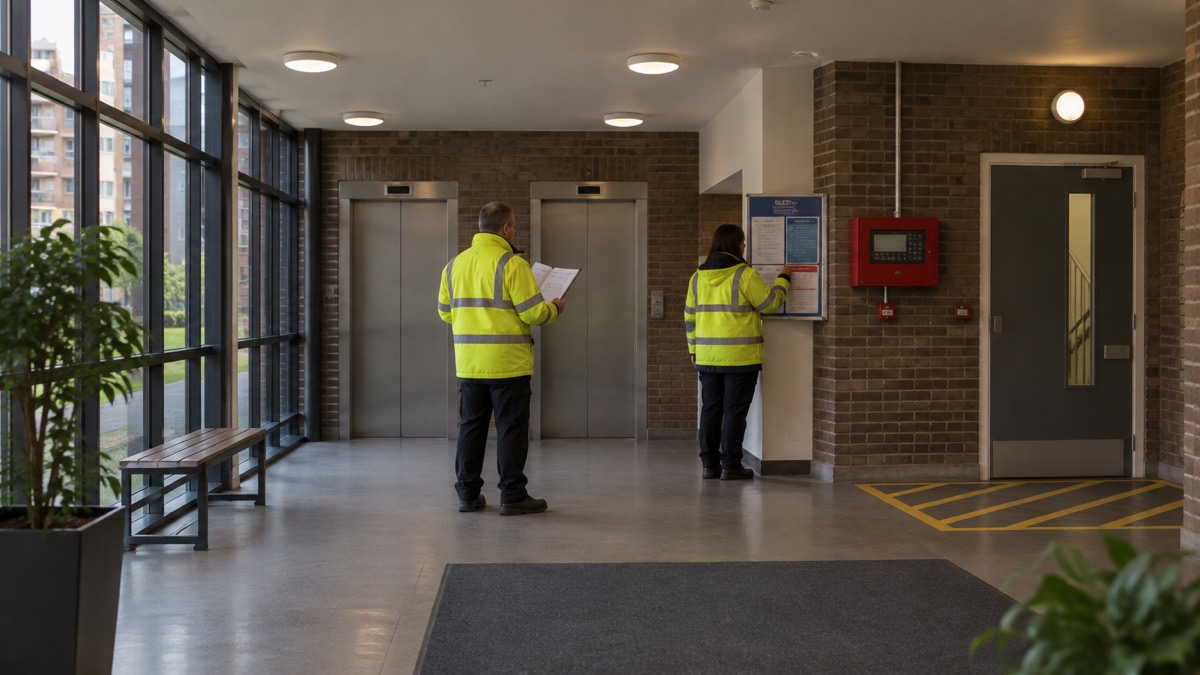
The Fire Safety (Residential Evacuation Plans) (England) Regulations 2025 came into force in England on Monday 6 April 20261. They introduce a process known as Residential Personal Emergency Evacuation Plans (RPEEPs), which requires the Responsible Person for certain residential buildings, usually the building owner, landlord or managing agent, to identify residents who may need support to leave the building in a fire and to plan for their evacuation2. The regulations were laid on 4 July 2025, and statutory guidance for Responsible Persons was published on 2 December 20253.
The duties apply to buildings containing two or more domestic premises that are at least 18 metres above ground level or have at least seven storeys, or that are more than 11 metres in height and operate a simultaneous evacuation strategy, meaning all residents should leave if there is a fire2. A "relevant resident" is someone who lives in the building as their only or principal home and whose ability to evacuate without assistance is compromised by a cognitive or physical impairment or condition3. Fire services give examples including reduced mobility, hearing or sight impairments, long-term health conditions and cognitive conditions affecting awareness or decision making2. Surrey County Council also lists a temporary physical illness such as a broken leg1.
Under the regulations the Responsible Person must use reasonable endeavours to identify relevant residents, offer each of them a person-centred fire risk assessment, agree a written emergency evacuation statement where the resident wishes, put in place reasonable and proportionate measures, prepare a building-wide emergency evacuation plan, and share a limited set of information with the fire and rescue service only with the resident's explicit consent2. The information shared is confined to the flat number, floor number, a basic indication of the assistance likely to be required and whether an evacuation statement exists; no medical or personal information is shared2. Assessments and arrangements must be reviewed at least every 12 months, or sooner if circumstances change2.
"The decision as to whether to participate in the Residential PEEPs process lies with the resident; a resident cannot be compelled to engage with Residential PEEPs."
| Item | Detail |
|---|---|
| In force from | 6 April 2026, England only3 |
| Buildings covered | 18 metres or 7 storeys or more with two or more domestic premises; or more than 11 metres with a simultaneous evacuation strategy2 |
| Who is a relevant resident | Lives there as only or principal home; evacuation without assistance compromised by a cognitive or physical impairment or condition3 |
| Information shared with fire service, with consent | Flat number, floor number, basic indication of assistance needed, whether an evacuation statement exists2 |
| Review | At least every 12 months, or sooner if things change2 |
Why it matters for households
The change affects households in covered high-rise buildings in England where someone would need help to get out in a fire, from 6 April 20261. Participation is voluntary: residents cannot be forced to take part, cannot be compelled to agree an evacuation statement, and can withdraw consent to information sharing at any time2. The government factsheet states there is no explicit requirement for a resident to share medical records or specific information with the Responsible Person3. On costs, the factsheet says the Responsible Person must implement reasonable and proportionate measures except where costs would fall to the resident and the resident declines to pay, in which case the resident may decline the measures or equipment3; fire services state a resident cannot be made to pay for a measure if they do not want to or cannot afford to2. Some measures may be eligible for the means-tested disabled facilities grant if they meet the conditions3. Fire services stress that residents should still phone 999 if there is a fire2. Surrey Fire and Rescue Service says it is reaching out to Responsible Persons in Surrey to ensure the work is undertaken, and that residents can also approach their Responsible Person directly1. Cornwall Fire and Rescue Service asks residents not to contact it to request an RPEEP, saying the first point of contact should be the Responsible Person for the building6. Suffolk Fire and Rescue Service notes that Home Fire Safety Visits remain available and are not replaced by these regulations5. How personal information may be handled by responders in an emergency is set out in the guide to sharing personal data in an emergency, and the wider system is described in how the UK prepares for emergencies.
What happens next
Responsible Persons were required to have the necessary processes and arrangements in place from 6 April 20265. Assessments and evacuation statements must be reviewed no later than 12 months after first being recorded, and before the end of every 12 month period thereafter, or sooner if there is reason to believe they need updating, for example after major changes to the building3. Fire and rescue authorities have powers to enforce compliance with the duties under the Fire Safety Order, and the government states there is no expectation that a fire and rescue authority will arbitrate in disagreements between a Responsible Person and a resident3. Residents in buildings of 18 metres or more can raise building safety concerns with the building's Accountable Person and, if not resolved, with the Building Safety Regulator under the Resident's Voice complaints procedure3.
Sources (6)
- Fire safety legislation for high rises: advice for occupants - Surrey County Council, surreycc.gov.uk
- Cheshire Fire & Rescue Service - Residential Personal Emergency Evacuation Plans (RPEEPs), cheshirefire.gov.uk
- Residential PEEPs: Factsheet - GOV.UK, gov.uk
- Residential Personal Emergency Evacuation Plans (RPEEPs) - North Yorkshire Fire & Rescue Service, northyorksfire.gov.uk
- suffolk.gov.uk, suffolk.gov.uk
- Residential Personal Emergency Evacuation Plans (RPEEPs) - Cornwall Council, cornwall.gov.uk
 UK Emergency Preparedness Guide