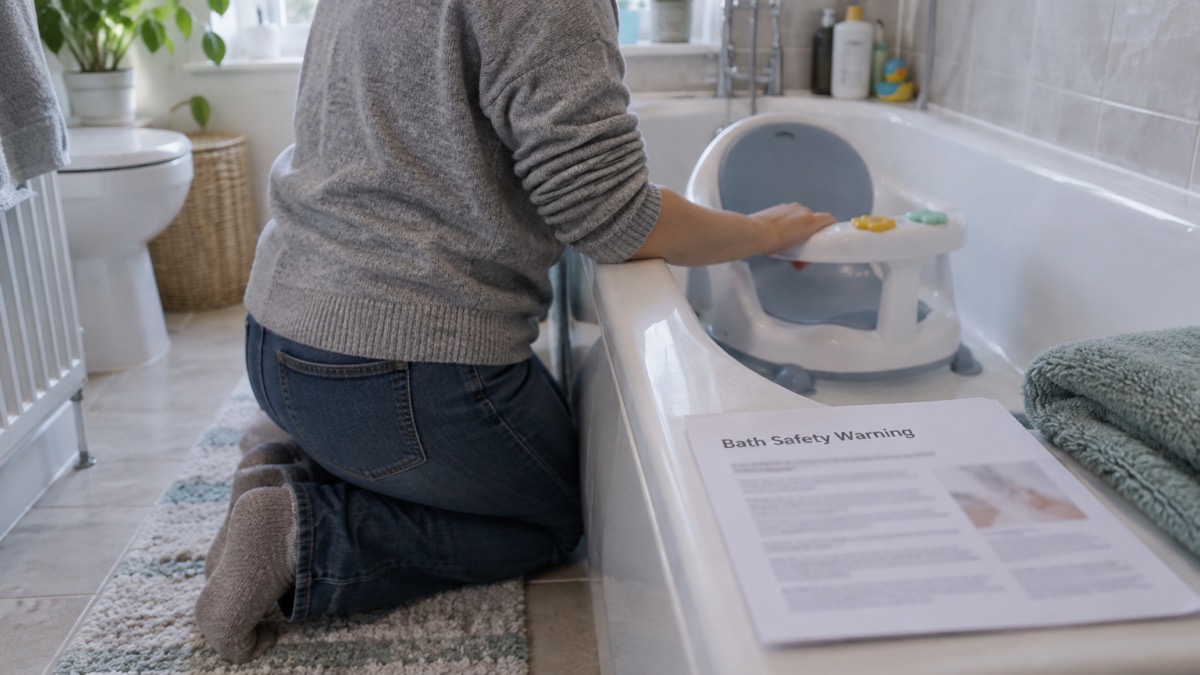
The Child Accident Prevention Trust (CAPT) issued a press release on 13 July 2023 reporting that the number of children drowning in the bath increased from 4 in 2019-20 to 12 in 2021-221. Seven of the deaths were of babies under one, and in five cases bath seats were being used1.
In the majority of cases, 82%, the child had been left alone in the bath1. CAPT listed the most common reasons given: taking a phone call, leaving the room to get something such as a towel, confusion about who was supervising the child, or attending to a sibling or other young children1. The release said the findings prompted a reminder that drowning happens quickly and silently, and that babies should be kept in arms' reach whenever they are in water, and that bath seats are not designed as safety devices and babies should not be left alone in them1.
The release was published weeks after a coroner issued a warning to parents about bath seats, following the death of a nine-month-old baby found drowned in a few centimetres of bath water1. According to the release, the boy had been left in his bath seat for a few minutes while his mother fitted a plug-in diffuser in his bedroom; she found him face down with the seat unfixed, though it had been firmly attached to the bath when she left1.
"It's simply not safe to leave your baby or toddler alone in the bath. Stay within arm's reach all the time while they're in water. Baby bath seats are designed to make bathing easier but they won't keep your child safe. Your baby needs your arms close by for that."
Giles Haythornthwaite, Paediatric Emergency Medicine Consultant at Bristol Royal Infirmary, said in the release that it was unclear what had caused the recent rise, and that it was possible it was due to an increase in the use of bath seats with an unforeseen knock-on effect in causing reduced parent supervision1. He said a baby bath seat might help make bath time easier but was not a replacement for the constant supervision of small children and babies while they are bathing1.
Why it matters for households
The figures cover children's deaths in the bath, a setting most households treat as routine. CAPT's stated reasons for leaving a child alone, a phone call, fetching a towel, uncertainty over who is watching the child, or seeing to another child, are ordinary events in family homes1. The charity's position is that supervision, not equipment, keeps babies safe: it says bath seats can topple or a baby can slip out, and that a baby should not be left alone in one even for a moment1. It also says a toddler should not be relied on to watch a baby, as they are too young to understand the danger1. Its advice includes getting everything needed ready before bath time and staying with a baby or young child at all times they are in the bath, within arm's reach1. Haythornthwaite said it was important that parents receive good bathing safety advice from midwives and health visitors, particularly on constant supervision1.
What happens next
No further steps, reviews or timetable have been reported. CAPT points readers to its drowning guidance for further water safety tips1. General household planning for home accidents is covered in the guide to home emergencies.