

Morningstar makes solar charge controllers: the box that sits between a solar panel and a battery and stops the panel overcharging it. For a household preparing for power cuts, that is the piece that lets a small solar set-up keep a battery topped up through a long outage, charging phones, a torch or a radio without the mains. The maker's own manual for its SunSaver Duo controller sets out how the unit regulates charging, what its display tells you, and a five-year warranty from the date of shipment to the original end user1.
The company has been operating since 1993 and describes itself as employee-owned. Its reliability claim is its own: it states that its hardware failure rate is less than 0.4%, and that over four million of its products are in the field. Those are maker figures, not independent test results, and they describe a product line rather than your particular unit. Treat them as a reason to read the manual carefully, not as a promise that the kit will work on the night the power goes off.
What follows covers what Morningstar makes that bears on emergency power, what its reliability figures do and do not mean for a household, what to check before you rely on the kit, and how support, warranty and safety notices work. It is written for someone building a plan around a power cut, a storm or a flood, not for someone designing a permanent off-grid installation.
Morningstar: an employee-owned maker operating since 1993
Morningstar has been in business since 1993 and is employee-owned, meaning the people who work in the company hold it rather than outside shareholders. For a household, ownership matters less than what it produces: a settled product line, published manuals and a warranty written down in those manuals. The SunSaver Duo manual, for example, carries a revision number, MS-001164 v2.1, so you can tell whether the documentation you have matches the unit you own1.
The kit is not made in the UK. The manual states the SunSaver Duo is designed in the U.S.A. and assembled in Taiwan1. That does not change how it works in a British home, but it does shape support: your first point of contact is the manual and the retailer you bought from, and the warranty terms are the maker's, set out in its own documentation.
For emergency planning, the useful question is not who owns the company but whether the kit will still be serviceable years after you install it. A long trading history and a published manual help here. So does keeping the manual with the installation, because the settings, the display codes and the warranty conditions all live in that document.
What Morningstar makes for UK households
Morningstar's products for a household are the parts of a small solar charging system: a charge controller, a remote meter to read what the system is doing, and a temperature sensor so the controller charges the battery correctly in the cold. They are not a complete power station. They are the control layer between a panel and a battery, and they only help in an emergency if the rest of the system, the panel and the battery, is in place and working.
That places them in the backup power side of a household plan, alongside the batteries, chargers and power banks that keep phones and torches alive during an outage. If you are working out how much power you need and what to run from it, the self-reliance guide covers the wider picture of off-grid power at home. The one product with its own page here is the Morningstar SunSaver Duo.
| Kit type | What it does for the household | What it does not do |
|---|---|---|
| Charge controller (SunSaver Duo) | Regulates charging from a solar panel to a battery, with voltage accuracy of 1.0% and current accuracy of 2.0%1 | Does not store energy or supply mains power on its own |
| Remote Meter RM-1 | Lets you read the system from inside, supplied with 32.8 ft (10.0 m) of cable, a mounting frame and screws1 | Does not charge anything itself |
| Remote Temperature Sensor RTS | Feeds battery temperature to the controller, with a standard cable of 25 ft (7.6 m) that can be extended to 100 ft (30 m) or longer1 | Does not measure anything else in the house |
The SunSaver Duo charge controller
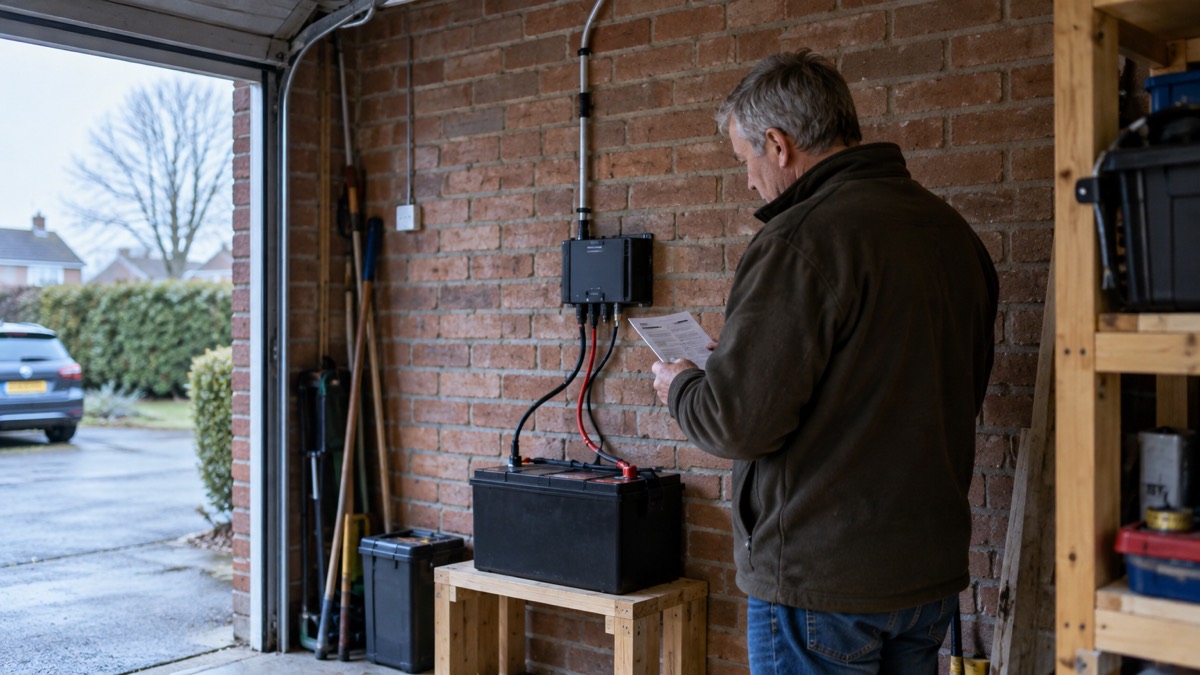
The SunSaver Duo is the core product described in the material here. It regulates charging using 300 Hz PWM or slow switching at 10 Hz maximum, and its accuracy figures are 1.0% for voltage and 2.0% for current1. In plain terms, it holds the battery at the right charge rather than letting the panel push it up and down with the weather.
Its charging behaviour is set out in the manual. For flooded batteries it runs an equalise cycle every 28 days, a boost interval of 28 days and a boost time of 2 hrs; for sealed batteries those cycles do not apply. Both battery types move to float after 1 hr1. If you are relying on the kit through a winter outage, those settings are what keep the battery healthy between sunny days.
The display is simple. At night the LED status is off with a 5 second heartbeat1. A meter can be connected through a 6-pin RJ-11 Meterbus connection1, which is how the Remote Meter RM-1 reads the system.
The Remote Meter RM-1 and Remote Temperature Sensor RTS
The Professional Series is the maker's range of accessories that support a controller installation. The Remote Meter RM-1 is supplied with 32.8 ft (10.0 m) of cable, a mounting frame and mounting screws, so it can be sited indoors while the controller stays near the battery1. For a household, that means you can see the state of charge without going out to a shed or garage in bad weather.
The Remote Temperature Sensor RTS has a standard cable length of 25 ft (7.6 m), and this can easily be extended to 100 ft (30 m) or longer1. It tells the controller the battery's temperature so charging is adjusted for the cold, which matters in an unheated outbuilding in winter.
Professional Series: over four million products in the field
The maker states that over four million of its products are in the field. That figure is a count of units sold and put into service worldwide, not a count of UK households, and it is the company's own number. Its practical value to you is indirect: a product line with a large installed base tends to have manuals, accessories and spare parts that are easier to find years later.
The Professional Series accessories are part of that picture. The RM-1 and the RTS are the kind of parts that make a system usable day to day, and their cable lengths, 32.8 ft (10.0 m) for the meter and 25 ft (7.6 m) standard for the sensor, are the specifications that decide whether they will reach where you want them1.
What the field figure does not tell you is how any one unit will behave in a British power cut. It is not a test result and it is not a statement about your installation. Use it as a sign that the product line is established, and rely on your own checks, the manual and a fallback plan for the night the power goes off.
Hardware failure rate: less than 0.4%, by the maker's own figure
The maker states a hardware failure rate of less than 0.4%. That is the company's own figure, published by the maker, and it should be read as a claim about its products as a whole rather than a guarantee for the unit in your cupboard. No independent test result is given here, so the honest position is that the figure is the maker's and the risk to your household is not zero.
That matters for planning. A charge controller is one part of a chain: panel, cable, controller, battery, and whatever you plug in. A failure anywhere in that chain leaves you without power, and the controller's failure rate says nothing about the rest. Keep the fallback simple: a torch with spare batteries, a charged power bank and a plan for charging phones elsewhere if the solar set-up is out of action.
What the maker's reliability figures mean for your household
Reliability figures are useful for choosing between approaches, not for deciding whether to prepare. A household that installs a solar charging set-up should still hold the basics that every emergency kit list in the UK includes: a battery torch with spare batteries or a wind-up torch, a first aid kit, bottled water and ready-to-eat food, and a phone charger or power bank2. Those lists come from councils and the Scottish and Northern Irish preparedness services, and they apply whatever brand of controller you own.
The same applies to the things you rely on medically. Scottish guidance on home emergency kits includes a mobile phone charger, equipment you rely on with spare chargers or power banks, and essential medication, medical information and prescriptions2. If someone in the house depends on powered equipment, the controller is one option among several and the plan needs a backup that does not depend on the sun.
Flooding is the other reason to think about where the kit sits. One in six homes in the UK is at risk of flooding5, and a controller and battery installed at floor level in a garage or outbuilding are vulnerable. Site them above likely flood level and keep the manual somewhere dry.
What to check before relying on Morningstar kit in an emergency
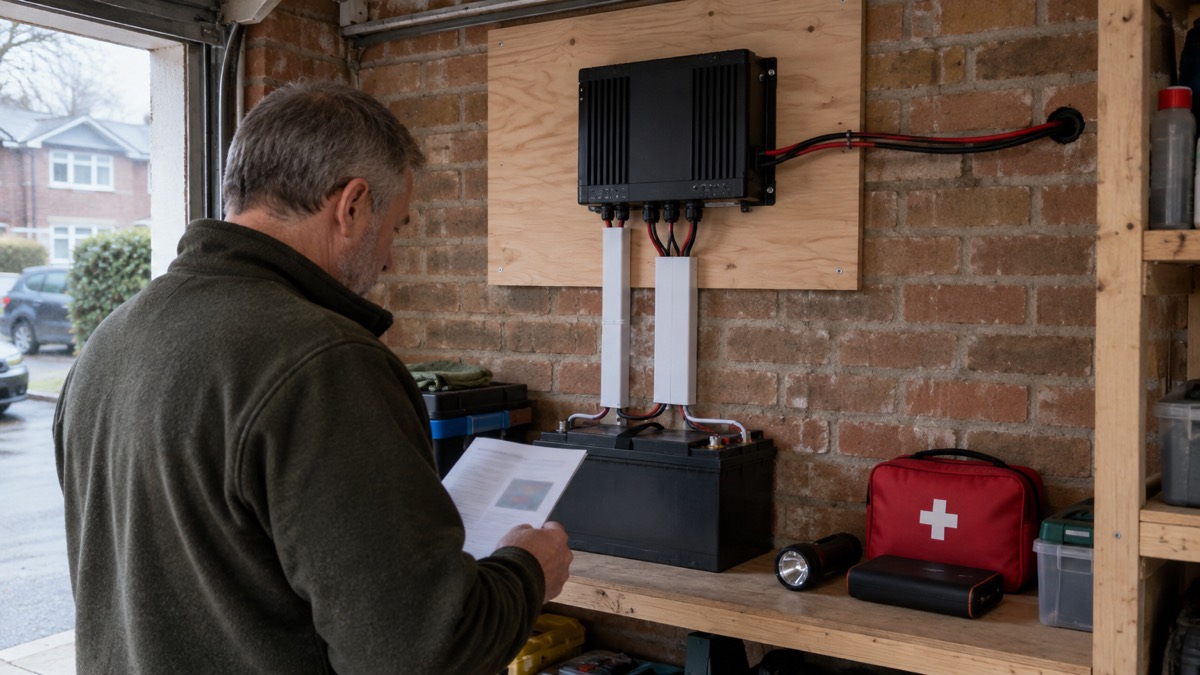
Before you count on any solar charging set-up in an outage, work through the same checks you would make on any household kit. The maker's manual is the first document: check the revision number, MS-001164 v2.1 for the SunSaver Duo, so you know the instructions match the unit1. Then check the installation against the manual's settings for your battery type, because the equalise and boost cycles differ between flooded and sealed batteries1.
- Read the manual before the emergency, not during it. The display codes, the night heartbeat and the Meterbus connection are all explained there1.
- Check the battery type setting. Flooded batteries get a 28-day equalise and boost cycle; sealed batteries do not1.
- Check the cable runs. The RM-1 comes with 32.8 ft (10.0 m) of cable and the RTS with 25 ft (7.6 m), extendable to 100 ft (30 m) or longer1.
- Check the rest of your kit. A torch, spare batteries, a first aid kit and a phone charger belong in every household kit2.
- Check the site. Keep the controller and battery above likely flood level, given that one in six UK homes is at risk of flooding5.
Support and warranty
The SunSaver Duo carries a warranty of five years from the date of shipment to the original end user1. The manual sets out what the warranty excludes: damage by accident, negligence, abuse or improper use; PV or load currents exceeding the ratings of the product; unauthorised product modification or attempted repair; and damage occurring during shipment1. Read those conditions before you install, because exceeding the current ratings voids the cover.
For a household, the practical steps are to keep proof of purchase, keep the manual with the installation, and go back to the retailer first if something goes wrong. Independent consumer guidance on buying equipment for the home advises checking that there is a guarantee and a returns policy in case it does not meet your needs6. That advice is written about telecare products but the principle holds for any household kit.
If you are buying for an older or disabled household member, the same guidance applies: check the guarantee and returns policy before you rely on the equipment6. And follow the manufacturer's safety advice for any equipment used in the home, as fire and rescue services advise7.
Safety notices and recalls
Manufacturers are responsible for making a product recall and alerting you if there is a safety concern with goods they produce8. That responsibility only works if the maker can reach you, which is why registering an appliance matters: registering means manufacturers can tell you if there are any issues with your products9, and it ensures they can contact you if a safety repair is needed10.
To check whether something you own has been recalled, use Electrical Safety First's online product checker to see if any of your appliances have been recalled11. The Office for Product Safety and Standards also issue recall and alert notices on their website12. For white goods in particular, registering the appliance means the manufacturer can contact you immediately to arrange a replacement or to carry out work to make it safe13.
The same discipline applies to the rest of a household's electrical kit. Make sure an appliance has a British or European safety mark when you buy it14, and check for product recalls or safety notices related to your specific model from time to time16. If you find it hard to manage with all the items you have, help is available from Hoarding UK17.
Sources (17)
- SunSaver Duo Operation Manual, Morningstar, 2025
- Emergency kit, Ready Scotland, 2026
- Get help and advice in an emergency, Lincolnshire County Council, 2026
- Preparing for an emergency, Nottinghamshire County Council, 2026
- Flooding, Wiltshire and Swindon Prepared, 2026
- Telecare, Age UK, 2026
- Healthcare equipment, Devon and Somerset Fire and Rescue Service, 2025
- Product recalls, Bath and North East Somerset Council, 2026
- Total recalls: making white goods safer, London Fire Brigade, 2026
- Maintain appliances and recalls, Greater Manchester Fire and Rescue Service, 2026
- Stay fire safe, Greater Manchester Fire and Rescue Service, 2026
- Electrical items, London Fire Brigade, 2026
- White goods, Mid and West Wales Fire and Rescue Service, 2026
- Electrical fire safety, Warwickshire County Council, 2026
- Christmas safety tips, Warwickshire County Council, 2026
- Electrical fire safety, Warwickshire County Council, 2026
- Digital easy read fire safety booklet, London Fire Brigade, 2026
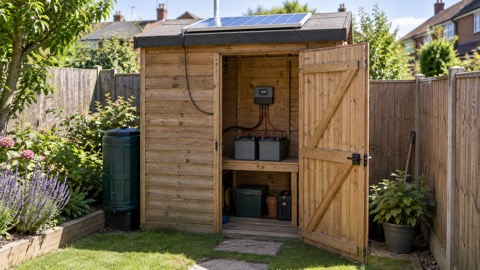 Morningstar SunSaver Duo