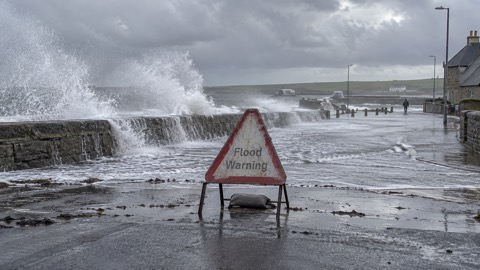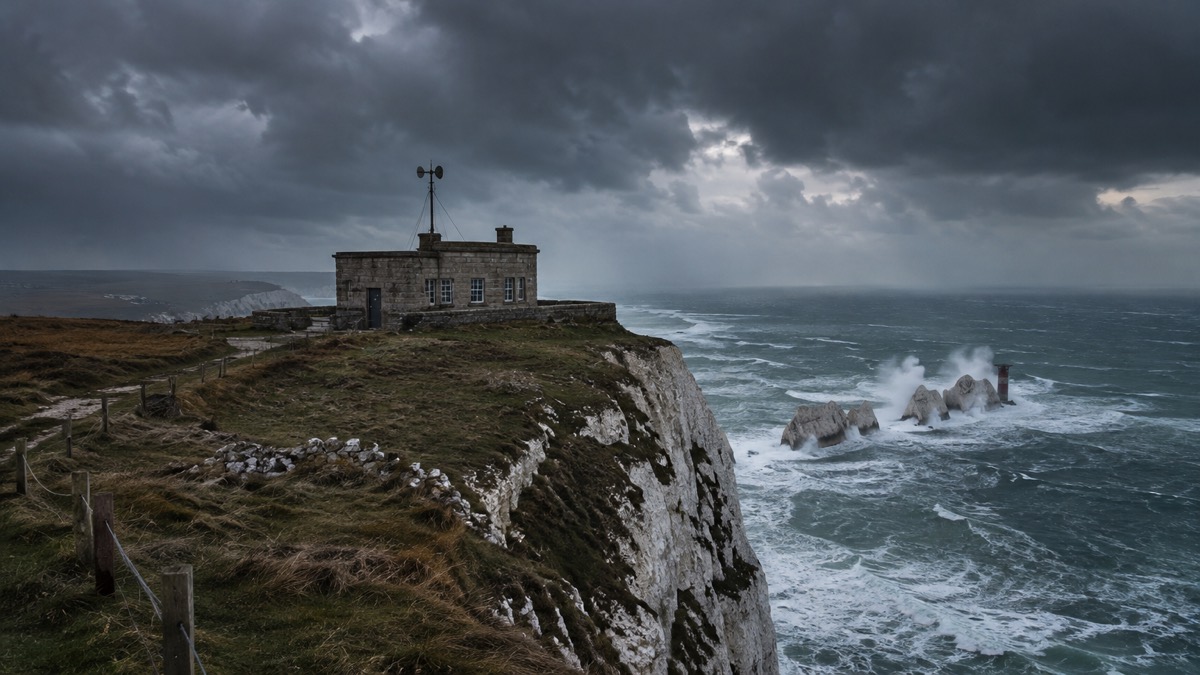
Storm Eunice brought a gust of 122mph to Needles Old Battery on the Isle of Wight on 18 February 2022, setting a new England gust speed record, according to the Met Office1. The previous record was 118mph at Gwennap Head in Cornwall on 15 December 19792. Eunice was the most severe and damaging storm to affect England and Wales since February 2014, and the first time a red warning for wind had been issued covering south-east England, including London2.
Eunice was named on 14 February 2022, the first time two storms had been named at once since the storm naming scheme began in 2015; Dudley was named the same day1. Dudley affected the UK on 16 to 17 February and Eunice on 18 February, with Franklin named on 20 February and affecting the UK on 20 to 21 February1. Three named storms affected the UK within a week, the first time this had happened since storm naming was introduced in 2015/20162. The Met Office records that the season saw six storms named over the year1.
"Three storms (Dudley, Eunice and Franklin) were named in the one week in February 2022, with two red weather warnings and some of the highest wind speeds we've seen recorded in over 30 years."
Peak gusts during Eunice, as recorded by the Met Office2:
| Location | Gust |
|---|---|
| Needles Old Battery, Isle of Wight | 122mph |
| Isle of Portland, Dorset | 90mph |
| Mumbles Head, West Glamorgan | 87mph |
| Aberdaron, Gwynedd | 84mph |
| Pembrey Sands, Carmarthenshire, and Chivenor, Devon | 83mph |
| Charlwood, Surrey | 78mph |
| Boscombe Down, Wiltshire | 77mph |
Winds gusted widely at over 69mph across southern England1. Needles Old Battery recorded an hourly mean wind speed of 94mph for the hour to 1100 UTC at the height of the storm2. The Met Office says wind speeds as high as this are extreme for southern England and south Wales and might be regarded as approximately 10kt higher than those experienced during a more typical winter storm2. Many stations recorded their highest February gust since 26 February 1990, and some their highest February gust on record, such as Chivenor (37 years) and Thorney Island, West Sussex (33 years)2.
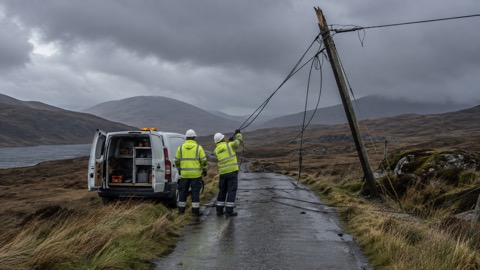
Four people died in the UK and Ireland as a result of falling trees2. Over a million homes were left without power as strong winds brought down trees, with ongoing power cuts lasting several days2. Schools and businesses were closed across Wales and the worst affected areas of England2. The Port of Dover was temporarily closed to all shipping, and the Humber bridge and both Severn bridges were closed for the first time in their history2. Several hundred flights in the UK were cancelled2. Roofs were torn off several buildings, the top of a church spire in Wells, Somerset was blown down and the Millennium Dome in London was damaged2. Thousands of trees were felled2.
Across the three storms, the persistent heavy rain brought significant flooding problems in parts of England, Wales and Northern Ireland; around 400 properties were flooded, with severe flood warnings issued for several major rivers including the Severn2. In Yorkshire, the River Wharfe burst its banks and the lines at Rotherham Central station were flooded2. Snow caused significant transport disruption in Scotland and northern England, with depths on 19 February including 11cm at Oyne, Aberdeenshire, and 5cm at Copley, County Durham2. Storm Dudley left thousands of homes across parts of Cumbria, Yorkshire and Lancashire without power, and disrupted rail lines heading north to Glasgow and Edinburgh2.
Why it matters for households
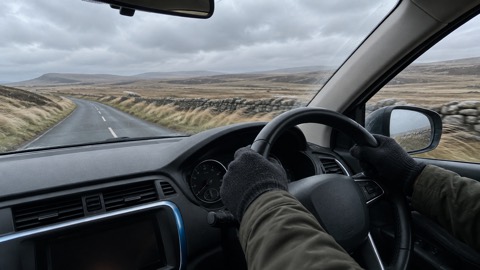
The Met Office record shows what a named storm at the severe end of the range does to household services: power lost for several days for over a million homes, roads blocked by fallen trees, bridges and ports closed, and trains and flights cancelled2. The red warning for wind covering south-east England, including London, was a first2. The season also shows that storms can arrive in quick succession: Franklin's strong winds hampered clean-up operations following Eunice2. The Met Office's account of driving in strong winds is set out in its guidance on how to drive safely in strong winds, and its wider material is collected in the storms and snow hub.
What happens next
The Met Office summary of the 2021/22 season lists the storms named over the year and the unused names: Gladys, Herman, Imani, Jack, Kim, Logan, Méabh, Nasim, Olwen, Pól, Ruby, Seán, Tineke, Vergil and Willemien1. No further steps for households arising from Storm Eunice have been reported.
Sources (2)
- UK storm season 2021/22 - Met Office, weather.metoffice.gov.uk
- metoffice.gov.uk, metoffice.gov.uk
 Driving in Strong Winds