The National Energy System Operator (NESO) published its final report on the North Hyde Substation outage on 2 July 2025, having reviewed nearly 900 pieces of evidence1. The review was commissioned by the Department for Energy Security and Net Zero and Ofgem1. It follows an interim report published on 8 May that set out the timeline and sequence of events1.
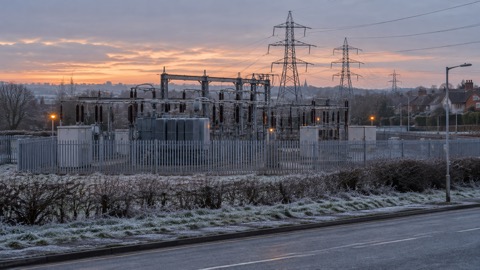
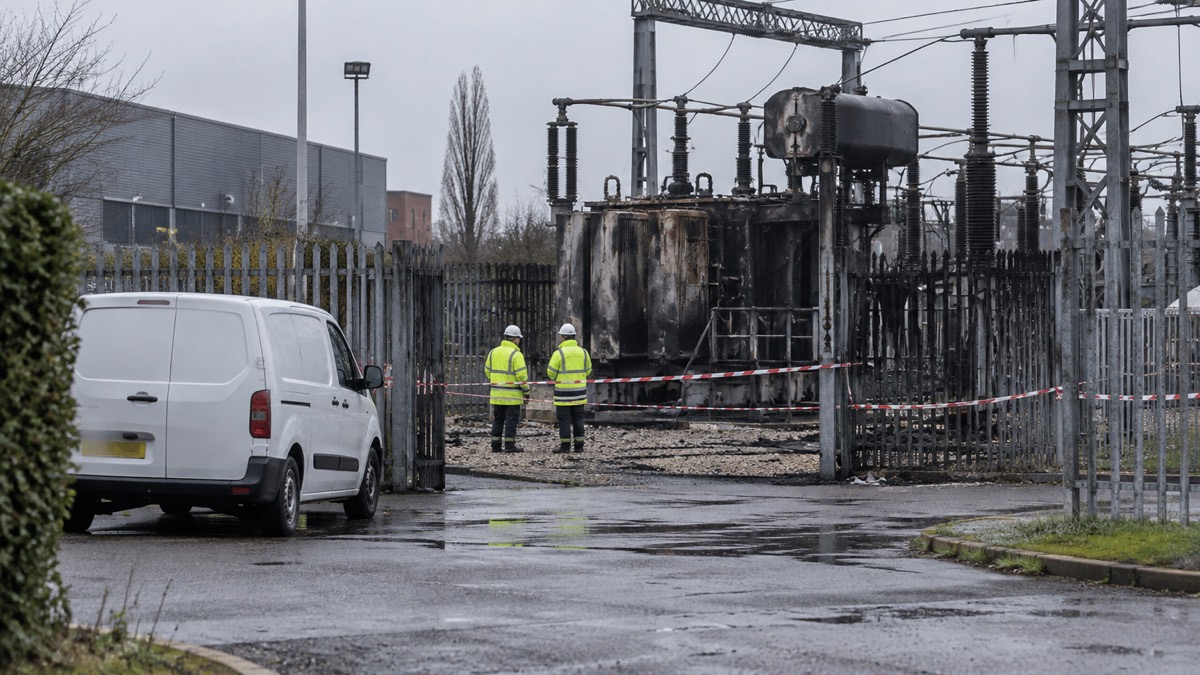
The incident began at 23:21 on Thursday 20 March, when one of three supergrid transformers at the 275kV substation, SGT3, and its connecting circuit tripped2. A catastrophic failure on one of the transformer's high voltage bushings caused the transformer to catch fire, most likely caused by moisture entering the bushing1. An elevated moisture reading had been detected in oil samples taken in July 2018, but mitigating actions appropriate to its severity were not implemented1. At 23:49, 28 minutes after the loss of SGT3, protection systems switched the adjacent transformer SGT1 out of service, and the loss of the remaining transformer followed, cutting all supplies from the site2.
The outage led to 71,655 domestic and commercial customers losing power2. This comprised 66,919 customers of SSEN Distribution and an additional 4,736 customers of Independent Distribution Network Operators supplied via North Hyde's 66kV and 22kV substations2. By 12:24, all except two of the 66,919 SSEN Distribution customers had power restored following re-energisation of North Hyde 66kV1. The Metropolitan Police Service declared a major incident at 00:422. Residents living near the substation were evacuated, with some needing alternative accommodation, and three data centres lost power but continued operations using backup generators1.
Heathrow Airport Limited took the decision to close the airport at 01:11 on Friday 21 March, because of disruption to operationally critical systems2. The review found that the design of the airport's private internal network meant the loss of one of its three independent supply points would cut power to some critical systems, and that reconfiguring the network to take power from the other two was estimated to take 10 to 12 hours1. The airport closed for most of 21 March, reopened for some flights late that day and was fully operational from 22 March1.
"The power outage and closure of Heathrow airport were hugely disruptive and our report seeks to improve the way parties plan for and respond to these incidents, building on the underlying resilience of our energy system."
The report makes 12 recommendations under nine themes: asset management systems; maintenance actions; fire and asset risk assessments; site accessibility for emergency services; visibility of total site risk; the Electricity Safety, Quality and Continuity Regulations; incident management protocols; resilience of infrastructure with multiple supply points; and energy resilience of Critical National Infrastructure1. The review also found that energy network operators are not generally aware whether customers on their networks are Critical National Infrastructure, and that such facilities have no priority within the electricity legal or regulatory framework1.
Why it matters for households
The report describes how a single asset failure at one substation removed supply to more than 70,000 homes and businesses, and how the effects reached a hospital, road and rail services and the airport1. It records that restoration for the customers directly supplied by SSEN Distribution was completed within expected timeframes and that communication with domestic customers was effective and timely1. For households, the recommendations on asset management, maintenance and fire risk concern the equipment and sites that supply them, not their own properties. The review notes that some commercial customers reported less coordinated communications than domestic customers1.
What happens next
The government published its response to the NESO report on 18 November 2025, setting out an implementation plan to make progress against the recommendations and a commitment to improve GB energy resilience through an Energy Resilience Strategy3. The plan covers resilience of energy infrastructure, response and restoration, and resilience of critical infrastructure to energy disruption, and was developed with the Energy Resilience Group, a partnership between government, the regulator and industry3. The response applies to England, Scotland and Wales3.
Households who lose supply can find guidance in the power cuts hub, including how to report a loss of electricity by ringing 105 and what food to throw away after an outage.