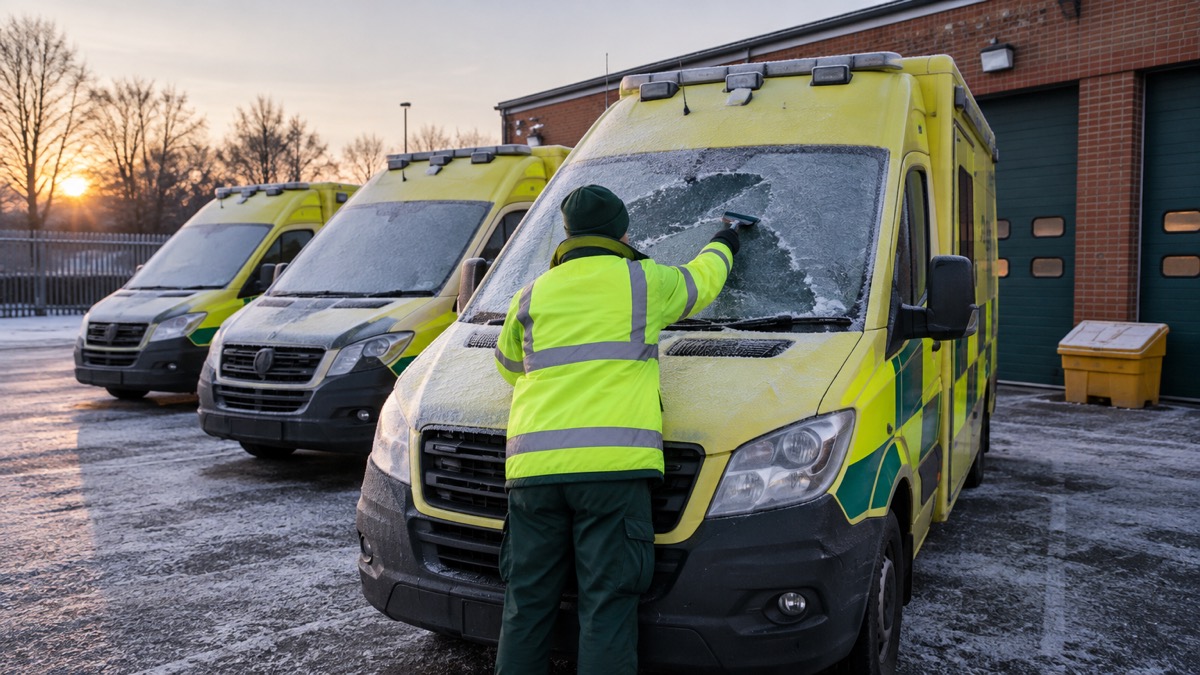
South Central Ambulance Service NHS Foundation Trust (SCAS) reported on 6 January 2026 that calls to its 999 control room rose by almost 20% as a cold spell of weather arrived across its region1. The trust said there were 14,769 calls over the Christmas week of 22 to 28 December, and 17,468 calls in the seven days from 29 December to 4 January1.
SCAS said it prioritises calls to the most sick and injured patients, and that the effect of the higher demand was felt most by patients whose conditions were not serious or life-threatening1. Kirsten Willis-Drewett, assistant director of operations for Thames Valley at SCAS, said waits for less urgent patients had run well beyond the trust's target:
"Whilst we aim to respond to less urgent issues within 2-3 hours, unfortunately for some patients over the last week, that wait time has been significantly longer."
The trust said that over half of patients seen by its ambulance crews and paramedics are not then taken to a hospital or other healthcare setting1. Willis-Drewett urged people who can make their own way to hospital or an urgent treatment centre to do so, saying that arriving by ambulance does not mean being seen quicker than other patients and that a lift from a friend or a taxi may get them there sooner1. For urgent but not emergency help, she directed people to 111.nhs.uk or 111, which asks a few questions about main symptoms and can direct people to the most appropriate local urgent healthcare service or arrange a call back from a doctor, nurse or paramedic1.
SCAS said 999 should be called only for a life-threatening or serious emergency, giving as examples someone not breathing or unresponsive, severe blood loss, serious chest pains, symptoms of stroke, major injury or serious burns1.
| Period | 999 calls to SCAS |
|---|---|
| 22 to 28 December | 14,769 |
| 29 December to 4 January | 17,468 |
Why it matters for households
The figures cover the SCAS region, which includes the Thames Valley, and the week to 4 January1. During that week, households with an urgent but non-emergency problem were told by the trust to use 111.nhs.uk or 111 rather than 999, and those able to travel to hospital or an urgent treatment centre themselves were urged to do so1. The trust's stated response target for less urgent issues is 2 to 3 hours, and it said some patients waited significantly longer than that over the week1. Cold weather is the backdrop the trust gives for the rise in calls; the storms and snow hub covers practical preparation for winter conditions.
What happens next
No further dates or service changes were announced in the trust's statement1.