A home safe is one of those purchases most households only think about after something has gone wrong, or when an insurer asks a question they cannot answer. Chubbsafes is one of the names you will meet while working that out. The company describes itself as one of the world's most trusted safe brands, with a heritage of 190 years in secure storage, and today as part of the Gunnebo family1. For a UK household, what matters is narrower: it makes certified safes for private homes, tested against both burglary and fire, and the certificate on the label is what decides whether your insurer will accept it2.
The practical answer to "should I get one, and does this brand fit?" runs in three steps. First, decide what you are protecting and from what: passports, deeds, jewellery and cash are the usual candidates, and the two risks are theft and fire2. Second, match the certification to the job. Chubbsafes home safes come in certified grades from 0 to 4, and the maker states plainly that only safes with the appropriate grade allow insurance coverage of valuables at their correct value3. Third, tell your insurer before you rely on it, and keep the paperwork.
This page covers what Chubbsafes makes for UK homes, what its certifications mean, how the brand relates to Chubb and Gunnebo, and where to go for support. It sits alongside our wider guide to home security, which covers the rest of the picture: doors, locks, lighting and what to do after a break-in.
What Chubbsafes makes for UK homes
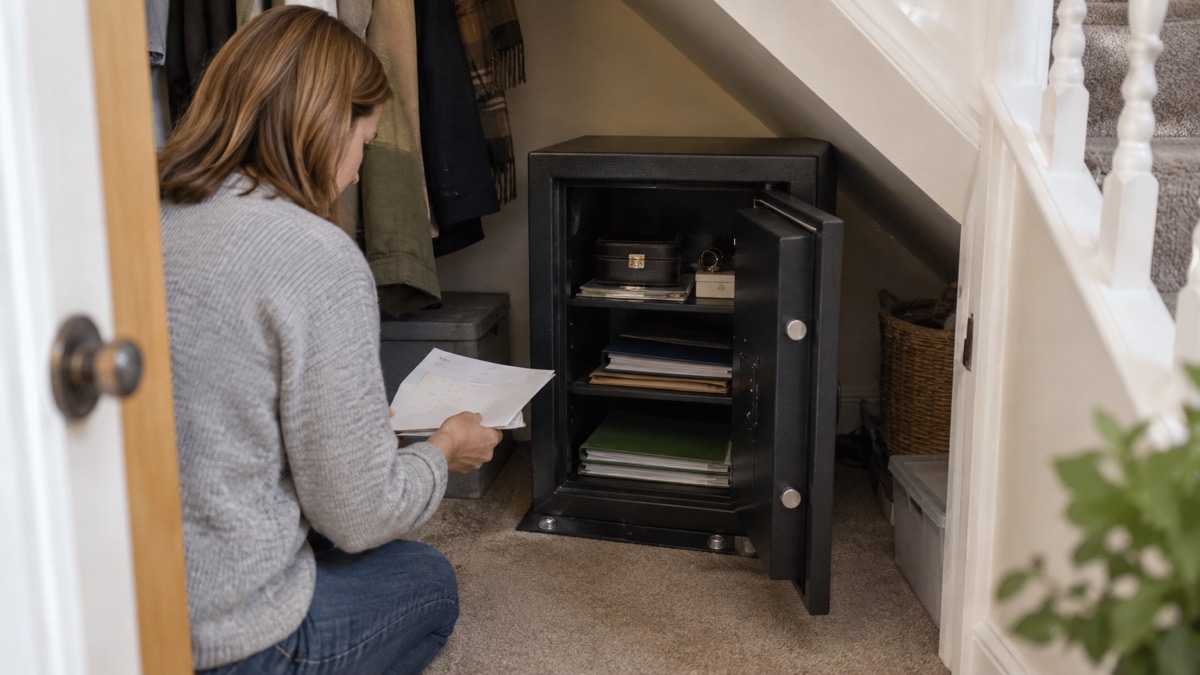
Chubbsafes offers what it calls a trusted range of certified safe storage solutions tailored for private residences, and its graded and fireproof safes are presented as dependable security against burglary and fire2. The home range is not one product but a ladder of them, sorted by how much resistance they offer and how much they hold. The maker's own summary is that you choose from a variety of sizes and certified grades, from 0 to 4, to match your security needs and available space3.
The household case for one is straightforward. A safe keeps valuables such as jewellery, passports and small electronics safe from theft and heat damage, and the fireproof models protect vital documents, data media and irreplaceable records from fire with safes tested to resist high temperatures2. In preparedness terms, that is the point: the documents you would need to rebuild after a house fire or a flood, and the small items you could not replace, sit in one place you can grab or leave behind knowing they are protected.
The range splits roughly into three jobs:
| What it does | Chubbsafes models | Certification | Suits |
|---|---|---|---|
| Basic burglary protection for the home or small office | Air | Burglary resistance; key or electronic lock10 | Cash, collectables, jewellery and other valuables kept at home10 |
| Certified burglary protection with fire resistance | HomeSafe S2 30P, Rhino Mk II, Senator | HomeSafe S2 30P certified EN 15659 for up to 30 minutes fire protection3; Rhino Mk II is a burglary and fire-resistant safe11 | Documents, cash, jewellery, passports; households whose insurer asks for a grade |
| Higher-grade and specialist storage | Consul, Europa T2, Europa Grade V T2, Vega | Europa T2 available in Grades I T2, II T2 and III T212; Europa Grade V T2 at Grade V T213 | Larger valuables, collectables, households needing a stated grade |
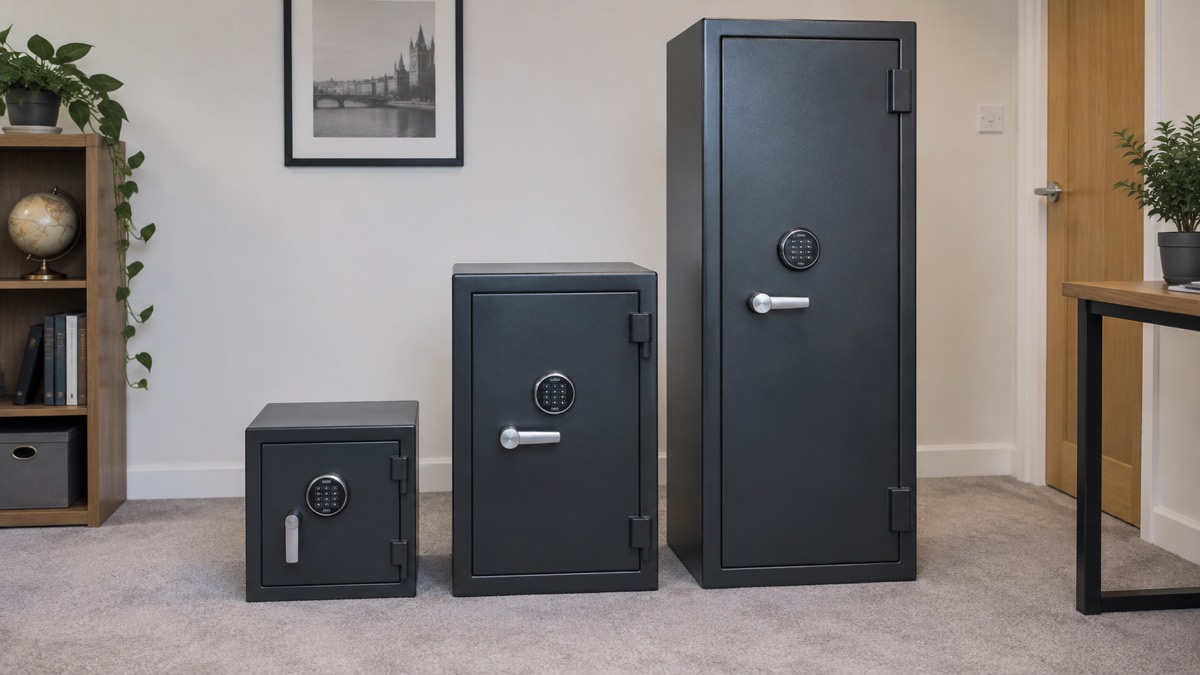
The Air is the entry point: a safe with elementary burglary protection for the home or small office, available with a double-bitted key lock or an electronic lock with a programmable code, and finished with an inner base carpet and key hooks on the electronic models10. The HomeSafe S2 30P is the model most households will meet: a secure cabinet to protect cash, valuable items and important documents in the home and office, with walls and door built from inner and outer layers of steel around a burglary and fire resistant material developed by Chubbsafes3. The Senator is described as ideal for the home or office, with a removable door for easier installation and reduced weight, and internal fittings that include a removable shelf and interior ladder racking5.
Certified safes for private residences
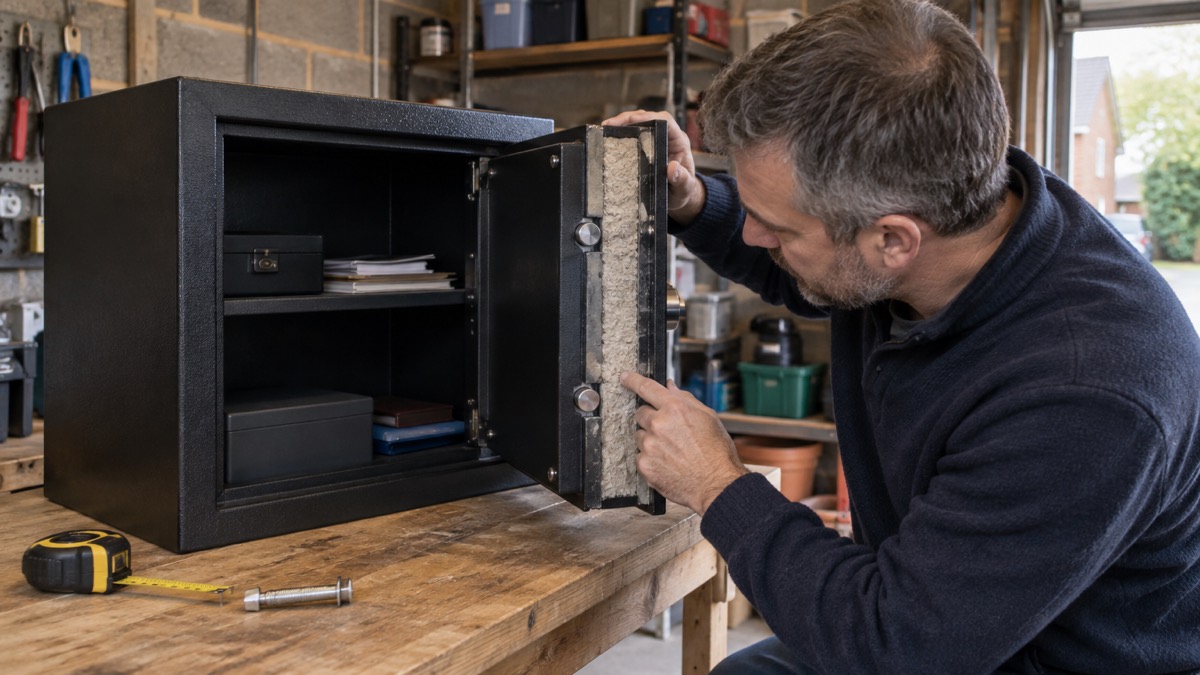
The word "certified" is doing real work on these products, and it is worth knowing what sits behind it. Chubbsafes states that its home safes are independently tested by accredited laboratories in accordance with recognised European and international standards, and that they are built to withstand attempts involving fire, burglary or even explosives3. That is the maker's claim about its own testing regime; the useful part for a household is the standard and grade printed on each model, because that is what an insurer reads.
The certifications you will see fall into three families:
- Burglary, graded: EN 1143-1, used for the higher grades. The Vega meets EN 1143-1 at Grade V and is certified by ECB•S3; the Consul is certified by ECB•S for Grade 0 and I12; the Europa T2 range is certified by ECB•S in accordance with EN 1143-1 T2 across Grades I T2, II T2 and III T28.
- Burglary, classed: EN 14450, used for the lower residential classes. The HomeSafe S2 30P is certified to EN 14450 Class S2, certified by ECB•S, in all sizes4; the Rhino Mk II is certified by ECB•S to EN 14450 Level S211.
- Fire: EN 15659. The HomeSafe S2 30P carries 30 minutes' protection for documents, certified by ECB•S4; the Senator is rated EN 15659 LFS 30P for up to 30 minutes of fire resistance5.
Locks have their own standard. The maker states that all locks are independently tested and certified in accordance with EN 1300, and the Senator carries an EN 1300-certified Class A key lock and or Class B high-security electronic lock7. The HomeSafe S2 30P offers an EN 1300-certified double-bitted key lock4. The Rhino Mk II uses a Sargent and Greenleaf certified three-wheel combination lock, listed under UL Group 2, VdS class 2, CEN B and A2P B11.
Two details are worth knowing because they affect how a safe behaves in a real fire. Chubbsafes says its fireproof safes undergo endurance testing for post-fire conditions, ensuring continued resistance to heat and humidity even after the flames are extinguished6. And the fire ratings vary by model: the Executive range provides fire protection for up to 60 minutes, while the Senator and HomeSafe sit at 306. If documents are the reason you are buying, the fire rating matters as much as the burglary grade, and the maker notes that certified fire resistance is a key criterion for insurance providers when assessing your risk profile15.
ECB•S certification and what it means for home insurance
ECB•S appears on almost every Chubbsafes certificate, and it is the mark an insurer is most likely to recognise. It is a European certification body, and the maker describes its Vega as certified by ECB•S, "one of" the recognised bodies for the standard3. You will see the same body named across the range: the HomeSafe S2 30P at Level S24, the Europa T2 grades8, the Consul at Grades 0 and I12, the Rhino Mk II at S211, and the Vega at Grade V16.
What that means in practice is a chain of evidence. The safe is tested to a European standard, a certification body confirms the result, and your insurer can look up the grade rather than take your word for it. Chubbsafes puts the insurance point directly: certification is a key factor for insurance purposes, as only safes with the appropriate grade allow coverage of valuables at their correct value3. It adds that insurance requirements vary by country, and recommends consulting your local Gunnebo Safe Storage expert to determine the right safe17.
For a UK household, three habits make that chain work:
- Check the grade against your policy before you buy. Ask your insurer what grade or class they require for the value you want covered, then match it to the model's certificate.
- Have it installed properly and keep the certificate. Police Scotland advises having your safe installed by a vetted professional and getting an installation certificate, because your insurance might need this if you make a claim9. The Police Service of Northern Ireland's house security guidance makes the parallel point that you should make sure you have up-to-date contents insurance18.
- Keep the datasheet. The model, grade, lock standard and fixing details are all on it, and they are what a claims handler will ask for.
The Consul carries an extra line that helps here: it is approved by the Association of Insurance Surveyors12. That is a UK body, and the approval is the kind of detail an insurer will recognise without further explanation.
Trading since 1835: 190 years in secure storage
Chubbsafes describes itself as having a heritage of 190 years in secure storage1. Counting back from the present day, that places the firm's origins in the mid-1830s, which is why the brand is often associated with 1835. The company now presents that history as a foundation: as part of the Gunnebo family, it says it combines long-standing expertise with innovation to deliver reliable protection1.
For a household, the age of a safe maker is not sentiment. It bears on three practical things. The first is continuity: a firm that has traded for generations is more likely to still be there to answer a question about a safe bought a decade ago, and to hold the records that go with it. The second is the depth of the range. The catalogue runs from a small home safe with elementary burglary protection up to document protection cabinets certified by Underwriter's Laboratories to UL 72 Class 350 for up to 120 minutes of fire protection, built for banks and financial institutions10. That spread is what lets one maker supply both a household and the institution that insures it.
The third is that the range has been through several generations of standards. The Europa Grade VI manual, for instance, is version 1.0 dated 19 March 2025, while the DuoGuard manual is revision 7.0 dated 15 February 201920. If you inherit or buy a second-hand Chubbsafes safe, the manual revision matters: the instructions that came with your model are the ones to follow, and the maker notes that illustrations in a user guide may differ from the actual product22.
Part of the Gunnebo family
Chubbsafes is part of the Gunnebo family, and that relationship is the practical route to help1. When the maker discusses insurance requirements, it recommends consulting your local Gunnebo Safe Storage expert to determine the right safe17. The Vega datasheet lists an authorised dealer route through chubbsafes.com16. For a household, that means the first call for a question about a model, a grade or a fixing is the dealer or expert named by the maker, not a general retailer.
The engineering side of the family shows in the details. Fixing is taken seriously across the range, which matters because an unbolted safe can simply be carried out of a house. The Senator is ready to use on delivery and can be fixed to the floor, with the required bolts included7. The Europa T2 has base fixing as standard on all models8. The Consul is prepared for base or rear fixing, with an anchoring kit supplied12. The Rhino Mk II adds fixed anti-heeling bolts on both front and rear edges to protect the door from prying attack11. Where the maker's manuals give fixing hole sizes, they are worth checking before the safe arrives: the Vega V lists a 120mm hole fixing layout23, and the DuoForce and DuoGuard both specify 120mm fixing holes24.
Storage inside is thought through too. The Senator is supplied with one shelf as standard and offers dual locking on models 45 to 1907. The Rhino Mk II includes a shelf and a full width drawer on all models11. The Consul can store A4 binders from model 25 upwards12. The Europa Grade V T2 can be equipped with high quality fittings to maximise storage13.
The Chubb name is used under licence
The name on the door and the name on the certificate are not the same company, and it is worth being clear about it. The maker's datasheets state that "Chubb" is the registered trademark of Chubb International Holdings Limited, and that "Chubbsafes" is used under license from Chubb International Holdings Limited7. Other documents in the range put it slightly differently, stating that the Chubb brand is owned by Chubb plc and is a registered trademark used under license11. The Europa Grade VI manual states that Chubbsafes is a registered trademark and used under license20.
The practical upshot: a Chubbsafes safe is a storage product made under licence, not an insurance policy and not a division of an insurance company. If you are looking for cover, you need an insurer, and the safe's certification is what you show them. The two things sit side by side rather than one standing for the other.
That distinction matters most when you are choosing what to put in the safe and what to insure. The maker lists the valuables its models are designed for, and they are consistent across the range: cash, documents, collectables, jewellery and other valuables4. Your insurer decides what they will cover and at what value; the safe's grade is the evidence you supply.
ISO certification and EcoVadis Silver rating
Chubbsafes lists ECB•S certification for insurance, an EcoVadis Silver rating and ISO certification among its credentials17. The ISO side is specific in the product literature: the Fire File 25 is manufactured in accordance with ISO 9001 for quality management systems and ISO 14001 for environmental management systems19. Those are management system standards rather than product tests, but they tell you something about how the factory is run, which is the kind of thing a procurement department at a bank asks before it buys a cabinet.
The environmental paperwork is more visible than you might expect on a safe. Several manuals state that the product complies with the 2011/65/UE directive on hazardous substances, known as RoHS20. The Europa range manual states that the product must be collected separately from household refuse at the end of its useful life, under the WEEE directive24. The Europa Grade VI manual adds that the packaging is fully recyclable20, and the Fire File manual notes that plastic components can go to a plastic recycling process and steel components to a steel recycling process23.
For a household, this is a small but real point about disposal. A safe is heavy steel with fire resistant filling, and it does not go in the wheelie bin. If you are replacing one, ask the dealer about collection at the same time as you arrange delivery.
Staying safe with a home safe
A safe is a piece of heavy equipment, and the risks are physical rather than exotic. The maker's own manuals are the place to start: follow the fixing instructions for your model, use the anchoring kit supplied, and do not improvise a fixing into a floor that will not hold. Where a manual gives a tightening torque, use it; the DuoForce manual specifies 150NM22.
Two further points from the maker's literature are worth keeping. First, illustrations in a user guide may differ from the actual product, so check the model number on your own safe against the manual before following a procedure22. Second, keep the key or combination secure but reachable: the point of a safe in an emergency is that you can get into it, and a key locked in another safe is no help.
Where a safe fits your wider preparations is covered in our guide to home security, which sets out the rest of the measures a household can take, and in getting started, which puts the whole plan in order.
Where to get help and support
Support runs through the maker and its dealer network. Chubbsafes directs owners to their local Gunnebo Safe Storage expert for advice on insurance requirements and the right model17, and its datasheets list an authorised dealer route through chubbsafes.com16. Keep the datasheet, the manual for your model and any installation certificate together with your household paperwork, so that a question about grade, fixing or cover can be answered from one folder.
If you are buying for the first time, the sequence that works is: ask your insurer what grade they require, match it to a model's certificate, arrange installation by a vetted professional, and file the certificate. If you already own one, check the grade against your policy now rather than after a loss.
For the wider picture, our guides to home security and home emergencies cover the risks a safe sits alongside, from break-ins to fire and burst pipes. The Chubbsafes Senator page sets out that model in detail.
Sources (25)
- Chubbsafes home page, Chubbsafes, 2026-08-05
- Home and residential, Chubbsafes, 2026-09-01
- Home safes, Chubbsafes, 2026-09-01
- HomeSafe S2 30P, Chubbsafes, 2026-05-15
- Senator, Chubbsafes, 2025-05-21
- Fireproof safes, Chubbsafes, 2026-09-01
- Senator datasheet, Chubbsafes, 2026
- Europa I-III T2 datasheet, Chubbsafes, 2024-12-19
- Break-in and housebreaking, Police Scotland, 2026-11-02
- Air, Chubbsafes, 2025-05-21
- Rhino Mk II datasheet, Chubbsafes, 2024-08
- Consul, Chubbsafes, 2025-05-21
- Europa Grade V T2, Chubbsafes, 2026-07-13
- HomeSafe S2 30P datasheet, Chubbsafes, 2025-01-22
- Fireproof safes range, Chubbsafes, 2026-09-01
- Vega datasheet, Chubbsafes, 2024-10
- Home safes (EU), Chubbsafes, 2026-07-02
- House security, Police Service of Northern Ireland, 2026-11-02
- Fire File 25 datasheet, Chubbsafes, 2024-08
- Europa Grade VI manual, Chubbsafes, 2025-03-19
- DuoGuard user manual, Chubbsafes, 2019-02-15
- DuoForce user manual, Chubbsafes, 2021-11-26
- Fire File key and dial lock manual, Chubbsafes, 2019-02-15
- Europa user manual, Chubbsafes, 2021-02-16
- VEGA user manual, Chubbsafes, 2024-06-23
 Chubbsafes Senator