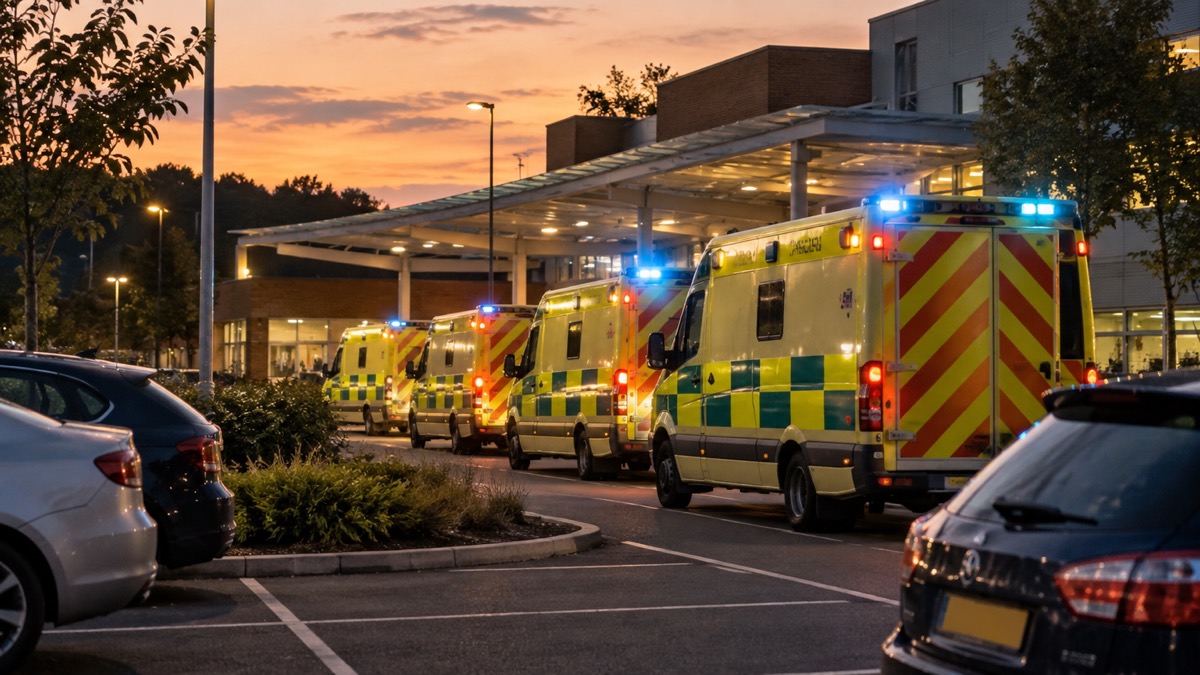
South Central Ambulance Service (SCAS) declared a critical incident on Monday 11 July 2022 "due to current pressures on our services", the trust said in a statement published the same day1. The service said it would continue to prioritise patients with life-threatening and serious emergencies, but that there would be delays in responding to other patients with less urgent needs who are assessed as requiring an ambulance response1.
SCAS said it was experiencing an increasing number of 999 calls, combined with patients calling back when there was a delay in a response, and that its capacity to take calls was being severely challenged1. It also cited the challenges of handing patients over to busy hospitals across its region, a rise in COVID infections and other respiratory illnesses among staff and in the community, and high temperatures expected across the region, which it said would lead to an increase in demand1. The trust said the declaration of a critical incident enables it to seek further support from partners and to alert the wider healthcare system, as well as the public, to its existing challenges in reaching patients as quickly as it can1.
"We continue to prioritise our response to those patients with life-threatening and serious emergencies but, due to the current levels of pressure we are seeing, there will be delays in responding to other patients with less urgent needs who are assessed as requiring an ambulance response."
In its statement, SCAS asked patients to seek alternative treatment or advice through NHS 111 online or by calling 111, local urgent care centres, their GP or a local pharmacist1. It asked people not to call 999 back to ask about an estimated time unless the patient's condition had changed, to keep the line free for someone who may need urgent assistance, and asked people calling 111 not to hang up and call again, as this would send them to the back of the queue1. The trust said it would post further updates on its social media channels and website1.
The same page, updated later, records that SCAS moved from its critical incident status, declared on the Monday, to an internal business continuity status on Thursday 14 July1. It said the pressure had eased but not gone away, and that the next few days were expected to remain very challenging because of high levels of demand, very high temperatures expected in the region from Sunday to Tuesday, and continuing challenges facing other parts of the local NHS and social care services1. The trust paid tribute to its staff, volunteers and partners, and repeated its request that the public use 999 for life-threatening or serious emergencies only and contact NHS 111 online or by phone for urgent medical problems, or use local urgent treatment centres, GPs and pharmacies1.
Why it matters for households
The incident covered the SCAS region, which the statement does not list by county1. For households there, the practical effect set out by the trust was that an ambulance response for a condition assessed as less urgent could take longer, while life-threatening and serious emergencies remained the priority1. The trust's requests to the public were to use 999 only for life-threatening or serious emergencies, to use NHS 111 online or by phone, urgent treatment centres, GPs and pharmacies for urgent problems, not to call 999 back to ask about an estimated time unless the patient's condition had changed, and not to hang up and redial 1111. The trust linked the pressure in part to high temperatures expected in its region, which it said would increase demand1. The service said updates would appear on its social media channels and website1. For general guidance on following official alerts and updates, see the staying informed hub.
What happens next
SCAS said on the same page that it moved from critical incident status to an internal business continuity status on Thursday 14 July, and that it expected the following few days to remain very challenging1. It said further updates would be posted on its social media channels and website1. No further steps beyond those updates have been reported1.