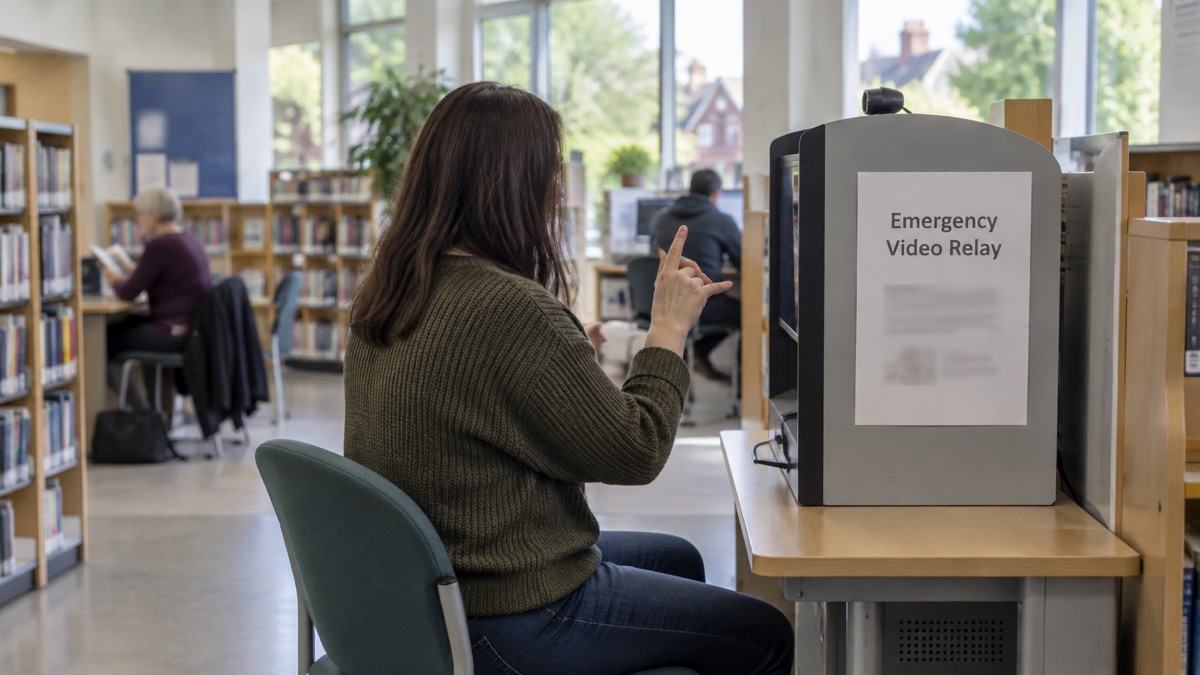
The obligation on regulated providers to provide an emergency video relay service came into force on 17 June 2022, Ofcom has said. The service lets British Sign Language (BSL) users contact the emergency services in their first language, alongside the existing voice 999, text relay 999 and SMS 999 routes1.
The regulator had announced its decision to launch a new UK emergency video relay service in June 20211. Under new General Condition C5.11, regulated providers must provide or contract to provide an Ofcom-approved emergency video relay service, and ensure that relevant users who communicate in BSL because of their disabilities can access and use it1.
General Condition C5.12 sets further requirements: the service must be provided free to the user; where technically feasible, no charge must be made for data traffic associated with it; measures must protect the confidentiality of communication between users and the emergency organisations; and the service must be available for lawful use at all times1. The definition of an emergency video relay service covers a service available at all hours, every day of the week, accessible from readily available compatible equipment with video capability, including smartphones, computers and tablets, allowing communication at a speed equivalent to voice communication, and offering a text channel alongside video relay1.
The obligation applies to anyone providing consumer internet access services, or number-based interpersonal communications services, where it is technically feasible to provide the service1. BT has agreed to act as wholesaler for emergency video relay; a provider contracting with BT for an approved service should be sufficient to demonstrate compliance with C5.111. BT also has a separate role as the UK's 999 call handling agent, including emergency video relay calls from 17 June 20221.
The service covers the whole UK, including Northern Ireland, where some deaf people use Irish Sign Language (ISL). Interpreters familiar with ISL may use it where this benefits a deaf caller in an emergency, but only BSL provision is required under the regulatory obligation1. Calls may be made from outside the UK, but can only connect to 999 control rooms1.
Why it matters for households
Households that include BSL users, and the providers they buy internet or phone services from, are affected from 17 June 2022. Ofcom states that regulated providers must make the service free to users and, where technically feasible, apply a zero rate to associated data traffic, so users should be able to use their own devices on mobile data at no cost1. Providers are also required under General Condition C5.6 to take all reasonable steps to give wide publicity to services for disabled people, including the emergency video relay service, and Ofcom said it would publicise the service itself, working with the voluntary sector, and publish a BSL video to coincide with the launch date1. Ofcom notes that users may need to register to use Wi-Fi on trains or in hotels, and that it cannot control how such private businesses manage their networks1.
What happens next
Ofcom's page, published on 6 March 2024, says it will add to its answers to common questions as the launch date approaches1. It gives contact addresses for its policy team (emergencyBSL@ofcom.org.uk), BT (999liaison@bt.com) and Sign Language Interactions (info@999bsl.co.uk)1. For general guidance on receiving warnings and official information, see the site's staying informed hub.
Sources (1)
- Gwasanaeth cyfnewid fideo brys: sut y bydd yn gweithio, ofcom.org.uk