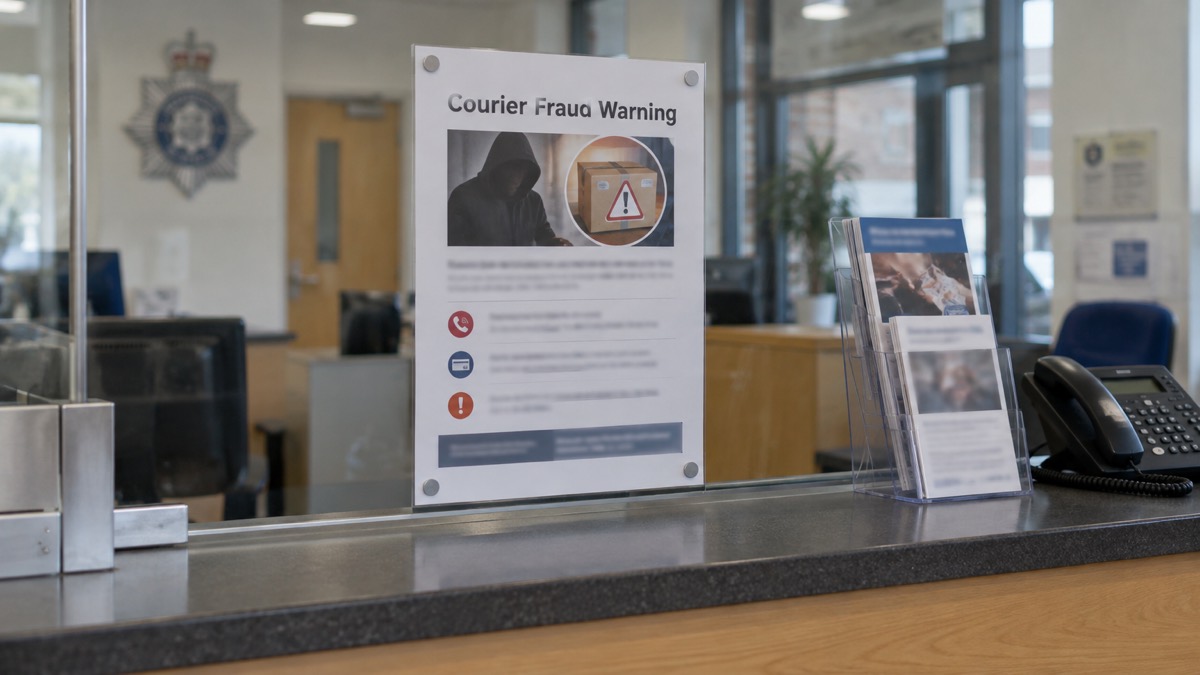
Wiltshire Police has set out figures on courier fraud, reporting that 417 reports of the crime were identified across the South West between February and May 2025, with total reported losses of £2,865,7271. The force published the figures alongside case studies and prevention work in an article on Wiltshire & Swindon Prepared, the local resilience site1.
Of those 417 reports, 44 involved the purchase or handover of gold or jewellery, and gold was the most requested item, followed by watches1. In Wiltshire itself, the force said there were 25 cases of courier fraud last year, resulting in the loss of £155,2301. The article describes courier fraud as criminals impersonating police officers, bank officials or other trusted figures to deceive victims into believing their bank accounts have been compromised or that they must assist with a police investigation, after which victims are encouraged to withdraw money or buy high-value items and hand them to a courier under false assurances of reimbursement1.
The force gave one case in detail. In August 2024, a couple from Salisbury were defrauded out of £350,000 after being contacted by someone claiming to be a Metropolitan Police Detective, who said they had arrested someone in possession of bank cards in the couple's names and needed their help to work undercover1. The victims were instructed to purchase first £100,000 worth of watches and then, when this failed, gold bullion, which was delivered to their address on three separate occasions, with someone dressed as a postman attending each day to collect the gold1. The fraudster offered methods to "verify" their identity, including getting the victim to call the police directly, but stayed on the line so the phone reconnected to them, and the couple also received additional calls pretending to be from their bank1.
Officers have been visiting taxi firms and jewellers across the county to educate them on how fraudsters manipulate victims into purchasing jewellery, gold bullion and watches1. The force said taxi services are often used to facilitate fraud, whether to transport the victim to a store or to collect a package on someone else's behalf and deliver it to the victim's home1.
"We need to get the message out we'd never cold call or ask anyone to share bank details or move assets to aid investigations or for any other reason."
Why it matters for households
The force said victims are often the elderly, and that many live alone and suffer age-related illnesses, so it asked families, friends and neighbours to keep vigilant and help protect vulnerable people in their lives1. It described courier fraud as a nasty crime which can have devastating psychological effects and significant financial loss1.
Davies gave several points of contact for households. She said anyone called by someone claiming to be from the police can always hang up and call back on 101 to check the veracity of the call1. She said anyone who suspects they have been a victim of courier fraud should report it to Action Fraud at actionfraud.police.uk or by calling 0300 1232040, and that anyone who has revealed bank details or handed over a card to a courier should call their bank straight away to cancel the card1.
The article does not give a breakdown of the 417 reports by police force area, nor say how the South West figure was compiled. General guidance on checking official sources and warnings is set out in the site's staying informed hub.
What happens next
No further dates for this reporting period or for the force's prevention visits have been announced in the article1.
Sources (1)
- Spotlight on Wiltshire Police - Courier Fraud - Case Studies - Wiltshire & Swindon Prepared, wiltshireandswindonprepared.org.uk