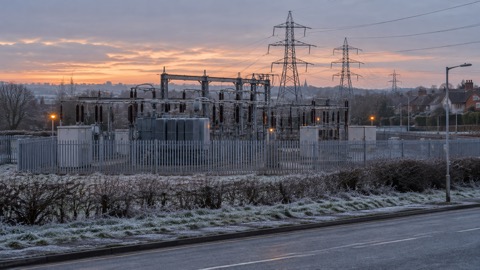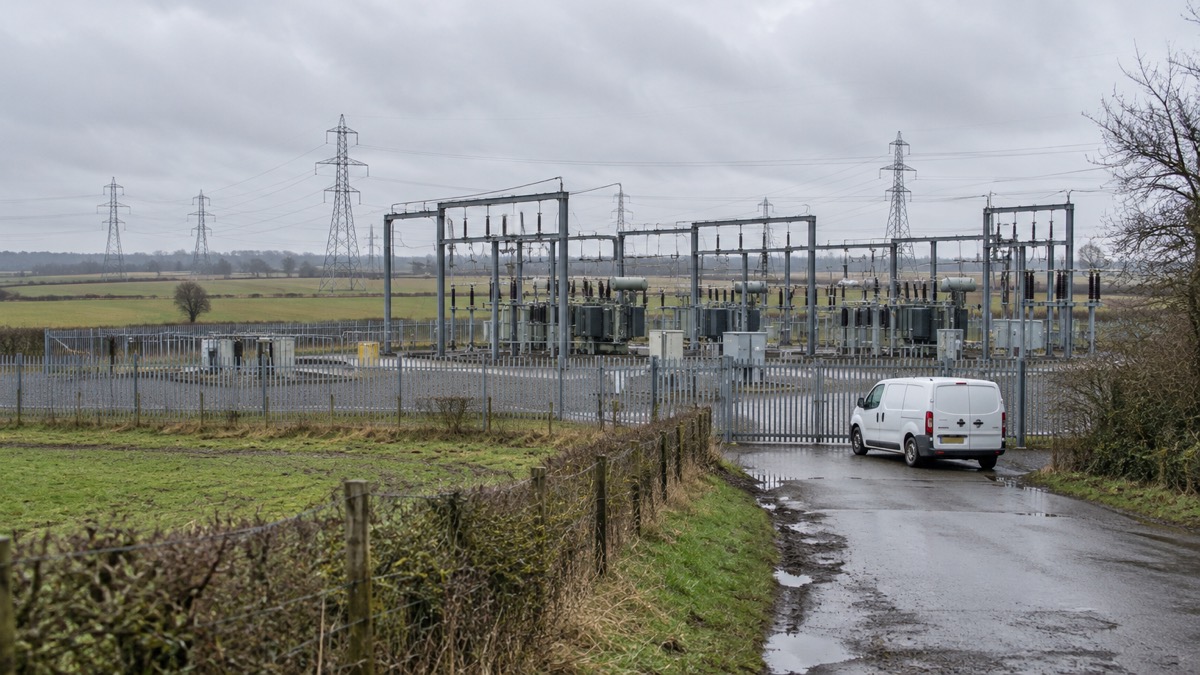
The North Hyde 66kV busbars were re-energised at 09:49 on Friday 21 March 2025 using an interconnection to the Iver 66kV substation, which facilitated the full restoration of domestic customers1. The re-energisation followed the loss of all supplies at the North Hyde 275kV and 66kV substations after a fire at the site near Hayes in West London1.
The incident began at 23:21 on Thursday 20 March, when SGT3 at North Hyde 275kV substation and the circuit connecting it to the wider transmission system tripped1. At 23:49, 28 minutes after the loss of SGT3, SGT1's protection systems operated, automatically switching SGT1, and the circuit connecting it to the wider transmission system, out of service1. This resulted in 66,919 of SSEN Distribution's domestic and commercial customers, and an additional 4,736 customers of Independent Distribution Network Operators who were being supplied via North Hyde 66kV and 22kV substations, losing power, including a loss of supply to Heathrow Substation A1. The review gives the combined figure as 71,655 domestic and commercial customers1.
The review found that a catastrophic failure on one of SGT3's high voltage bushings caused a fire to ignite on the supergrid transformer, most likely caused by moisture entering the bushing causing a short circuit1. An elevated moisture reading in one of SGT3's bushings had been detected in oil samples taken in July 2018, and according to National Grid Electricity Transmission's relevant guidance such readings indicate "an imminent fault and that the bushing should be replaced", but the review found the mitigations appropriate to its severity were not actioned1. A National Grid Electricity Transmission review in 2022 indicated that the fire suppression system on SGT1 and SGT3 at North Hyde 275kV substation was inoperable, and a further fire risk assessment report conducted in July 2024 indicated that the fire suppression system at North Hyde substation was still out of service1.
At 01:11 on Friday 21 March, Heathrow Airport Limited took the decision to close Heathrow Airport due to the disruption caused to operationally critical systems following the power outage1. At 00:42 the Metropolitan Police Service declared a major incident1. The Metropolitan Police Service, supported by the Metropolitan Police Counter Terrorism Command, confirmed on Tuesday 25 March that it had "found no evidence to suggest that the incident was suspicious in nature" and as a result closed its investigation into the fire1. London Fire Brigade issued the stop message, confirming cessation of firefighting, at 17:13 on Wednesday 26 March, five days and 18 hours after it first arrived on site1.
At 00:55 on Saturday 22 March, North Hyde 275kV substation's SGT2 was energised and connected to the wider transmission system1.
"At 09:49 on Friday 21 March, North Hyde 66kV busbars were re-energised."
Why it matters for households
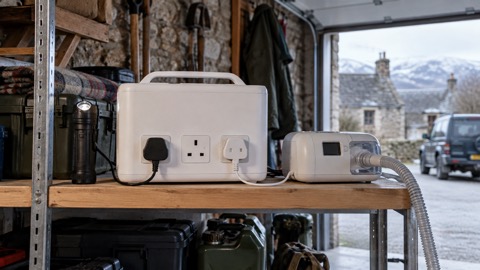
The outage affected more than 70,000 domestic and commercial customers, including customers of Independent Distribution Network Operators supplied via the North Hyde 66kV and 22kV substations1. The review states that customer restoration occurred within expected timeframes and that relevant parties communicated effectively with the public and domestic customers, although some commercial customers told the review that the communications they received were less coordinated1. The review also found that the incident's effect on the wider electricity transmission system beyond North Hyde was limited, and the electricity system operated within the applicable standards1. Households wanting general information on preparing for and coping with supply interruptions can read the power cuts hub.
What happens next
The review, commissioned by the Secretary of State for Energy Security and Net Zero and Ofgem, published an interim report on Tuesday 6 May 2025 which established the timeline and sequence of events, the roles and responsibilities of the key stakeholders involved, and outlined areas of further investigation1. The final report sets out the root cause and recommendations for improving the resilience of essential services, including Critical National Infrastructure, to energy disruption in the future1. A forum held its first meeting on Monday 24 March, chaired by NESO's Director of System Operations1. The review's recommendations cover asset management systems, maintenance actions, fire and asset risk assessments, and site accessibility for emergency services, and the review states they will require close cooperation across industry, regulators and lead government departments1.
Sources (1)
- download, neso.energy