

UPP is a maker of e-bike battery packs, and its batteries are not emergency power kit. They are the kind of lithium-ion battery a household may already own, and the government has warned that two UPP models pose a serious fire risk. If you have a UPP battery, the first thing to do is check its model number. Models U004 and U004-1 are deemed to pose a serious fire risk according to the Government1.
The official safety notice, case number 2401-0083, was notified by the Office for Product Safety and Standards and advises owners to stop using the battery immediately and dispose of it safely via their local household waste disposal site2. That advice is the centre of this page. Everything else, from charging to storage to what happens in a power cut, follows from it.
For a household getting ready for emergencies, a battery like this matters in two ways. It is a fire risk in the home if it is charged or stored badly, and it is not a substitute for a torch, a power bank or a radio when the power goes off. The sections below set out what UPP makes, what to do with it, and how to keep the rest of your emergency kit ready.
UPP safety notices and recalls
The UPP notice is a product safety report rather than a simple recall. It was notified by the Office for Product Safety and Standards under alert number 2401-0083, and the risk level recorded in the report is serious4. The notice covers UPP Battery E-Bike Battery Packs sold via Amazon, AliBaba, eBay, Made in China and Desertcart, with China given as the country of origin2.
The warning has been repeated. West Yorkshire Fire and Rescue Service carries the OPSS warning on dangerous UPP e-bike batteries, a repeat warning to stop using UPP batteries linked to multiple serious fires5. That repetition matters: if you saw the original notice in 2024 and put it to one side, the advice has not softened.
Checking for recalls is something every household should do periodically, not only for UPP kit. Fire services advise checking your appliances are not subject to a product recall by checking the Office for Product Safety and Standards alerts and recalls page6. For white goods, check for recalls or safety notices on the Electrical Safety First website6. Registering electrical items with the manufacturer means you can be told if a safety repair is needed6.
What UPP makes for UK households
The product the safety notice covers is the UPP Battery E-Bike Battery Pack. The notice lists two models, U004 and U004-1, and gives their battery types as 18650 for the U004 and 21700 for the U004-12. Those cell types are how you tell the two apart if the model number on the label is hard to read.
E-bike batteries sit within a wider group of lithium-ion devices that fire and rescue services warn about. South Wales Fire and Rescue Service describes these as batteries that can be recharged and range from mobile phones, vaping devices, e-bikes and scooters, vacuum cleaners, tablets, iPads and ear pods7. The same charging disciplines apply across all of them, which is why the advice below is worth applying to the whole house and not just to one battery.
UPP batteries are sold through online marketplaces rather than a UK high street chain, according to the notice: Amazon, AliBaba, eBay, Made in China and Desertcart2. That affects how you get support, because there is no shop counter to take the battery back to. Keep your order confirmation and any messages with the seller, and deal with the marketplace you bought through if you need to raise the matter.
UPP kit for power cuts
A UPP e-bike battery is not a household backup power supply. It is designed to drive a bike, it is the subject of a serious fire risk warning, and it should not be pressed into service to run lights or charge phones during an outage.
What a household actually needs for a power cut is set out by local resilience partnerships. West Yorkshire Prepared lists a torch and spare batteries, a wind up or battery-powered radio tuned into local news or a car radio, a power bank or solar charger, an analogue phone, warm clothes and blankets, and non-perishable food8. The Met Office gives the same short list in its storm advice: battery candles, torches and batteries, and a mobile phone power pack9.
| Need during a power cut | What to keep ready | Why it matters |
|---|---|---|
| Light | Torch and spare batteries8 | Safe light without flames |
| News and warnings | Wind up or battery-powered radio, or a car radio8 | Local updates when the internet is down |
| Phone charging | Power bank or solar charger8 | Keeps a mobile working for calls |
| Warmth | Warm clothes and blankets8 | Heating systems often stop with the power |
| Food | Non-perishable food8 | Meals without cooking |
Build that kit around your household rather than around a bike battery. Our guide to power cuts walks through what happens and in what order, and the emergency kit page sets out what to keep ready as a baseline.
Charging UPP kit safely
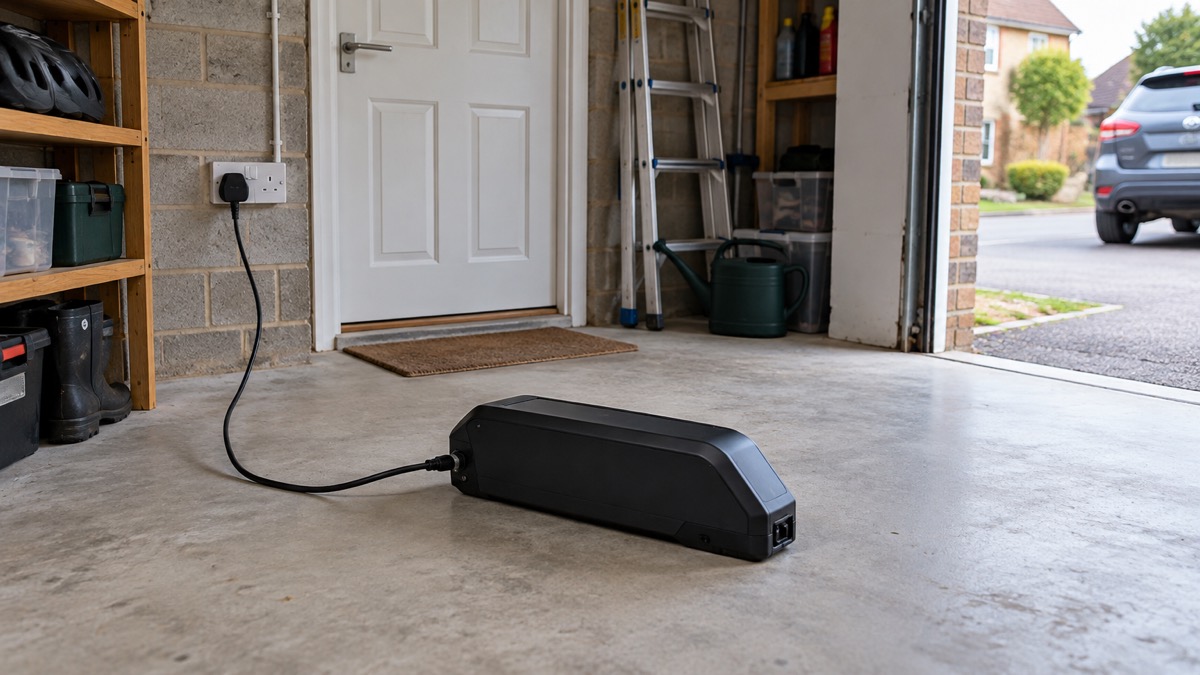
If you own any UPP battery that is not one of the two affected models, or you are charging other lithium-ion kit in the home, the fire and rescue services give clear rules. Always use the manufacturer's approved charger, because using the wrong charger can cause the battery to overheat and a fire to start3. Never leave electrical items unattended when charging, and unplug them before going to bed or leaving home3. Never cover batteries while charging, as this can cause overheating and start a fire10.
The Office for Product Safety and Standards sets out a five step routine, and its fourth step is to charge in a safe place without blocking exits and always unplug your charger when you have finished charging11. London Fire Brigade adds that you should put your device on a hard surface like a table before you start to charge it up, and unplug the charger once the battery is full12.
"Unplug the charger once the battery is full."
If a battery swells, the instruction from London Fire Brigade is blunt: stop charging immediately13. A swollen cell is a battery that has already failed. Do not press it back into a case, do not try another charger, and do not leave it in the house while you think about it.
Storing UPP kit so it is ready for an emergency
Storage for a battery under a safety warning means keeping it out of the living space until it can be disposed of, not arranging it neatly for use. For the rest of your kit, the principle is that it should be within reach when the lights go out.
Local resilience advice is consistent on this. Prepare an emergency pack and keep it within easy reach if needed14. Make up a home emergency pack, prepare an evacuation checklist, and keep a basic emergency kit in your vehicle depending on the time of year15. Keep spare batteries at home in the event of an emergency16.
- Keep spare batteries at home in the event of an emergency8
- Prepare an emergency pack and keep it within easy reach if needed8
- Keep the kit somewhere in the house where everyone can get to it16
- Keep some of the kit in a waterproof bag in case you need to leave your home without notice14
- Use plastic boxes or backpacks to keep the supplies together, in a designated place that all household members know17
Winter is when this matters most. Insulating pipes is standard winter preparation17, and a household that has its kit checked before the first storm is not hunting for a torch by phone light. Our storms and snow guide covers the seasonal side in more detail.
Using UPP kit safely during an emergency
During an actual emergency, the temptation is to improvise. Resist it with batteries. A power cut is not a reason to charge a suspect battery from a generator or a car, and a storm is not a reason to move a battery somewhere warmer and softer.
The general rules for the home still apply when the power is off. Fire services advise checking for product recalls and safety notices on your specific model periodically18, and the government's product safety alerts, reports and recalls list is the place to search19. If you have registered your appliances, you will be told when a safety repair is needed6.
For the household kit that does work in an emergency, keep it simple and tested. A first aid kit should be handy in case of an emergency20. Pet care items should be included if required21. A wrench or pliers to turn off utilities belongs in the kit21. None of that depends on a bike battery.
UPP support and warranty
The government notice does not publish a UPP support line, a warranty period or a repair service. What it does record is where the batteries were sold: Amazon, AliBaba, eBay, Made in China and Desertcart2. Your route to support therefore runs through the seller or marketplace you bought from, using your order records.
For any electrical product, the practical steps are the same. Register the item with the manufacturer so you can be contacted if a safety repair is needed6. Check the government's list of product safety alerts, reports and recalls, and register your appliances so that you can be notified if your product is recalled19. For white goods, check for recalls or safety notices on the Electrical Safety First website6.
If a battery has been recalled or is under a safety warning, a warranty claim is secondary to getting it out of the home safely. The notice's instruction is to stop using it and dispose of it safely2. Keep a record of what you did and when, in case the seller asks.
Disposing of old or damaged UPP kit
Disposal is the step most households get wrong, because a lithium-ion battery cannot go in the bin. The UPP notice advises owners to dispose of the battery safely via their local household waste disposal site, and to check first with their local centre whether it accepts this type of battery2.
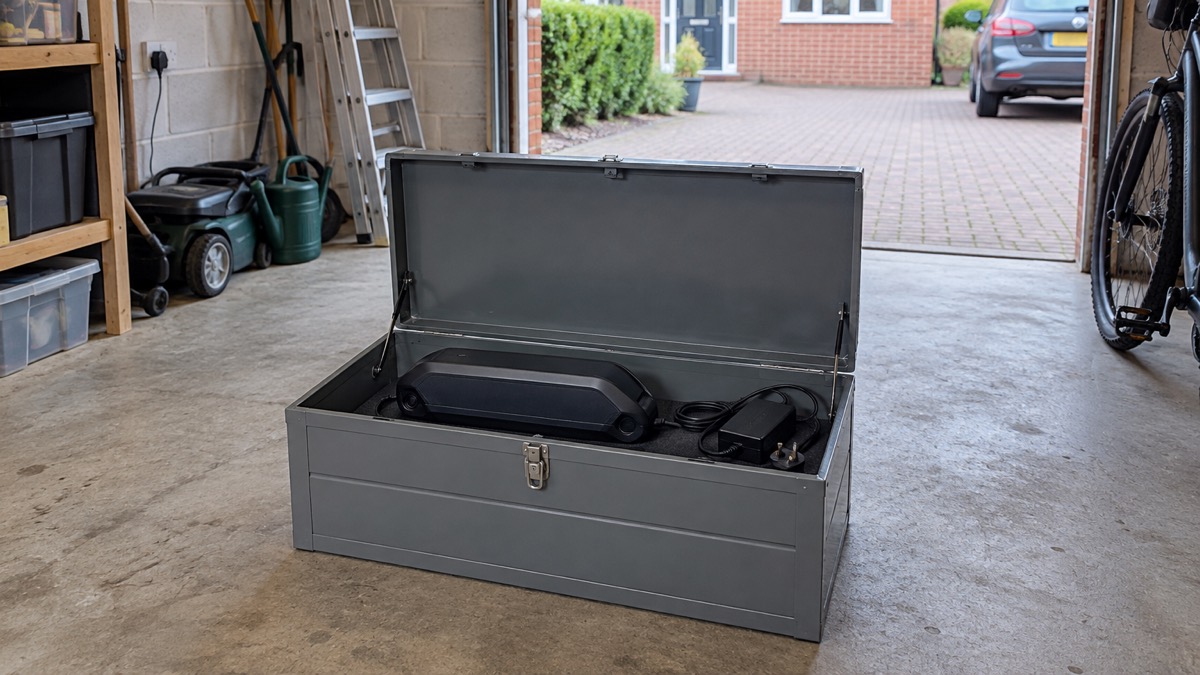
Fire services give the same direction for damaged or end of life batteries generally: if in doubt, always take them to your local household waste recycling centre, the tip1. Vaping device batteries should be disposed of safely at designated recycling facilities22, and damaged or worn-out batteries should be replaced promptly to reduce the risk of malfunctions and fires22. The Office for Product Safety and Standards has run a campaign highlighting the hidden dangers of improper charging, damaged batteries and binning vapes23.
Sources (23)
- E-bikes, e-scooters and mobility scooters, Greater Manchester Fire and Rescue Service, 2026
- Product safety report: UPP Battery E-Bike Battery Packs (2401-0083), Office for Product Safety and Standards, 22 January 2024
- Electrical fire safety leaflet, Greater Manchester Fire and Rescue Service, 2026
- 2401-0083 UPP Battery product safety report, Office for Product Safety and Standards, 2024
- Battery safety, West Yorkshire Fire and Rescue Service, 29 October 2026
- Maintain appliances and recalls, Greater Manchester Fire and Rescue Service, 29 October 2026
- Lithium-ion batteries, South Wales Fire and Rescue Service, 13 January 2026
- Power cuts, West Yorkshire Prepared, 29 October 2026
- Stay safe in lightning, Met Office, 25 October 2026
- Battery safety, Greater Manchester Fire and Rescue Service, 29 October 2026
- Product safety, East Sussex County Council, 29 October 2026
- Digital easy read fire safety booklet, London Fire Brigade, 2026
- Batteries and chargers, London Fire Brigade, 25 October 2026
- Amber weather warning flood alert, Lancashire Prepared, 29 October 2026
- Preparing for emergencies, Somerset Council, 17 September 2026
- Emergency kit checklist, Neath Port Talbot Council, 29 October 2026
- Winter preparedness, Essex Prepared, 29 October 2026
- Electrical fire safety, Warwickshire County Council, 29 October 2026
- Fire prevention, Fire Kills, 25 March 2026
- 12 tips to prepare for a power cut, Horsted Keynes Parish Council, 2026
- Get help and advice in an emergency, Lincolnshire County Council, 29 October 2026
- Fire safety tips: smoking, vaping and e-cigarettes, Warwickshire County Council, 29 October 2026
- OPSS launches safe vapes usage and disposal awareness campaign, Office for Product Safety and Standards, 4 March 2026