Sistema is a New Zealand maker of reusable plastic containers for food and drink, and its products reach UK households as part of a business that ships to more than 110 countries around the world1. Everything the company sells is made at its own factory in New Zealand, from materials it describes as food grade, and its best known products for everyday use are durable, reusable drink bottles intended to cut the amount of single-use plastic a household throws away1.
For a UK household thinking about preparedness, a reusable bottle is a small but practical piece of kit: something you can fill, carry and refill, whether that is for the school run or for keeping water to hand during a power cut or a disruption to supplies. This page sets out what the maker itself says about its products, its factory and its materials, what those claims do and do not tell you, and how to look after a Sistema bottle so it lasts.
What Sistema makes for UK households
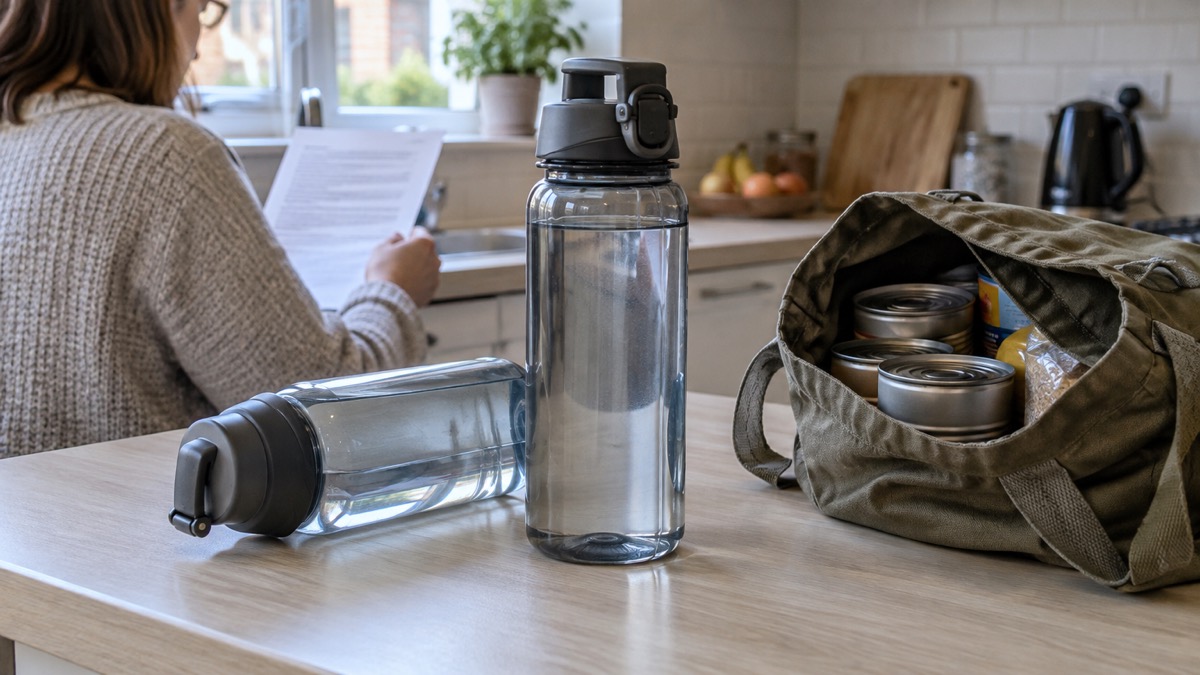
The product the maker documents in detail is a reusable drink bottle: the Sistema 460 ml Squeeze Bottle, style number 785, made of plastic1. The maker's pitch for it is straightforward, that a durable, reusable bottle reduces the landfill a household creates from single-use bottles1. That is the company's own framing, and it is the framing that matters most for everyday use: this is drinking equipment, not specialist emergency equipment.
That said, a reusable bottle earns its place in a household's preparations easily. Fire and rescue services in the UK advise households to keep a grab bag ready for emergencies, and the contents listed by Hampshire Fire and Rescue Service include canned food alongside the other essentials a household would need if it had to leave home or manage without supplies for a period2. A filled water bottle belongs with that kind of planning: if you keep a bottle clean, close to hand and habitually refilled, you always have a way to carry water. Our emergency kit guide sets out what a UK household should keep ready, and our water guide covers how much water to store and how to keep it safe, both of which a reusable bottle supports.
The specifications the maker publishes for the 460 ml Squeeze Bottle are:
| Specification | Detail |
|---|---|
| Product type | Reusable drink bottle1 |
| Capacity | 460 ml1 |
| Style number | 7851 |
| Material | Plastic1 |
| Made in | New Zealand1 |
| Dishwasher | Safe for normal household dishwashers, top rack only1 |
| Freezer | Not to be used in the freezer1 |
Made in New Zealand, shipped to over 110 countries
Sistema is unusually explicit about where its products come from. The maker states that "Sistema® products are made at our state-of-the-art factory in New Zealand", and individual product pages carry the phrase "Made in New Zealand"1. The same pages state: "We are proud to ship our New Zealand made products to over 110 countries around the world"1. So a UK household buying Sistema is buying something manufactured in one place, by the company that designs it, and distributed globally from there.
Country of origin is not just a marketing detail. It is standard information on official UK product safety notices: when the government publishes a recall, the notice lists where the product was made. Recent examples show the range: a 2026 recall of Ebac air dehumidifiers lists their country of origin as the United Kingdom3, while a 2025 recall of a B&Q GoodHome Saturnia electric blanket lists China4. Knowing where a product was made helps you act quickly if a safety notice is ever published, because you can match the notice to what you own. In Sistema's case, the answer is consistent and stated by the maker itself: New Zealand1.
The maker does not publish a list of UK stockists on the product page, so the reliable way to confirm what is currently available is to check the maker's own site and the retailers you normally use. The export figure of over 110 countries is the maker's own account of its reach1, and it tells you the company is a substantial global supplier rather than a small workshop, but it does not by itself tell you which specific products are on a UK shelf this month.
Food grade materials, delivered to each machine
The maker's central claim about its materials appears on its product pages: "We use the highest quality food grade materials electronically delivered to each machine"1. Two things are being claimed there. First, that the plastic is food grade, meaning it is intended to be safe for contact with food and drink. Second, that the material reaches each production machine electronically, which points to a controlled factory process rather than materials being handled and moved around between stages.
It is worth understanding where that claim sits in the wider system. In the UK, the safety of food is overseen by the food standards agencies, as the government's own public information on emergencies makes clear when it describes "the food standards agencies who oversee the safety of food"5. A maker's food grade claim is made within that regulatory landscape: it is the maker's statement about its own materials, and the regulatory framework around food safety exists alongside it. For a household, the practical reading is that "food grade" is a meaningful term, not a vague one, but the specific wording on Sistema's pages is the company's own description of its materials rather than the finding of an independent test published in the sources here.
"We use the highest quality food grade materials electronically delivered to each machine."
Looking after a Sistema bottle: dishwasher yes, freezer no
The maker gives two clear care instructions for its Hydrate plastic bottles, and both are worth following exactly. The first is that "Sistema® Hydrate plastic bottles are safe for normal household dishwashers (top rack only)"1. Top rack only matters: the top rack of a household dishwasher is the gentler position, and the maker has specified it, so put the bottle there rather than in the bottom basket.
The second instruction is a prohibition, and the maker states it emphatically:
Following the maker's instructions is not just about making a bottle last. A bottle that is washed properly and used within its intended limits is a bottle you can rely on to carry drinking water when you actually need it, whether that is a hot day or a disruption to your water supply. If a bottle has been misused, frozen against the maker's instructions, or damaged, replace it rather than continuing to use it for drinking water. For what to do if your water supply is interrupted, see our water guide.
What the maker's claims do and do not tell you
Everything on this page so far about Sistema's factory, materials and reach comes from the maker's own product pages1. That is the right source for what a company says about itself, and Sistema is consistent and specific across its claims: one factory in New Zealand, food grade materials delivered electronically to each machine, exports to over 110 countries. But it is worth being clear about the status of those claims. They are the manufacturer's statements, not the findings of an independent assessment published in the sources here, and a household should read them as such.
Why does this care matter for preparedness? Because the containers a household uses for food and drink are part of how it manages a disruption. The government has designated food as one of 13 Critical National Infrastructure sectors that it considers essential, as the National Audit Office reported in its 2026 review of the resilience of the food supply chain6. And the risks to that supply are taken seriously at local level: the London Risk Register rates the risk of food supply contamination as very high, with an impact rated 4 on a 1 to 5 scale7. Households do not need to dwell on those figures, but they explain why this site advises keeping food and water ready, and why the quality and condition of the containers you use matter. A reusable bottle from a maker that states its materials and care instructions clearly is easier to use with confidence than one with no published detail.
What the maker's claims do not tell you is equally plain. Sistema's pages do not, in the material here, publish independent test results, a full materials sourcing story, or a UK stockist list. None of that means the products are poor; it means the honest summary for a household is: the maker is clear and consistent about what it makes, where, and from what kind of material, and beyond that you are relying on the company's own account1.
Support, registration and safety notices
No UK product safety recall or safety notice concerning Sistema products appears in the government's published recall notices used for this page. UK recalls are published as official product safety alerts by the government, covering everything from dehumidifiers3 to electric blankets4, so if you want to check the current position at any time, the gov.uk product safety alerts, reports and recalls pages are the place to look, and you can search them by product name.
One habit worth forming with any household product, including reusable containers, is keeping the details that identify it. The fire and rescue service guidance on product safety notes that when you register an appliance you typically need the model name or number, the serial number and the purchase date8. The same details serve you for any product if a safety notice is ever issued: with the model and serial number to hand, you can check in seconds whether something you own is affected. Keep the packaging information or a photo of it when you buy.
For support with a Sistema product, the maker's own website is the starting point. The product pages carry the maker's care and use instructions, including the dishwasher and freezer guidance set out above1, and the company publishes its contact and support information there. If a bottle is damaged or has been used against the maker's instructions, the safe course is to stop using it for food and drink and replace it.
For the wider picture of what to keep ready and why, start with getting started, and for the food side of your preparations, see our emergency food guide.
Sources (8)
- Sistema 460 ml Squeeze Bottle product page, Sistema Plastics, 2026
- Reduce the risk of wildfire damage to your property, Hampshire Fire and Rescue Service
- Product recall: Ebac Limited air dehumidifiers, UK Government, 2026-04-21
- Product recall: B&Q GoodHome Saturnia electric blanket, UK Government, 2025-12-15
- Nuclear emergencies: information for the public, UK Government
- Resilience of the food supply chain to disruptions, National Audit Office, 2026-09-04
- London Risk Register v14, Greater London Authority, 2025-01
- Electrical safety at home, Scottish Fire and Rescue Service