
If you are looking at Purewell kit because you want your household to cope better with a power cut, a storm or an interruption to the water supply, the useful question is not what the products are called but what each one does when the mains fails. Purewell makes two kinds of kit that matter in an emergency: water treatment, which turns stored or suspect water into something you can drink, and portable power, which keeps a phone, a torch or a small appliance running when the electricity goes off.
Both are backup, not replacement. Official advice is to hold a store of water and ready-to-eat food, a battery or wind-up torch with spare batteries, a first aid kit and your household emergency plan in one place you can reach in the dark1. Purewell kit sits alongside that core, and only helps if it is charged, filled, serviced and understood before the day you need it.
This page covers what Purewell makes, how each type fits a household plan, the specifications worth checking before you buy, how to set the kit up and check it, how to use it safely, what goes wrong, and how to get support, spare parts and recall information. It does not give prices, and it does not compare Purewell with other makers.
What Purewell makes for UK households
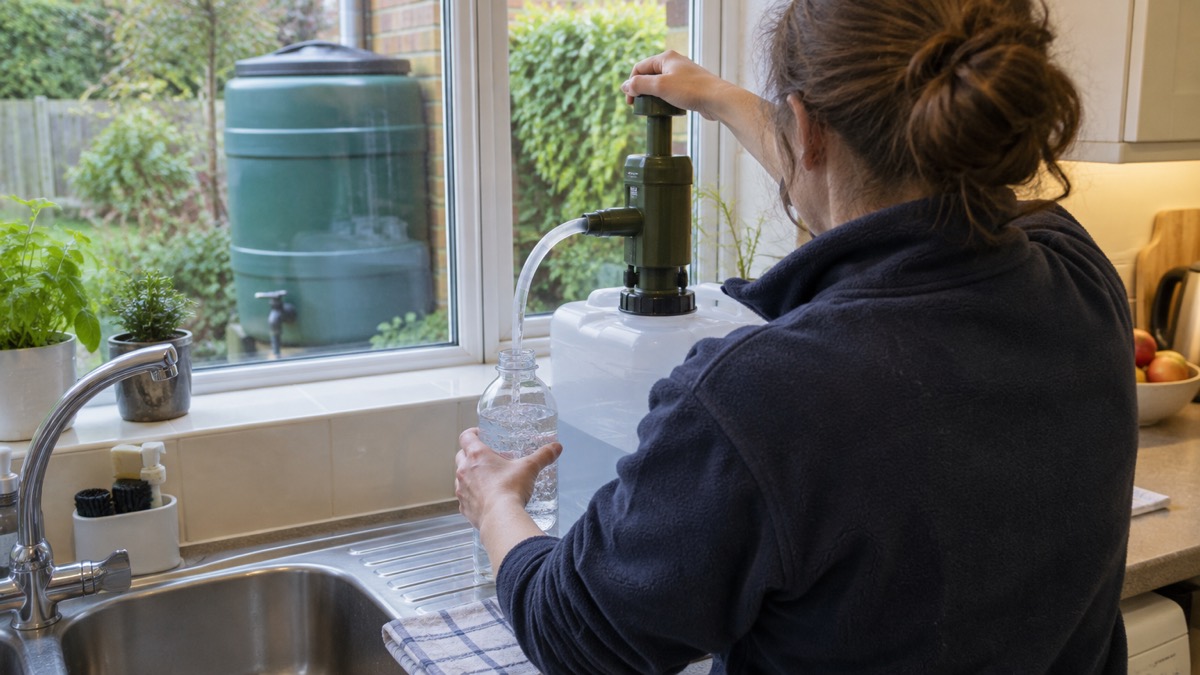
Purewell's range for emergency preparedness falls into two groups. The first is water treatment: filters and purification products that let a household make stored or collected water safe to drink when the mains supply is interrupted or a private supply is compromised. The second is portable power: battery units and power stations that store electricity so you can charge a phone, run a light or keep a small device going during an outage.
That split matches how emergencies actually affect a home. A water supply interruption removes the thing you cannot store indefinitely in large quantity, and official guidance points households towards water purification tablets as one way to treat water, noting they are widely available online, from pharmacies and from outdoor and camping retailers2. A power cut removes lighting, communications and charging, which is why official storm advice is to charge phones, power banks and any essential medical equipment before the storm arrives3.
Neither category replaces the basics. A household emergency kit should include your emergency plan and contact numbers, a battery torch with spare batteries or a wind-up torch, a first aid kit, important documents, bottled water and ready-to-eat food, spare keys, spare glasses, toiletries and medicine details, a pencil and paper, a penknife, a whistle and pet supplies6. Purewell kit is what you add to that list when you want more capability than a torch and a bottle of water give you.
Water treatment: making stored water drinkable
Water is the part of an emergency kit that runs out first and is hardest to replace. Official guidance for a home emergency pack lists water for drinking and sanitation among the things to store7, and a supply interruption can leave a household relying entirely on what it has put aside. Water treatment extends that store: it lets you use water you would otherwise discard, and it gives you a way to make a small supply go further.
Purewell's water products are filters and treatment items. Used as intended, they do two jobs. First, they let you treat water from a stored container or a private supply so it is fit to drink. Second, they reduce how much bottled water you need to keep, which matters in a small flat where storage space is the limiting factor.
There are limits worth understanding before you rely on them. A filter is only as good as its condition: a clogged or out-of-date cartridge will not do the job, and the maker's instructions for your model set out when to change it and how to fit the replacement. Households on a private water supply have extra reason to keep treatment working, because about 1% of the population of England and Wales use a private supply8, and official advice for those households is to keep treatment systems operating correctly and to have filters and UV treatment systems serviced and maintained9.
If your supply comes from a tank or cistern rather than the mains, the storage itself needs checking. The Drinking Water Inspectorate advises periodic visual checks to make sure there has not been a build-up of scale or deposits on the tank floor and that the lid and screens are securely in place10. A filter cannot fix water that has been sitting in a contaminated tank.
For the wider picture, including how much to store and how to treat water safely, see Water in an Emergency: A Household Guide.
Portable power: keeping the essentials running
A power cut is the emergency most households meet first, and the things that stop working are predictable: lighting, phone charging, the router, and any medical equipment that runs on mains power. Official storm preparation advice is blunt about the fix: charge your phone, power banks and any essential medical equipment before the storm arrives3. A portable power station does the same job for a longer outage, holding a store of electricity you can draw on when the mains is down.
Purewell's power products are battery units designed to be charged in advance and used to run or recharge small devices. What they can do depends on their capacity and output, which is why the specifications matter more than the label. What they cannot do is run the whole house: a portable unit is for the essentials you have chosen in advance, not for heating, cooking or anything with a heavy draw.
Batteries bring their own risks, and they are the same risks whatever the brand. Lithium-ion batteries, the rechargeable kind found in phones, tablets, e-bikes, scooters, vacuum cleaners and ear pods, can fail and cause fires if they are damaged, badly charged or badly stored11. Fire and rescue services advise not overloading sockets, using one plug per socket, checking cables and leads regularly for damage, replacing damaged items, switching off and unplugging appliances when not in use, never covering lights or electrical equipment with material, and having electrics checked by a qualified electrician if you live in an older property5.
For how to size a unit to your household and what it will and will not run, see Backup Power at Home: A Household Guide. For the wider subject of outages, see Power Cuts: A Household Guide.
How Purewell kit fits into a household emergency plan
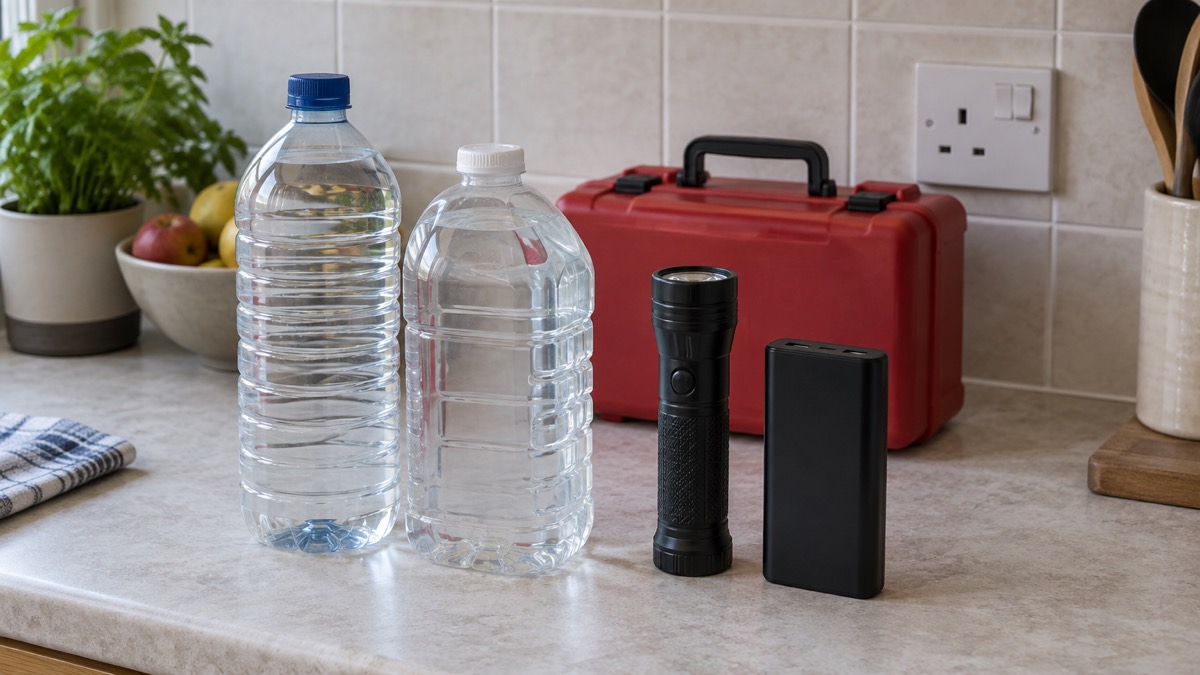
Kit without a plan is just equipment in a cupboard. A Household Emergency Plan includes all the information you could possibly need during an emergency and should be stored in your grab bag12, and official advice is to include a copy of your household emergency plan in your emergency kit1. Purewell items belong in the same scheme: written into the plan, with their location, their state of charge or filter life, and who in the household knows how to use them.
The plan itself is simple to build. It should give you a list of useful contact numbers and tell you what you should have in your household emergency pack13. It should account for the people in your home who need something different: official guidance is to tailor your kit to your needs, including babies, pets and anyone who needs medication or other essentials14. It should also cover the case where the household is separated, which is one of the situations emergency preparation exists for15.
Children can be part of this. Letting children help with the emergency plan and household kit can help them remember the information and feel safer16. A child who knows where the torch is and how to switch it on is one less thing to worry about in the dark.
| What the plan needs | Why it matters for Purewell kit |
|---|---|
| Contact numbers and a copy of the plan in the kit | So you can act without hunting for information1 |
| A torch with spare batteries, or a wind-up torch | Lighting that does not depend on your power unit1 |
| Water for drinking and sanitation | The store your filter or tablets back up7 |
| Tailoring for babies, pets and medication | The essentials a power cut or water interruption puts at risk14 |
| A smaller personal kit in a backpack | Ready if you have to leave14 |
Official advice also suggests preparing an evacuation checklist and keeping a basic emergency kit in your vehicle depending on the time of year12. A charged power bank and a water filter belong in that vehicle kit as much as in the house.
Key specifications to check before you buy
The specifications that decide whether a piece of kit suits your household are the ones that set what it can do when the mains is off. For a power unit, that means capacity and output: how much energy it stores and what it can run at once. For a water filter, it means what it removes, how much it treats before the cartridge needs changing, and whether replacement cartridges are available for your model.
Check the maker's own figures rather than a retailer's summary. Where a maker and a retailer disagree on a specification, the maker's figure is the one to rely on, and it is worth knowing that retailers sometimes list a different number. Look for the model number, the rated output and the capacity on the maker's page or in the manual, and match them to what you actually need to run.
Two further checks are worth making before you buy anything electrical for emergency use. First, confirm the item carries the safety information and instructions you need, and read them before first use. Second, check that the product is not the subject of a safety notice. Recalls happen for real reasons: one string light sold through an online marketplace was withdrawn because the minimum creepage and clearance between live and neutral on the control PCB tracks were less than 1 mm17. That is the kind of fault you cannot see, which is why the recall list is worth checking rather than trusting the listing.
| Check | What to look for | Why it matters |
|---|---|---|
| Model and serial number | Printed on the product and packaging | Needed for registration, support and recall checks18 |
| Power output and capacity | The maker's own figures | Sets what the unit can actually run |
| Filter life and replacement parts | A named replacement cartridge for your model | A filter with no spare is a one-use item19 |
| Safety notices | No entry on the recalls list | Some faults are invisible from outside17 |
| Instructions | A manual for your exact model | Safe use depends on following it |
Setting up Purewell kit before an emergency
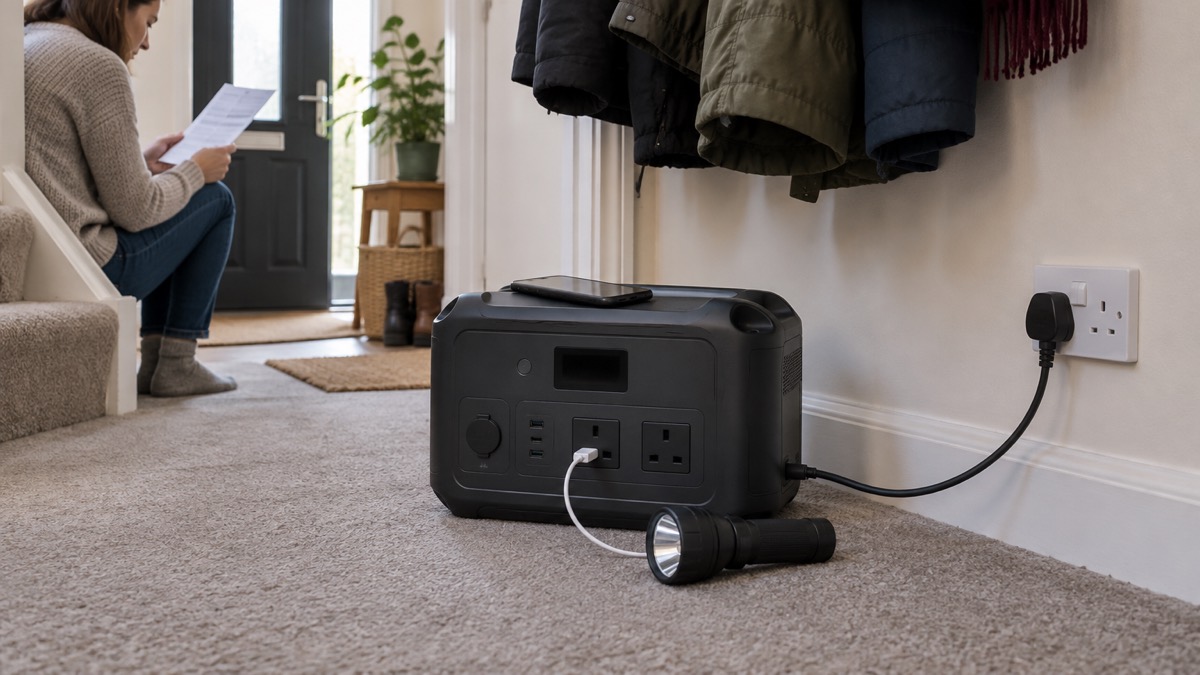
Set kit up on a quiet day, not in the middle of a storm. The order that works is: read the manual, charge or fill the item, test it, then store it where you will find it in the dark and write it into your plan.
For power units, the first job is a full charge, and the habit to build is topping them up before bad weather. Official advice is to charge your phone, power banks and any essential medical equipment before the storm arrives3, and the same logic applies to a power station: it should be full before the forecast turns, not after the lights go out. Test that it will run the devices you have chosen, and note how long it takes to recharge.
For water treatment, the first job is fitting the filter correctly and checking it is in date. Follow the maker's instructions for your model, and keep the manual with the kit. If you store water in a tank or container, check it as the Drinking Water Inspectorate advises, looking for scale or deposits and making sure the lid and screens are secure10.
- Charge your phone, power banks and any essential medical equipment before the storm arrives3.
- Store a torch with spare batteries alongside the kit, so lighting never depends on the power unit1.
- Put a copy of the household emergency plan in the kit1.
- Make sure everyone knows where the kits are kept14.
- Keep the manuals with the kit, not in a drawer.
Using Purewell kit safely in an emergency
Safety in an emergency comes down to a few rules, and they are the same rules fire and rescue services give for electrical goods in general. Do not overload sockets: use one plug per socket. Check cables and leads regularly for damage and replace damaged items. Switch off and unplug appliances when not in use. Never cover lights or electrical equipment with material. If you live in an older property, have the electrics checked by a qualified electrician5.
Batteries need particular care. Lithium-ion batteries can fail and cause fires, and fire and rescue services treat them as a distinct hazard in the home11. Charge on a hard, flat surface where you can see the unit, do not leave charging unattended overnight where you can avoid it, and stop using any battery that is swollen, hot or damaged. If a battery fire starts, get out, stay out and call the fire and rescue service.
Water treatment has its own rules. Use the filter exactly as the maker instructs for your model, change cartridges when they are due, and do not assume a filter makes any water safe: it is a backup to a stored supply, not a licence to drink from any source. Households on a private supply should keep treatment systems serviced and maintained9.
What can go wrong and how to avoid it
Most failures with emergency kit are boring and preventable: a flat battery, a filter past its change date, a charger that was never tested, a manual nobody read. The fix is routine checks and a plan that names who does them.
Electrical faults are the ones with real consequences. Overloaded sockets, damaged leads and covered equipment are the common causes fire and rescue services warn about5, and fitting the wrong fuse is a specific hazard: if you fit the wrong fuse, it will not blow, and the appliance could overheat and cause a fire20. Use the fuse specified for the appliance and replace damaged plugs rather than repairing them.
Batteries are the other recurring risk. Rechargeable lithium-ion batteries are in phones, tablets, e-bikes, scooters, vacuum cleaners and ear pods, and they can fail11. Store them away from anything that would burn, charge them where you can see them, and dispose of them properly: some local councils in Wales offer kerbside collection for small portable batteries, so check your local authority's website21.
Water treatment fails quietly. A filter that has not been changed, or a cartridge that does not fit your model, will not do the job, and you may not notice until you need it. Keep spare cartridges, note the change date, and check the filter before the emergency, not during it.
- Flat power bank: charge your phone, power banks and any essential medical equipment before the storm arrives3.
- Wrong fuse: fit the fuse specified for the appliance20.
- Overloaded socket: one plug per socket5.
- Battery at end of life: dispose of it through your council's arrangements21.
Storage and routine checks
Store emergency kit where you can reach it without a torch, and check it on a routine. The checks that matter are the ones that keep the kit working: charge levels, filter condition, battery dates and the state of any stored water.
For stored water, the Drinking Water Inspectorate advises periodic visual checks to make sure there has not been a build-up of scale or deposits on the tank floor and that the lid and screens are securely in place10. For filters, check the cartridge and replace it as the maker instructs. For power units, charge your phone, power banks and any essential medical equipment before a storm arrives3, and check cables and leads regularly for damage, replacing damaged items, as fire and rescue services advise for any electrical item5.
| Item | Routine check | When |
|---|---|---|
| Power bank or power station | Charge level, cable and lead condition | Before a storm arrives3 |
| Water filter | Cartridge condition and change date | Before each season, and before storms |
| Stored water | Scale, deposits, lid and screens secure | Periodically10 |
| Torch and batteries | Works, spares present | Before a storm arrives3 |
| Paperwork | Plan copy, manuals, model and serial numbers | Yearly, and after any new purchase18 |
Keep the manuals with the kit. A manual you cannot find is a manual you cannot follow, and the maker's instructions for your model are the ones that apply.
Support and warranty
Support starts with the paperwork. Before you need help, note the model name or number, the serial number and the purchase date, because those are the details you will typically be asked for when you register an appliance or report a fault18. Keep the proof of purchase with them.
Warranty terms vary by product and by condition, so read the terms that came with your item rather than assuming. Some products are sold as clearance items with shorter cover: one maker's clearance listing states that the product may have signs of use or wear and carries a 6 months warranty22. If you buy anything described as clearance or ex-display, check the warranty length before you rely on it for emergency use.
For faults, contact the maker using the details in your manual or on their website, or the retailer who sold you the item. If your concern is safety rather than function, official advice is to contact the retailer or manufacturer23.
Replacement parts are usually consumables: filters, cartridges and similar. Makers list these as spare parts with their own item numbers so you can match the right one to your unit; one replacement filter pack, for example, is listed as a spare part with item number 802140619. Check the item number against your model before ordering, and fit parts exactly as the instructions describe.
Safety notices and recalls
Check for recalls before you rely on a product, and check again if you have had it a while. Official advice is to check for recalls or safety notices on the Electrical Safety First website4, and to search the Government's list of product safety alerts, reports and recalls5. If an appliance is not listed as recalled it should be safe to use, but if you have concerns about its safety, contact the retailer or manufacturer23.
Registration is the other half of the job. Register your appliance so manufacturers can contact you about faults or recalls4, and make sure you register your appliances so that you can be notified if your product is recalled5. The Register My Appliance website makes it easy to register all of your electrical products, and you will need the brand name, model, serial number and purchase date18.
Recalls are specific and worth reading properly. One power bank recall was notified by the Office for Product Safety and Standards under notification number 2511-021724. A tumble dryer safety notice, by contrast, stated that Whirlpool branded tumble dryers were not affected by that notice25, which shows why you check the exact model rather than the brand alone. If a product of yours is listed, stop using it and follow the instructions in the notice.
Sources (25)
- Emergency kit, Ready Scotland, 2026-10-25
- Water supply interruptions or outages, GOV.UK Prepare, 2026-10-12
- Storm preparation, Cornwall Council, 2026-10-29
- White goods, Cheshire Fire and Rescue Service, 2026-05-20
- Fire prevention, Fire Kills, 2026-03-25
- Get Prepared - Carmarthenshire County Council, Carmarthenshire County Council
- Get help and advice in an emergency, Lincolnshire County Council, 2026-10-29
- Private water supplies, Drinking Water Inspectorate, 2026-10-28
- Private water supplies, Cornwall Council, 2026-10-29
- Water storage tanks and cisterns, Drinking Water Inspectorate, 2026-06-09
- Lithium-ion batteries, South Wales Fire and Rescue Service, 2026-01-13
- Preparing for emergencies, Somerset Council, 2026-09-17
- Protecting yourself, West Northamptonshire Council, 2024-05-31
- Preparing for emergencies, North Hertfordshire Council, 2026-10-29
- Protecting your family, Essex Prepared, 2026-10-29
- Emergency plan, Ready Scotland, 2026-10-29
- Product recall: LED Net Mesh Fairy String Light sold via Wish, Electrical Safety First, 2026-10-25
- Register your appliance, Cornwall Council, 2026-10-29
- BeFree AC Carbon Replacement (3 pcs.), Katadyn, 2026-10-28
- Electrical safety, Scottish Fire and Rescue Service, 2025-02-27
- Lithium battery fire safety, Tandridge District Council, 2026-10-29
- PS243000C, Sterling Power, 2026-10-25
- Stay fire safe, Greater Manchester Fire and Rescue Service, 2025-02-27
- Product recall: ESR HaloLock Wireless Power Banks sold via Amazon, Office for Product Safety and Standards, 2025-11-26
- How to check if your tumble dryer is a fire risk, London Fire Brigade, 2026-10-25