Primus is a Swedish stove and outdoor cooking maker whose products are sold direct to UK households through its own website, with shipping in 2 to 5 days and free returns within 30 days1. For a UK household preparing for power cuts, storms and heating failures, three of its product lines are the relevant ones: multi fuel camping stoves for cooking when the mains and gas go off, gas canister lanterns for light, and vacuum flasks for keeping hot water available through a cut2.
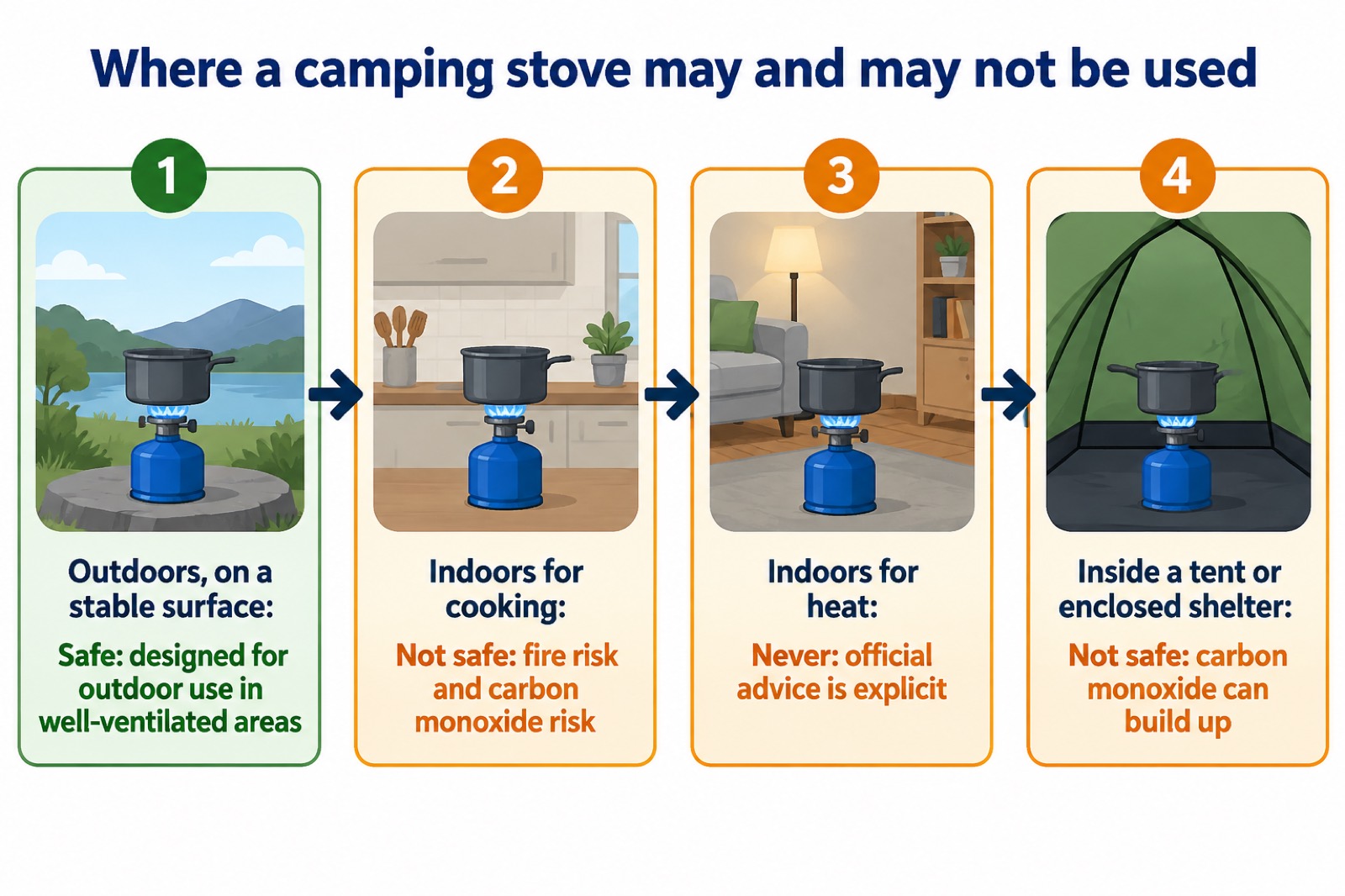
The single most important safety point comes first: camping stoves and lanterns of this kind are outdoor equipment. Devon and Somerset Fire and Rescue Service warns that camping stoves "pose a fire risk and a risk of carbon monoxide poisoning" and must never be used for heat indoors4, and the NHS says plainly not to use a camping stove indoors or inside a tent5. A Primus stove has a real place in a household emergency kit, but that place is outside, on a stable surface, with the right fuel and a carbon monoxide alarm in the home. This page sets out what the maker's kit does, what it cannot do, and how to use, store and support it safely.
What Primus makes for UK households
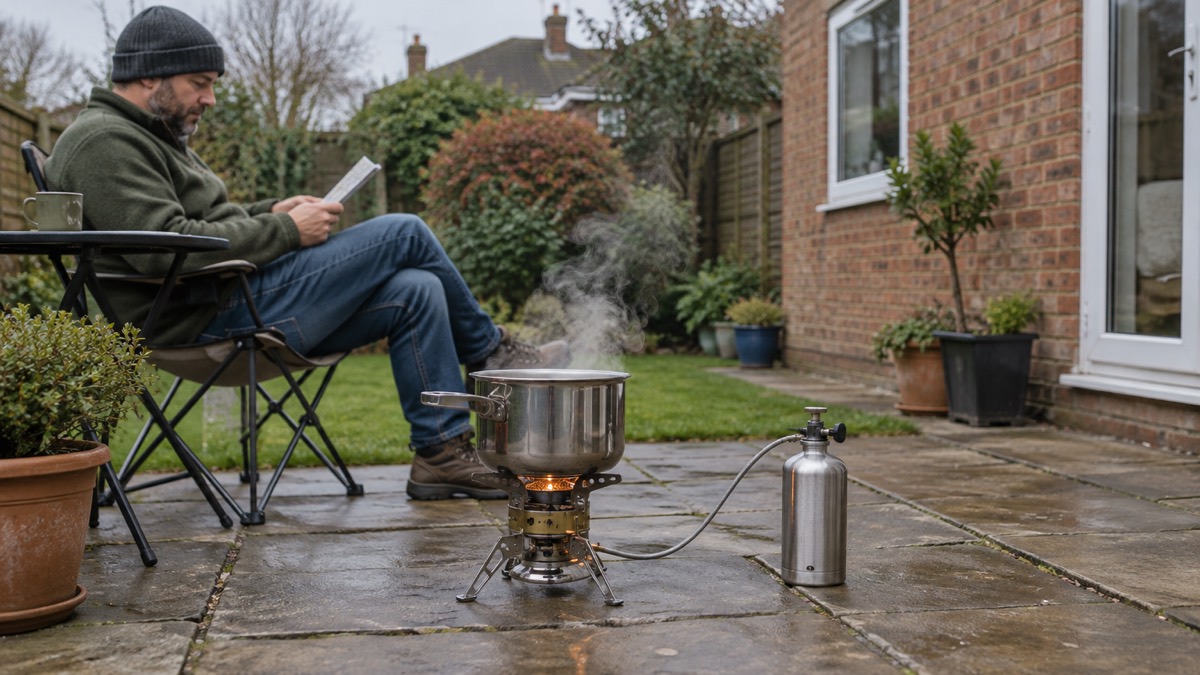
Primus makes the stoves, lanterns and insulated food and drink ware covered on this page, and the MultiFuel Stove carries the maker's own description of its origins: invented in Sweden, made in Europe2.
The stoves are the core of it. The Primus MultiFuel Stove is a "simple and robust multi fuel stove for 1 to 4 people on expedition", built from stainless steel and brass, delivering 2700W and able to melt snow and then boil a litre of water in four and a half minutes2. Its low centre of gravity allows the use of larger pots and pans and cooking for 1 to 4 persons, which is what makes it usable as a household cooking option rather than a single-person camping tool2. It is Primus Expedition Service certified and can easily be self-serviced, with multiple jet nipples included to use with the corresponding fuel2.
Alongside the stoves, Primus makes the Micron Lantern Steel Mesh, a steel mesh lantern that attaches directly to a gas canister3, and the Classic Light Vacuum Bottle range, insulated flasks in sizes from 0.35 L to 1 L1. Together these cover the cooking, light and hot water needs that a power cut creates, and each is covered in its own section below.
For how these fit into a wider household plan, see the guides on emergency kits, heating and cooking without mains power and emergency lighting.
Camping stoves for cooking without mains power
When the electricity goes off, the cooking methods most households rely on, the hob, the oven, the microwave and often the kettle, go off with it. A portable stove that runs on fuel you can store is one of the practical answers, and Humberside Fire and Rescue Service lists camping stoves alongside camping heaters, lanterns, charcoal grills and disposable barbecues as the fuel-burning equipment households turn to in exactly this situation8.
The Primus MultiFuel Stove is the maker's general-purpose option. It is designed for 1 to 4 people, so it can cook a family meal rather than a single portion, and its low centre of gravity allows the use of larger pots and pans2. The maker states it delivers 2700W and can boil a litre of water in four and a half minutes, which is fast enough to make hot drinks or rehydrate food for several people without burning through fuel2. It is made of stainless steel and brass, can easily be self-serviced, and is Primus Expedition Service certified2.
Two practical points from the maker's own product page matter to a household buyer. First, gas is not included: you buy the stove and the fuel separately, so the stove on its own is not usable until you have canisters or liquid fuel in the house2. Second, the stove takes several fuels, not just gas, and multiple jet nipples are included to use with the corresponding fuel, so you have some choice about which fuel you stock2.
Where you set it up matters as much as what it burns. For a household, that means a level surface outside, away from fences, dry vegetation and anything that can catch fire, not a kitchen worktop or a doorway. Stability is worth choosing kit for, too: the Primus Essential Stove Set is a remote-canister stove with a low centre of gravity for extra stability, and the MultiFuel Stove's low centre of gravity is what allows the use of larger pots and pans9.
For the wider picture on cooking through a power cut, including food safety and what to keep in the cupboard, see heating and cooking without mains power and emergency food.
Gas canisters and stove fuel
The MultiFuel Stove can run off gas, gasoline/petrol, diesel, kerosene/paraffin and even aviation fuel, according to the maker2. That range is the stove's main selling point for preparedness: if one fuel is hard to obtain, another may be available. But it also means the fuel you choose determines how you must store it, because petrol, diesel and kerosene each carry storage rules that gas canisters do not.
For most households, gas canisters are the sensible default for a stove kept for emergencies. The maker notes on both product pages that gas is not included, so factor the canisters in when planning what to keep at home2.
If you do store liquid fuels for the stove, follow the official storage rules in the storing section below. Devon and Somerset Fire and Rescue Service advises anyone storing diesel at home to follow the safety guidance on the government website10, and for petrol, the same service advises using a pouring spout or funnel when decanting10. Mid and West Wales Fire and Rescue Service local resilience guidance is blunter still: "Remember petrol is DANGEROUS - store it away from any means of ignition"7.
"Remember petrol is DANGEROUS - store it away from any means of ignition."
The maker's product information does not state a shelf life for either the canisters or the liquid fuels, so follow the use-by and storage guidance printed on the fuel packaging itself, and rotate your stock so the oldest fuel is used first.
Lanterns for light during a power cut
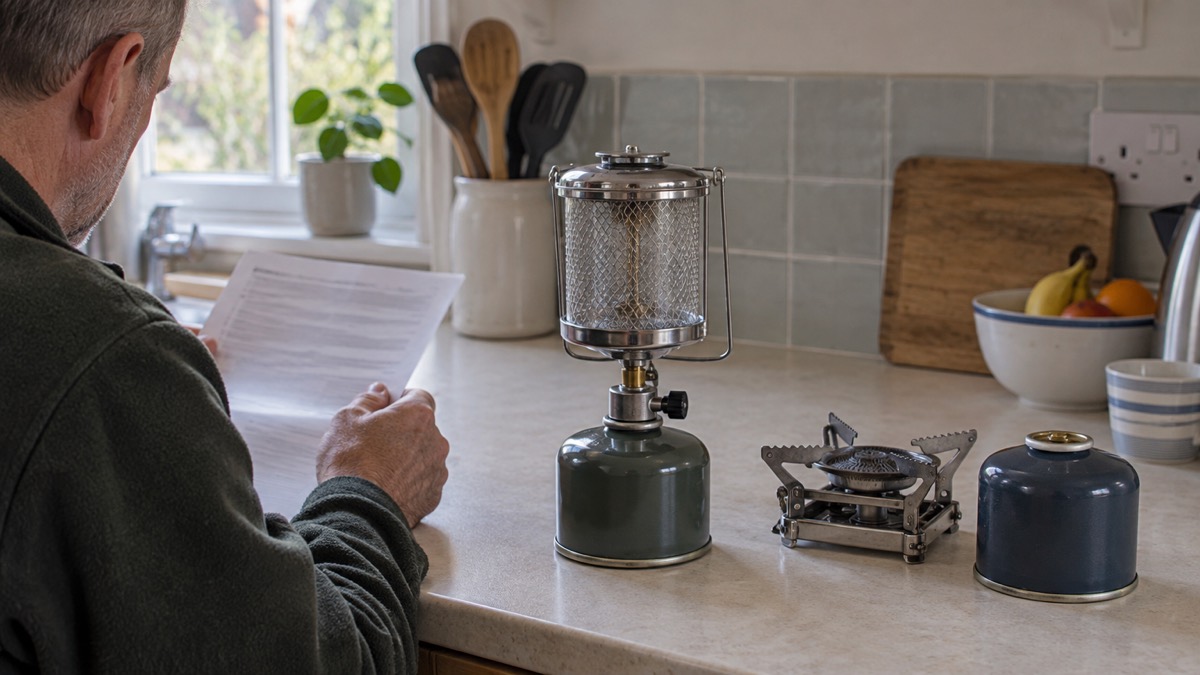
Light is the first thing a power cut takes away, and official advice across the UK is consistent about what to reach for. The Scottish Fire and Rescue Service says to use battery-operated lights or torches as an alternative light source during a power cut11, and Wiltshire and Swindon Prepared notes that wind-up torches or lanterns are available which require no batteries at all12. Some official power cut preparation guidance also suggests keeping a supply of candles13, though a flame is always a poorer safety choice than a torch.
The Primus option here is the Micron Lantern Steel Mesh, a steel mesh lantern that attaches directly to a gas canister3. It runs on the same canisters as the stove, so a household that already stocks gas for cooking needs no separate batteries or charging to also have light. The steel mesh construction means the light comes from an incandescent mesh rather than a glass mantle, which is a practical consideration for anything kept in a kit box for years. As with the stove, gas is not included3.
A gas lantern is a flame-bearing device, so treat it as you would any camping stove. Use it outside or in a very well-ventilated space well away from anything flammable, and never leave it burning unattended.
Two small habits from official advice make any power cut easier. Leave one light switched on so you know when the power has been restored, as the Met Office advises14, and keep torches where you can find them in the dark rather than hunting through cupboards by phone light.
For the full range of options, including battery lanterns, wind-up torches and how to plan lighting for a multi-day cut, see emergency lighting and power cuts.
Cookware and flasks for heating and keeping food warm
A flask of hot water is one of the most useful items in any emergency kit, and official guidance across the UK says so repeatedly. A parish council power cut tipsheet suggests boiling water and keeping it in a thermos flask, to make hot drinks or fill a hot water bottle if it gets cold15. The Scottish Government's emergency kit advice says to include some food and a warm drink in a flask16. Lancashire Prepared's emergency pack list includes basic cutlery, a tin opener and thermos flasks17. Neath Port Talbot Council's kit checklist says to take ready-to-eat food, a warm drink in a flask and bottled water if you have to leave your home18.
The Primus Classic Light Vacuum Bottle range is the maker's answer to this. The maker states the insulation performance as hot above 50 °C and cold below 12 °C, and gives figures for each size1:
| Bottle feature | What the maker states |
|---|---|
| Heat retention | Double-wall vacuum insulation keeps drinks hot or cold for up to 6 hours1 |
| Filling and cleaning | The wide opening makes it easy to fill, pour, clean or add ice6 |
The maker states that the Classic Light Vacuum Bottle's double-wall vacuum insulation keeps drinks hot or cold for up to 6 hours, so water boiled during a short power cut, or before a storm arrives, is still available as a hot drink or for a hot water bottle later the same day1. For households with a baby, official guidance from Northern Ireland advises preparing a flask of hot water to heat bottles and baby food, noting it is always safer to make up a fresh feed, and that feeds should never be stored for longer than 24 hours19.
A flask works best alongside a sensible food store. NHS guidance for Norfolk and Suffolk advises keeping a supply of long-lasting cupboard essentials such as tinned vegetables, beans, pulses, soup and pasta20, and Derbyshire's public health advice is to stock up on tinned food and supplies for your freezer21. The NHS also advises getting heating and cooking appliances properly installed and keeping them well maintained5, which applies to a stove as much as to a boiler.
For what to store and how to plan meals without power, see emergency food and water in an emergency.
Using a gas stove safely: ventilation and carbon monoxide
This is the section that matters most, because the danger is real and the official advice is unanimous. Carbon monoxide is produced when fuel burns without enough ventilation, and the Health and Safety Executive warns that without the proper safety precautions, dangerous levels can build up with the possibility of fatal consequences22.
The outdoor rule comes first. The NHS says do not use a barbecue or camping stove indoors or inside a tent5. Devon and Somerset Fire and Rescue Service says never use BBQs, camping stoves or patio heaters for heat indoors, because they are designed for use outdoors in well-ventilated areas and pose a fire risk and a risk of carbon monoxide poisoning4. The UK Health Security Agency's advice for a national power outage goes further: do not light a fire indoors unless you have a proper heating appliance or a fireplace with a working chimney, do not use camping stoves and barbecues indoors, and do not use petrol or diesel generators or similar fuel driven equipment indoors23. If you have a wood burner or other non-electric stove, the same advice is to make sure the room is well ventilated and follow all instructions carefully23.
If fuel-burning equipment must be used in any enclosed space, official guidance sets the conditions. Northern Ireland's official advice for storms and power cuts states there must be good ventilation and it must be used with a carbon monoxide alarm13. The Health and Safety Executive says any facilities using LPG need adequate ventilation at both high and low level, and to check it is not blocked, for example fixed grilles covered by newspaper or rags in cold weather to stop draughts24. The HSE also advises that all gas appliances need an adequate supply of air to help complete combustion of gas and efficient operation of their flue to remove combustion products, including carbon monoxide25.
The remaining official advice is about maintenance and alarms. The HSE says never block ventilation, ensure flues are kept clear at all times, and have your appliance regularly maintained and annually serviced by a Gas Safe registered engineer25. Manchester Fire and Rescue Service lists good ventilation among its carbon monoxide prevention essentials26, and Northern Ireland's winter guidance says to make sure your heating is safe and your house is properly ventilated to reduce the risk of carbon monoxide poisoning27. Mid and West Wales Fire and Rescue Service asks households to take simple steps to protect themselves from accidental fires and carbon monoxide poisoning as they look to keep warm and cut energy use in winter28. Oxford City Council, writing about wood stoves, advises using a stove thermometer to understand how your stove is performing and making sure the ventilation system is clean with no blockages29.
For more on the dangers and the alarms that protect against them, see home emergencies: fire, carbon monoxide and gas leaks.
Storing stoves and fuel at home
How much fuel you may keep at home, and where, is set by official guidance rather than by the maker. The Mid and West Wales Fire and Rescue Service resilience guidance states you may keep up to 30 litres of fuel in a shed or garage, only in a suitable container7. Manchester Fire and Rescue Service adds that if storing petrol at a domestic premises it must not be stored in your living accommodation, and that containers should be stored in a garage or shed away from other buildings, in a well-ventilated area, away from sources of ignition such as electrical equipment and naked flames30.
In practice, for a Primus stove that means:
- Gas canisters: keep them with the stove kit, somewhere cool and dry, following the storage instructions on the canister.
- Petrol, diesel or kerosene for the MultiFuel Stove: store in a suitable container, in a shed or garage away from other buildings, well ventilated and away from sources of ignition30.
- Never in living accommodation: petrol must not be stored in your living accommodation30.
- Decant carefully: use a pouring spout or funnel when transferring fuel10.
- Cap the limit: up to 30 litres of fuel at home, in a suitable container7.
The stove itself needs little special storage. Keep the stove together with the instructions it came with, in a dry place where you can reach it without unpacking everything else. Check the stove works before you need it: a stove that has sat in a loft for three years is a poor thing to discover is seized on the night of a power cut.
For the wider question of what to keep ready and where, see getting started and the emergency kit guide.
Support, spare parts and warranty
Primus sells to UK households direct through its own website. The MultiFuel Stove is listed as in stock2, and the Classic Light Vacuum Bottle is likewise in stock, with 2 to 5 days shipping and free returns within 30 days1. That returns window matters for a preparedness purchase: you can unpack the stove or flask, check it is what you expected and that nothing is damaged, and return it freely if not.
On parts and servicing, the maker's position is that the MultiFuel Stove can easily be self-serviced, and multiple jet nipples are included to use with the corresponding fuel2. Keep those parts with the stove, since a jet nipple change is what switches the stove between gas and the liquid fuels.
One piece of official advice applies to any appliance you buy for emergencies. Manchester Fire and Rescue Service advises registering your appliances, because registration ensures manufacturers can contact you if a safety repair is needed31. A stove bought and forgotten in a kit box is exactly the kind of product whose recall notice you would otherwise never see.
Safety notices and recalls
No recall affecting the Primus products on this page appears in the material verified here, but recalls happen across all product categories, and there are two places to check. London Fire Brigade notes that the Office for Product Safety and Standards issues recalls and alert notices on its website32. Mid and West Wales Fire and Rescue Service adds that the UK Association of Fire Investigators provides information on product recalls from all manufacturers33.
Make checking for recalls part of your routine when you maintain your kit: once a year, when you check the stove and rotate the fuel, look up your products on those notices.
For the dangers that recalls and faults can create in the home, see home emergencies.
Sources (33)
- Primus Classic Light Vacuum Bottle product page, Primus Equipment, 2026
- Primus MultiFuel Stove product page, Primus Equipment, 2026
- Primus Micron Lantern Steel Mesh product page, Primus Equipment, 2026
- Stay warm safely this winter, Devon and Somerset Fire and Rescue Service
- Carbon monoxide poisoning, NHS, 2025
- Primus Classic Light 0.35L S.S. - Vacuum Bottle Warranty! ✅, primusequipment.com
- Community Risk Register, Mid and West Wales Local Resilience Forum, 2024
- Barbecue safety advice, Humberside Fire and Rescue Service
- Safety outdoors guidance, Cumbria Fire and Rescue Service
- Storing fuel safely at home, Devon and Somerset Fire and Rescue Service
- Power cuts: at home advice, Scottish Fire and Rescue Service
- How to prepare for the loss of electricity, Wiltshire and Swindon Prepared
- Strong winds and heavy rain warning: information and advice, nidirect (Northern Ireland government), 2026
- Stay safe in a thunderstorm: seasonal advice, Met Office
- 12 tips to prepare for a power cut, Horsted Keynes Parish Council
- Emergency kit advice, Ready Scotland (Scottish Government)
- Emergency pack checklist, Lancashire Prepared
- Emergency kit checklist, Neath Port Talbot Council
- Strong winds weather warning: information and advice, nidirect (Northern Ireland government), 2026
- Stay warm and nourished this winter, NHS Norfolk and Suffolk Integrated Care Board
- Keeping warm in winter, Derbyshire County Council
- Gas appliances and flues: FAQs, Health and Safety Executive
- Keeping warm or cool in extreme weather: broadcast scripts, UK Health Security Agency, 2025
- Carbon monoxide: hazardous substances guidance, Health and Safety Executive
- Gas appliances: FAQs for owner-occupiers, Health and Safety Executive
- Chimney and heating fire safety, Manchester Fire and Rescue Service
- Staying warm in winter, nidirect (Northern Ireland government), 2026
- Winter safety campaign, Mid and West Wales Fire and Rescue Service
- Fuel Good campaign: wood burning stoves, Oxford City Council
- Domestic and non-workplace petroleum storage, Manchester Fire and Rescue Service
- Maintain appliances and recalls, Manchester Fire and Rescue Service
- Electrical items in the home, London Fire Brigade
- White goods safety, Mid and West Wales Fire and Rescue Service