
A reusable water bottle is one of the most useful things a household can keep ready for an emergency. It holds water you can carry if you have to leave home quickly, it can be refilled from the tap while supplies are working, and it takes up almost no space in a cupboard or a grab bag. Nalgene is a long-established maker of reusable bottles, and its own published guidance covers what the bottles are made of, how to clean them, how to freeze them and what its guarantee covers1.
For a UK household, the practical question is not which bottle to buy but how to use one well. Official guidance for a national power outage suggests holding a small amount of bottled water at home and checking it is not past its expiry date2. Council emergency checklists across the UK list bottled water as a core item, and one gives a working figure of 2.5 litres per person per day3. A reusable bottle is what you carry and refill around that stored supply.
This page sets out what Nalgene makes, how to fill, clean and store a bottle safely, how to carry one when you leave in a hurry, and what can go wrong. It does not rank bottles against each other or give prices.
Nalgene: a long record of reusable bottles
Nalgene is known for reusable bottles rather than single-use ones, and that is the point for a household preparing for disruption. A bottle you refill is a bottle you can keep using through a power cut, a boil-water notice or a stretch when shops are shut, as long as you have water to put in it.
The maker's own support pages set out the properties that matter in an emergency: the bottles are free of BPA, BPS, BPF and phthalates, they are dishwasher safe, and they can be frozen with care1. Those are the facts a household needs. The brand's age is less important than whether the bottle in your cupboard is clean, undamaged and ready to fill.
What a reusable bottle does in an emergency is narrow but valuable. It lets you carry a drinkable supply from a tap or a stored container to where you need it, it gives each person their own bottle so you are not sharing cups, and it can be filled before a known disruption such as a storm or a planned outage. It does not purify water, and it does not store a household's whole supply. Treat it as the carrying and drinking part of your water plan, with stored water behind it.
For the wider picture, see Water in an Emergency: A Household Guide and Emergency Kit: What a UK Household Should Keep Ready.
What Nalgene makes for UK households
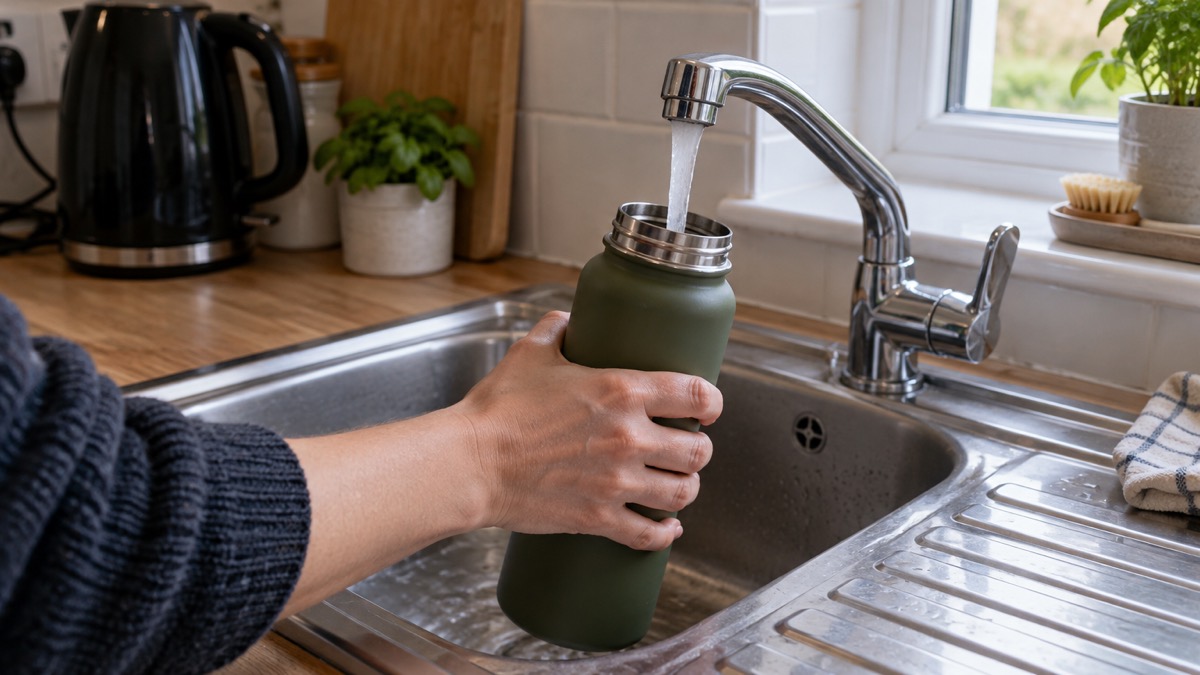
Nalgene's range for households is reusable water bottles and containers. The maker's guidance covers the whole range in the same terms: all bottles are free of BPA, BPS, BPF and phthalates, all are dishwasher safe, and the Lifetime Guarantee covers functional damage to bottles and containers1.
That is a simple range to plan around. A bottle for each person in the household, plus a spare cap or two, covers the drinking and carrying side of a water plan. The bottles are designed to be refilled and reused, which is exactly what an emergency kit needs: items that sit ready for months and then work first time.
| What it is | What it does for the household | What to know |
|---|---|---|
| Reusable water bottle | Carries drinking water from tap or store to where it is needed; one per person avoids sharing cups | Free of BPA, BPS, BPF and phthalates; dishwasher safe1 |
| Bottle for the grab bag | Ready to fill and carry if you leave home at short notice | Fill about two thirds full if freezing; store cap off when empty1 |
| Containers | Hold and carry water or other supplies | Covered by the same Lifetime Guarantee for functional damage1 |
Reusable water bottles in a household emergency kit
Bottled water appears on council emergency checklists across the UK. Dumfries and Galloway's household emergency pack guidance gives a figure of 2.5 litres of bottled water per person for each day3. The Scottish Government's Ready Scotland kit list includes toiletries, hand sanitiser and wet wipes for hygiene4. Wiltshire's checklist lists bottled water and dried foods such as cereal bars5, and Lincolnshire's emergency advice lists water for drinking and sanitation6.
A reusable bottle fits alongside that stored water rather than replacing it. The stored bottles are the reserve; the reusable bottle is what each person drinks from and carries. Keep one bottle per household member in the kit, clean and dry, with the caps off so they do not grow stale.
- Bottled water in plastic bottles, so there is drinking water in the kit itself1.
- Stored water behind it, at the figure your local guidance gives, such as 2.5 litres per person per day3.
- Hygiene items with the kit, including hand sanitiser and wet wipes4.
- Paper cups, plates and plastic utensils, and paper towels, listed among the items an emergency kit can include5.
North Hertfordshire's emergency kit list sets out the wider basics: a portable power bank, first aid kit and manual, hand sanitiser and wet wipes, a battery or dynamo torch, matches in a waterproof container, spare batteries, a notepad and pencil, a whistle, tools to turn off utility supplies, local maps, rubbish bags with plastic ties, a dust mask, plastic sheeting and duct tape7. Denbighshire's supplies kit adds sanitation items including moistened towelettes, soap, hand sanitiser, heavy duty plastic rubbish bags and ties, toilet paper and disinfectant8. A water bottle sits naturally with these: it is the item you reach for first and refill most often.
Filling a bottle safely from the tap or stored water
Fill your bottles from the tap while supplies are working, and refill them at the first sign of a disruption such as a storm warning or a planned outage. Official guidance for a national power outage says to hold a small amount of bottled water at home and make sure it is not past its expiry date2. Basingstoke's emergency guidance says it is useful to have bottled water, ready to eat food and a bottle or tin opener if you are required to remain at home for several days9.
If you are filling from stored water rather than the tap, keep the container clean. Use bottles that are clean and have not held milk or other dairy products, and fill them to the top to keep air out10. Do not fill a bottle from a source you are unsure of, and do not assume a reusable bottle makes water safe: it does not treat water, it only carries it.
For more on storing and treating water, see Water in an Emergency: A Household Guide.
Cleaning a bottle before and after use
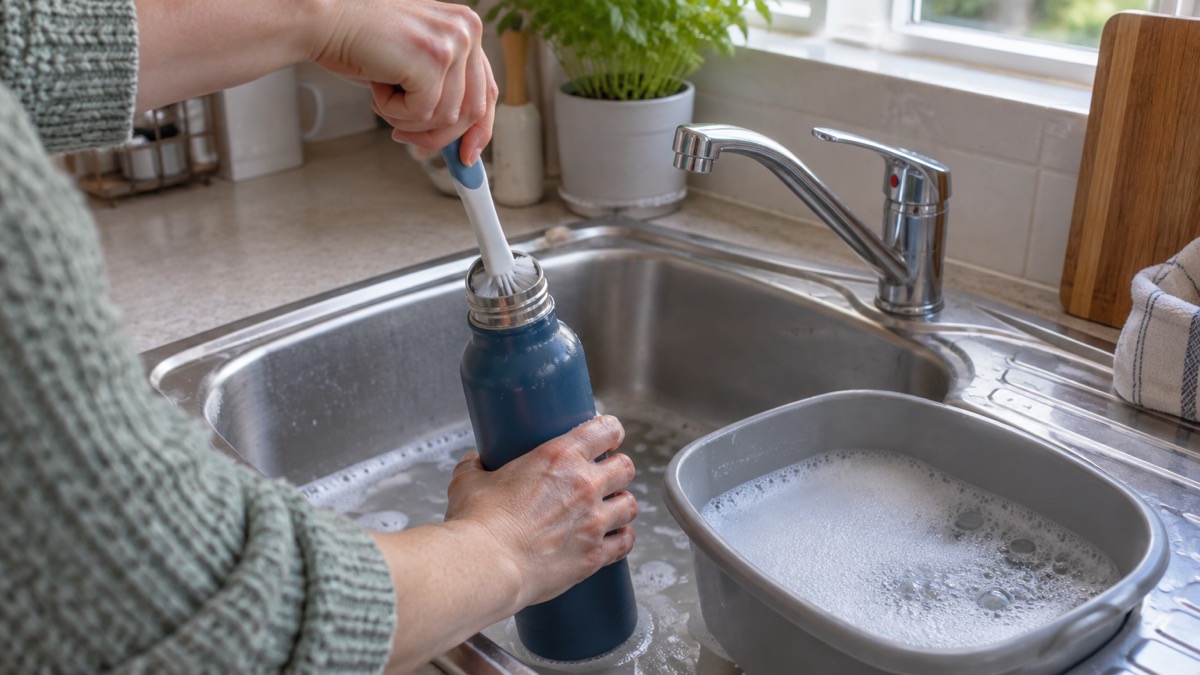
Nalgene states that all of its bottles are dishwasher safe, and recommends placing them on the top rack and away from any heating element1. That is the simplest routine clean. For a deeper clean, the maker gives a hand-wash method: fill the bottle about two thirds full with very warm water and a few drops of bleach, put the cap on, shake well, let it sit for an hour, scrub the cap and bottle with a bottle scrubber, then rinse well1.
Clean bottles before you store them and again before you fill them for use. A bottle that has sat in a cupboard for months should be washed before it holds drinking water. If you have used a bottle during a disruption, wash it before it goes back in the kit.
Storing filled and empty bottles at home
Store empty bottles clean and dry. Nalgene advises air-drying a bottle fully after cleaning with the cap completely removed to prevent bacterial growth and odours, then storing it with the cap off in a cool, dry place1. That keeps the bottle ready for its next use and avoids the musty smell that comes from sealing a damp bottle.
Store filled bottles where you will find them. Official guidance for a national power outage suggests holding a small amount of bottled water at home and making sure it is not past its expiry date2, and Basingstoke's guidance suggests having bottled water, ready to eat food and a bottle or tin opener ready if you must remain at home for several days9. Keep the filled bottles together with your food stores and your bottle opener, so the kit works as one.
Check dates. Official guidance for a national power outage says to make sure stored bottled water is not past its expiry date2. Rotate shop-bought bottles as you would food, and if you fill your own bottles, clean them first and use them within a sensible period rather than leaving them indefinitely.
For the household's wider water storage, see Water in an Emergency: A Household Guide.
Taking a water bottle when you leave home in a hurry
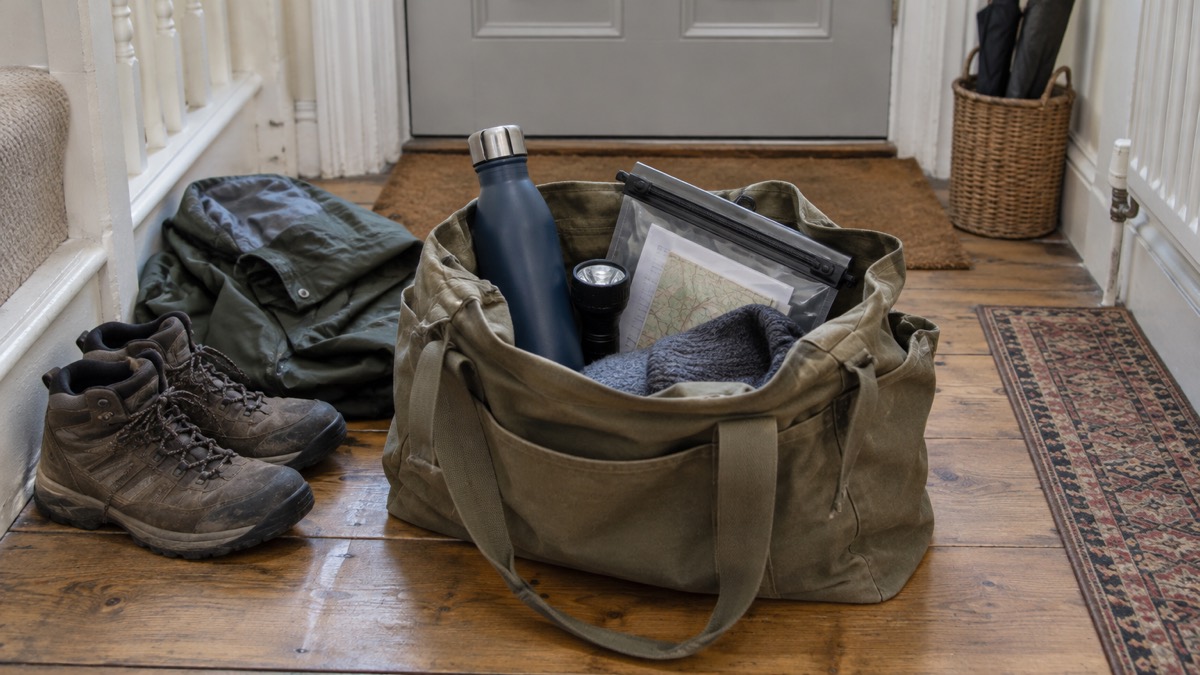
A grab bag is the kit you take if you have to leave quickly. A grab bag helps if you have to leave home quickly in an emergency, or your power or water are disrupted11. London Resilience Partnership advises packing a grab bag of essential items that might be helpful if you have to leave your home at short notice12. A filled reusable bottle belongs in it.
Official guidance is consistent on carrying water when you go out. The UK Government's hot weather advice says that if you are going out, take a refillable bottle filled with water, and take extra water for journeys on public transport or by car13. The Met Office's summer advice says to drink plenty of fluids and take a refillable bottle filled with water when you go out14. The Welsh Ambulance Service advises carrying a refillable water bottle with you15. Public Health Wales advises carrying some water and drinking lots of fluids11.
- Fill the bottle before you leave, not on the way13.
- Take extra water for journeys by public transport or car13.
- Pack it in a waterproof bag with your other emergency items, as the Royal Borough of Windsor and Maidenhead's home emergency plan advises16.
- For a long journey, National Highways advises having any medication you need, a charged mobile phone, and food and water with you before setting off17.
- For a warm drink, official guidance for leaving home suggests a warm drink in a flask and bottled water18.
What can go wrong with a reusable bottle
Most problems with a reusable bottle are simple and preventable. A full bottle put in the freezer can crack, which is why the maker says to fill only about two thirds full to allow for expansion1. A bottle stored damp and sealed can grow bacteria and smell, which is why the maker says to air-dry it fully with the cap off and store it cap off in a cool, dry place1. A lost or split cap makes the bottle useless for carrying water, so keep a spare.
A bottle left in a hot car or in direct sun is not a safe place for drinking water over long periods. Keep filled bottles out of direct sunlight and away from heat.
If a bottle is cracked, badly scratched inside or its cap no longer seals, stop using it for drinking water. The maker's Lifetime Guarantee covers functional damage such as cracks, breaks or broken components from regular, intended use1, so check the maker's support pages before you throw a damaged bottle away.
Support, warranty and safety notices
Nalgene's Lifetime Guarantee covers functional damage to the bottle or containers such as cracks, breaks or broken components from regular, intended use1. That is the maker's own statement of what the guarantee covers. Keep your proof of purchase and check the maker's support pages for how to make a claim.
Register your product where the maker offers it. South Wales Fire and Rescue Service advises registering products with the manufacturer for safety updates, recalls and warranties19. That applies to bottles as much as to anything else with a guarantee: it is how you hear about a recall or a change to the product.
For the household's wider planning, see Getting Started: Preparing Your Household for an Emergency and Emergency Kit: What a UK Household Should Keep Ready.
Sources (19)
- Nalgene FAQ and support articles, Nalgene, 2026-07-22
- What is a national power outage, Wiltshire and Swindon Prepared, 2026-10-25
- Prepare for emergencies: household emergency pack, Dumfries and Galloway Council, 2026
- Emergency kit, Ready Scotland, 2026-10-22
- Planning for an emergency: kit, Wiltshire Council, 2026-10-29
- Get help and advice in an emergency, Lincolnshire County Council, 2026-10-29
- Preparing for emergencies, North Hertfordshire District Council, 2015-01-12
- Emergency supplies kit, Denbighshire County Council, 2020
- Emergency, Basingstoke and Deane Borough Council, 2026-10-29
- Water storage tanks and cisterns, Drinking Water Inspectorate, 2026-06-09
- Stay safe in extreme heat, Met Office, 2026-10-29
- Preparing yourself for emergencies, London Resilience Partnership, 2026-10-25
- Beat the heat: staying safe in hot weather, UK Government, 2026-07-21
- Hot weather and heatwaves - Be Ready, prepare.campaign.gov.uk (Be Ready)
- Warm weather advice, Welsh Ambulance Service NHS Trust, 2026-08-11
- Home emergency plan, Royal Borough of Windsor and Maidenhead, 2025-10
- Driving on motorways, National Highways, 2026-10-29
- Emergency kit checklist, Neath Port Talbot Council, 2026-10-29
- E-Bikes, Cheshire Fire and Rescue Service