
maXpeedingrods makes small engines and power equipment, and for a UK household the part that matters in an emergency is backup power: inverter generators, petrol and dual-fuel generators, and portable power stations. Which one suits you depends on what you need to keep running and where you can safely put it. A fuel generator gives the most output but must stand outdoors, at least 6 metres from windows, doors and vents, and never in a garage, shed or any partially enclosed space1. A battery power station can be used indoors, with no fuel and no fumes3.
Before you buy anything, decide what has to stay on. A fridge, a freezer, a phone charger, a router, a medical device: each draws a different amount, and the maker's own guidance is to match the machine to the load rather than buy the biggest you can find. Inverter generators produce a stable output and suit sensitive electronics and smaller essential loads4. Conventional open-frame generators are practical for larger loads and extended backup use, where portability and low noise are not priorities4.
Whatever you choose, the safety rules do not change. Fuel-driven equipment stays outside, always5. Carbon monoxide is invisible and can kill, and a generator run indoors or in a partly open space is the classic way households come to harm during a long outage2. Keep a carbon monoxide alarm in the home, test it at least once per month, and treat the generator as outdoor equipment in the same category as a barbecue or a camping stove8.
What maXpeedingrods makes for UK households
The range falls into three groups, and each does a different job in a power cut. Inverter generators are the quiet, steady option for electronics and small loads. Petrol and dual-fuel generators are the higher-output option for longer cuts and heavier equipment. Portable power stations are the indoor option, with no fuel to store and no exhaust. The maker's own guidance sets out where each type fits, and it is worth reading it against your own household rather than against a showroom display4.
| Type | Best suited to | Where it can run | Main trade-off |
|---|---|---|---|
| Inverter generator | Sensitive electronics, home offices, smaller essential loads, quieter settings4 | Outdoors only | Lower output than open-frame machines |
| Petrol or dual-fuel generator | Larger loads, extended backup, workshops and worksites4 | Outdoors only | Noise, fumes, fuel storage |
| Portable power station | Indoor backup, phones, small appliances, medical devices9 | Indoors | Limited run time, needs recharging |
The wider household plan matters as much as the machine. A generator is one line in a backup power plan that also covers lighting, heating and cooking, and it should sit alongside the emergency kit you keep ready. If you have not yet worked out what your household would need in a long cut, start with Power Cuts: A Household Guide and come back to the kit once you know your loads.
Inverter generators: steady power for sensitive devices
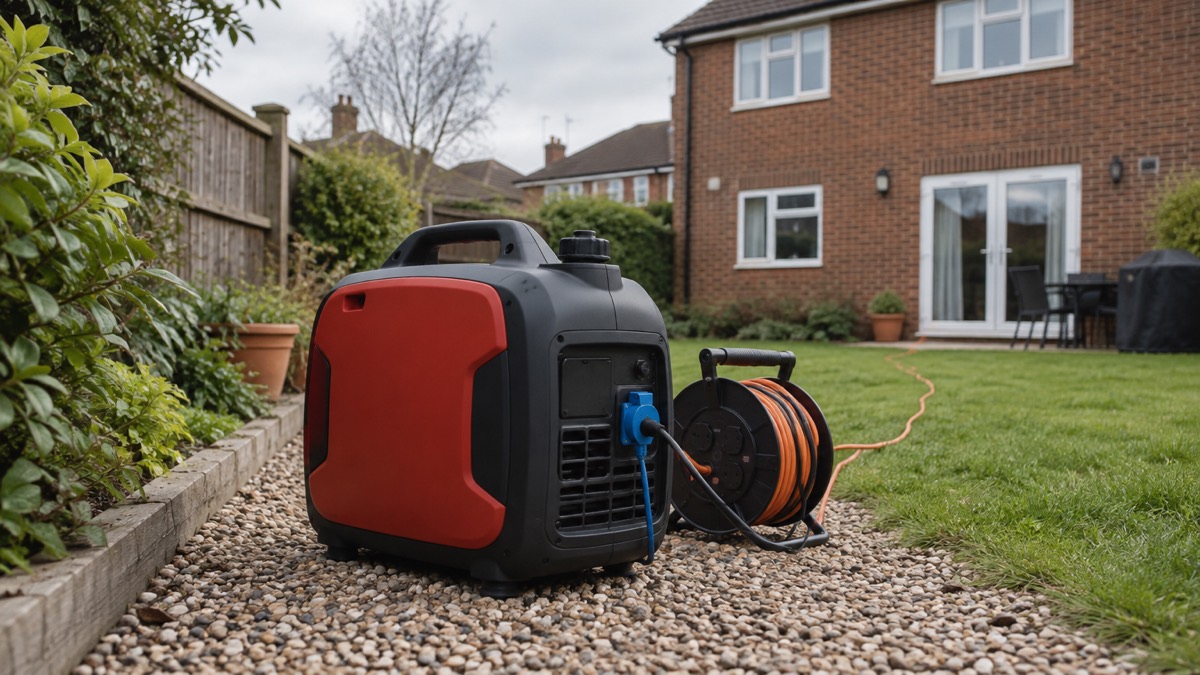
An inverter generator is the type to look at if what you need to keep running is delicate. The maker describes them as producing a stable electrical output, particularly well suited to sensitive electronic equipment, smaller essential loads, home offices, portable backup power and quieter environments4. In household terms, that means a laptop, a router, a phone charger, a small medical device or a modem can be run without the worry that a rough supply will damage them.
That stability is the point of the inverter design, and it is why this type is often the first choice for a flat or a small house where the load is modest and the neighbours are close. The quieter running matters in a terraced street during a long outage, when several households may be running machines at once. The maker also notes that two generators with similar power outputs can have very different fuel consumption, so think about how long you expect the outage to last and how much fuel you would need to see it through4.
What an inverter generator will not do is run the whole house. It is built for essential loads, not for electric showers, ovens or heating. Plan which circuits or appliances you would actually connect, write the list down, and keep it with the machine. If your needs are mostly charging and small devices, a battery power station may do the same job indoors with less fuss, and the two can work together: the generator outdoors, the power station inside.
Petrol and dual-fuel generators: higher output for longer cuts
When the load is heavier or the outage is long, a conventional generator is the practical choice. The maker describes traditional open-frame generators as able to provide substantial power, often a practical option when you need to run larger loads, for extended backup use, workshops and worksites, where portability and low noise are not priorities4. For a household, that might mean a freezer, a pump, power tools for clearing up after a storm, or a longer run of essential equipment.
Dual-fuel machines add flexibility. The maker states that dual-fuel generators let you operate using two fuel sources, typically petrol and LPG4. In a long outage, that means a second fuel route if one runs short, though you still have to store both safely and within the law. Diesel generators are also described by the maker: they tend to be larger, heavier and more expensive than many petrol or inverter generators, and can produce more noise and vibration4. For most UK households, petrol or dual-fuel is the more manageable route.
Fuel consumption is the figure that decides how useful a generator really is in a long cut. The maker's advice is to compare machines on how long they will run and how much fuel an extended outage would need, not just on output4. Work out your likely run hours, multiply by consumption, and check you can store that much fuel legally and safely. If you cannot, a smaller machine plus a power station may serve you better.
Portable power stations: indoor backup without fumes
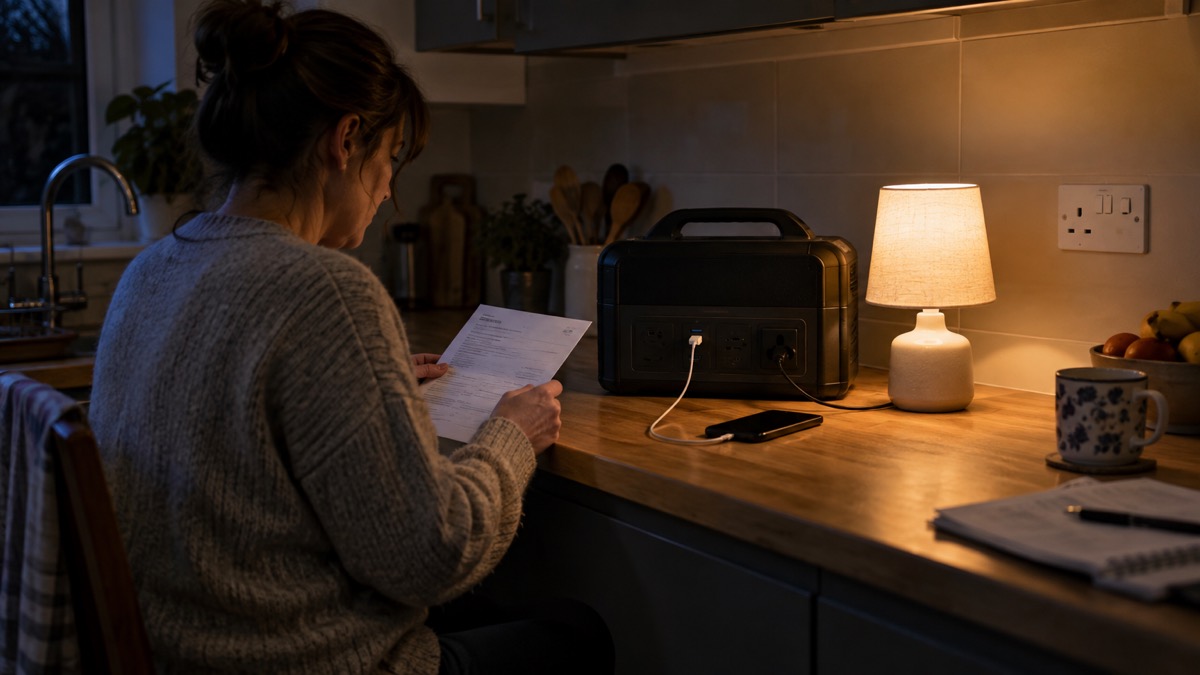
A portable power station is the one type of backup power you can use inside the home while you sleep. The maker's product information for the FridgePower model states that it has no gas to store, no fumes and no carbon monoxide, and is designed for safe indoor use with flame-retardant materials and a washable dust filter3. That combination is what makes it different in kind from a generator: there is no exhaust, no fuel and no siting rule about six metres from a window.
For a household, the power station covers the loads that matter most in the first hours of a cut: phones, a router, a light, a radio, and in some cases a fridge or a medical device. It also suits flats, caravans and homes with no safe outdoor space for a generator, and it can be used during a storm when running a fuel machine outside would be unwise. The trade-off is run time: a battery holds a fixed amount of energy and then needs recharging, from the mains when it returns or from a generator or solar panel outdoors.
Treat the battery with the same care as any other lithium-ion device. The fire and rescue service notes that lithium-ion batteries cover a wide range of household items, from phones to e-bikes and vacuum cleaners, and that they need sensible charging and storage10. Charge on a hard, non-combustible surface, do not cover the unit while charging, and keep it out of direct sun. If the case is damaged, stop using it and seek advice.
What a generator can run in a power cut
The honest answer is: less than most people expect, and only outdoors. A generator is not a replacement for a mains supply. It runs the appliances you plug into it, up to its output, and nothing more. The maker's guidance is to match the machine to the load: inverter generators for sensitive electronics and smaller essential loads, conventional generators for larger loads and extended backup4. Plan your list before you buy, and test it once in daylight so you know what works.
Start with what keeps the household safe and in touch: lighting, a phone charger, a radio, a carbon monoxide alarm, and any medical equipment. Add the fridge or freezer if the machine can carry it, and run it in bursts rather than continuously. Leave out anything that heats: kettles, ovens, immersion heaters, fan heaters and electric showers draw far more than a small generator will supply, and the fire and rescue service warns against overloading sockets and extension leads10.
- Keep on: lights, phone charging, radio, router, medical devices, carbon monoxide alarm
- Run in bursts: fridge and freezer, to keep food cold without running the machine all day
- Leave off: kettles, ovens, heaters, showers, anything that heats
- Never: connect a portable generator to the home's wiring yourself
If someone in the household depends on electricity for medical reasons, tell your network operator. Scottish and Southern Electricity Networks states that it only provides generators for customers who are medically dependent on electricity, and not for businesses or personal use11. That is a separate support route from buying your own machine, and it is worth registering for it. The Extra Help in an Emergency guide explains the Priority Services Register and other support.
Where a generator must never go
This is the section to read twice. Every fire and rescue service and safety body in the UK says the same thing, and the reason is carbon monoxide. The Health and Safety Executive for Northern Ireland states that a generator must not be used indoors or in partially enclosed spaces, including homes, garages and crawl spaces, even those areas with partial ventilation2. Armagh City, Banbridge and Craigavon Borough Council advises operating generators outdoors at least 6 metres (20 feet) away from windows, doors and vents, and states that partially open spaces, garages and sheds are unsuitable1.
The Welsh fire and rescue services put it just as plainly: do not use any fuel-driven equipment, generators or petrol and diesel pumps, indoors12. The Scottish Borders guidance is that petrol or diesel generators and other fuel-driven equipment should never be brought indoors13. The government's flooding recovery advice adds that using these devices indoors can be fatal, and that outdoor equipment should not be used inside for drying, heating, cooking or power supply14. The message does not vary by nation.
The same rule applies on holiday. Humberside Fire and Rescue Service advises never running a gas, petrol or diesel-powered generator or a heater not designed for the purpose inside a caravan, motorhome, tent or awning15. If you take a generator away with you, it stays outside the living space, every time.
Safe refuelling and fuel storage
Storing petrol is regulated, and the rules exist because petrol vapour ignites easily. The Health and Safety Executive states that storing petrol safely is covered by the Petroleum (Consolidation) Regulations 20147. Follow petrol station safety instructions whenever you fill your tank or a portable container, and place containers on the ground when filling them7. Keep petrol out of the reach of children7.
An empty container is not automatically safe. The Health and Safety Executive warns that a container that previously held petrol may still be unsafe because of the fumes which can remain in it, and that the cap should be kept securely fastened and the same storage advice followed7. Store fuel away from the house where you can, in a locked, ventilated place, and never in a hallway, under stairs or anywhere a fire could spread into the home.
Fire services also give siting advice for fuel stores. Mid and West Wales Fire and Rescue Service advises clearing at least a three-metre space around any fuel tanks, and storing tanks on non-combustible material such as gravel or concrete16. South Wales Fire and Rescue Service advises looking for safe locations for firewood, fuel and gas cylinders as part of property preparation17. For a household with a generator, that means a dedicated spot outdoors, away from the building, clear of vegetation and clutter.
- Keep fuel in approved containers, capped, out of reach of children7
- Fill containers on the ground at the station, following staff instructions7
- Store away from the house, on non-combustible ground, with a clear space around it16
- Never refuel a hot generator; let it cool first
- Keep a carbon monoxide alarm in the home and test it monthly8
Servicing and storing kit between emergencies
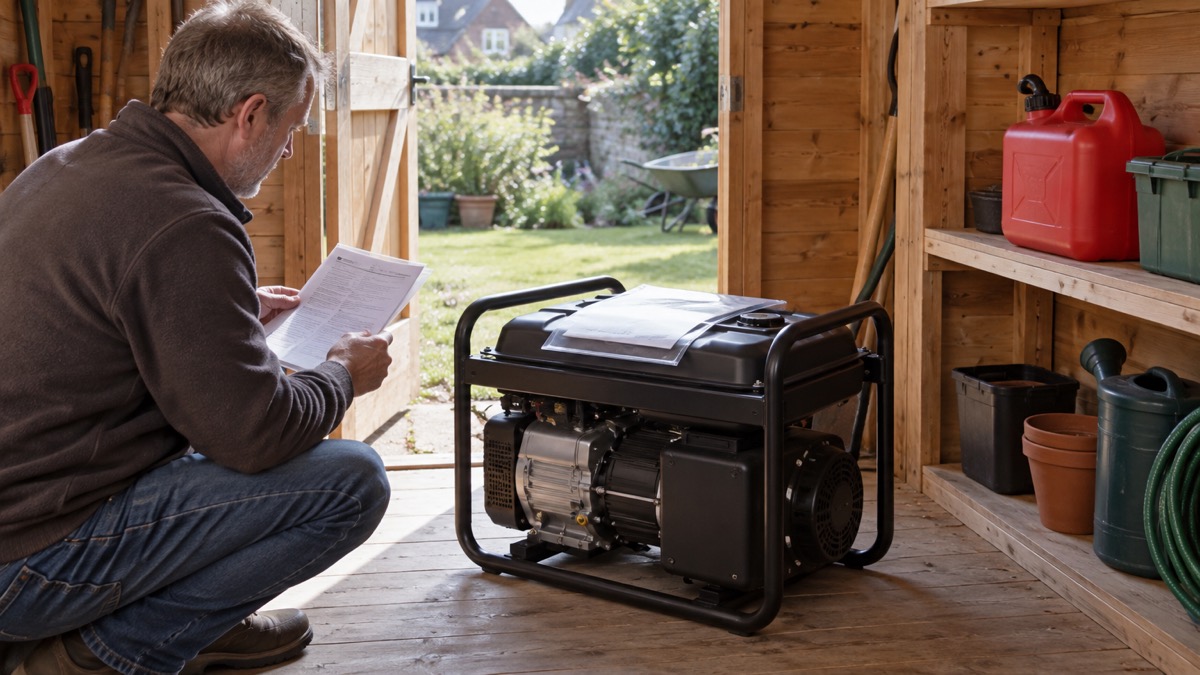
A generator that has sat in a shed for two years is not reliable backup. Between emergencies, run it briefly at intervals, check the oil and filters, and keep the fuel fresh. Store it dry, covered against rain but never sealed in a space where fumes could collect, and keep the manual with it. Record the model and serial numbers in your household file so a parts or warranty query is quick to answer.
The rest of the household kit needs the same attention. The emergency kit checklist for North Port Talbot includes a first aid kit and water for drinking and sanitation18. Keep baby and pet supplies at home in case of an emergency20. The Met Office winter checklist reminds households to think of vulnerable neighbours, which is a good prompt to check that an older neighbour's own backup arrangements are sound21.
For anyone using medical equipment at home, tell the supplier and the network operator. Warwickshire County Council states that the service will store information on the location and number of oxygen cylinders for use in an emergency and can provide additional guidance19. That kind of registration is what turns a household from an unknown address into one that gets help first.
Support and warranty for UK buyers
Buy from a seller who can show that the product meets UK safety law. The government's guidance on e-bike and e-scooter fires states that products sold to UK consumers must meet UK safety laws, and advises checking whether the seller provides information about how they comply22. The same principle applies to any electrical product: a legitimate UK seller will tell you who they are, where they are and how to reach them.
Register the product as soon as it arrives. Official guidance for home heating products is to register your products with the manufacturer or on the AMDEA website, so that in the event of a recall or repair you can be contacted23. Some retailers also provide registration links or instructions when you buy the product24. Keep the receipt, the model number and the serial number together, and note the date of purchase.
If something goes wrong, contact the seller first, then the maker. Have the model and serial numbers ready, describe the fault plainly, and do not attempt repairs to fuel or electrical systems yourself. If the machine is subject to a recall, stop using it immediately and follow the notice.
Safety notices and recalls
Check for recalls before and after you buy. The Office for Product Safety and Standards issues product recall notices, and checking them is the standard way to confirm whether a product you own has been withdrawn24. Recent examples show how seriously these notices are treated: a recall of MSR Trail and Reactor camping cooking pots, notified by the Office for Product Safety and Standards, told affected consumers to stop using the recalled pots immediately and contact the maker for a free replacement part25.
The same discipline applies to batteries. South Wales Fire and Rescue Service notes that lithium-ion batteries power a wide range of household devices, from phones to e-bikes and scooters, and that they need to be bought, charged and stored with care10. If a power station's casing is damaged, if it gets hot in use, or if it smells of burning, stop using it and seek advice from the seller.
Keep a simple record of every powered item in the house, with its make, model and date of purchase. It takes ten minutes and it is the difference between a quick recall check and a scramble through old emails. Pair it with a monthly alarm test and an annual wiring check, and your household will be ready for the next cut rather than caught out by it.
Sources (25)
- Safe use of heaters and generators, Armagh City, Banbridge and Craigavon Borough Council
- Safety tips for using a portable generator in an emergency, Health and Safety Executive for Northern Ireland, 2025
- FridgePower BlueCell 200, Bluetti Power UK
- Home backup guide, Champion Power Equipment
- Carbon monoxide safety, Mid and West Wales Fire and Rescue Service
- Power cuts, Dorset and Wiltshire Fire and Rescue Service, 2023
- Staying safe with fire and explosion risks, Health and Safety Executive
- Smoke alarms and CO detectors, Warwickshire County Council
- Portable Power Station Buyers Guide - Expert Advice - Machine Mart, Machine Mart
- Lithium-ion batteries, South Wales Fire and Rescue Service
- Planned power cuts, Scottish and Southern Electricity Networks
- Flooding advice, Scottish Borders Council
- How to recover from flooding, GOV.UK, 2023
- Carbon monoxide, Public Health Wales
- Caravan, motorhome and campervan safety, Humberside Fire and Rescue Service
- Rural wildfires, Devon and Somerset Fire and Rescue Service
- Carbon monoxide safety (Welsh), Mid and West Wales Fire and Rescue Service
- Get help and advice in an emergency, Lincolnshire County Council
- Fire safety when using medication and medical equipment, Warwickshire County Council
- Emergency kit checklist, Neath Port Talbot Council
- WeatherReady winter checklist, Met Office
- Buy safe, be safe: avoid e-bike and e-scooter fires, GOV.UK, 2024
- Heating your home safely, North Yorkshire Fire and Rescue Service, 2026
- Registering your e-bike or e-scooter for safety alerts and product recalls, London Fire Brigade
- Product recall: MSR Trail and Reactor camping cooking pots, Office for Product Safety and Standards, 2024