

Glow-worm is a British boiler maker that has been building domestic gas boilers since 1934, when it started at the Derwent Foundry in Derbyshire. It was acquired by the Vaillant Group in 2001 and still produces combi, system and heat only boilers, with Made In Britain accreditation for its Energy, Ultimate and Easicom ranges1.
For a household, the point of knowing the maker is what happens when the heating stops. A Glow-worm boiler is a gas appliance that needs mains power to run its pump, fan and controls, so a power cut takes your heating and hot water with it even if the gas is still on. Most faults a household can safely deal with come down to pressure, a tripped switch or a thermostat set too low; everything else needs a registered engineer1.
What Glow-worm makes for UK homes
Glow-worm's current output is domestic gas boilers, in three broad types: combi, system and heat only. The maker describes its boilers as A-rated for efficiency, and holds Made In Britain accreditation for the Energy, Ultimate and Easicom ranges1.
That matters for preparedness in a simple way. A gas boiler is not a standalone appliance like a torch or a radio. It depends on mains electricity for its controls, pump and fan, and on a live gas supply. In a power cut, or a gas interruption, it stops, and no amount of pressing buttons will bring it back until the service returns. Plan for warmth and hot water without it, using the heating and cooking without mains power guide and the gas and heating failures guide, rather than expecting the boiler to carry you through.
The other thing to know is that a boiler is a fuel-burning appliance, and the fire and rescue service treats those seriously. The advice is to use a reputable, registered engineer to install and service your boiler, cooker, heating system and appliances, and never to attempt to install or service appliances yourself2. That applies to Glow-worm boilers as much as any other make.
Combi, system and heat only boilers
The three types behave differently in a household, and the difference shows up most when hot water demand is high or when the supply is interrupted. The maker sets them out like this1:
| Type | What it is | What it means at home |
|---|---|---|
| Combi | A single unit that heats water on demand | Quicker to install and cheaper to maintain than other Glow-worm types, but can only provide hot water to one place at a time1 |
| System | A boiler with a separate hot water tank but no cold water tank, with pumps and valves built in | Takes up less space than a regular boiler1 |
| Regular (heat only) | A boiler, storage cylinder and a water tank | Can supply hot water to multiple taps at the same time, even in areas with low water pressure1 |
For emergency planning, the stored-water types have one quiet advantage: a cylinder holds hot water that stays warm for a while after the boiler stops, so a household with a system or regular boiler has a buffer a combi household does not. The combi's limitation, one outlet at a time, is worth knowing before a morning when everyone is trying to wash at once.
Energy, Ultimate and Easicom boiler ranges
Glow-worm's ranges carry Made In Britain accreditation, and the maker publishes fault codes so a household can tell a nuisance from a call-out. The codes differ by range, which is why the model matters when you ring for help1.
| Range | Code | Meaning |
|---|---|---|
| Energy | F10 | Flow temperature sensor defective1 |
| Energy | F22 | Low water pressure1 |
| Energy | F88 | Gas valve fault1 |
| Betacom | F00 | Flow heating temperature sensor fault1 |
| Betacom | F20 | Overheating fault1 |
| Betacom | F67 | Fault in main board1 |
| hxi | F4 | Ignition fault1 |
| hxi | F16 | Flame detection fault1 |
| hxi | F26 | Poor circulation1 |
A red flashing light on a Betacom range boiler could indicate that it is overheating1. Treat that as a stop signal: switch off and call an engineer rather than resetting repeatedly.
What to check before you call an engineer
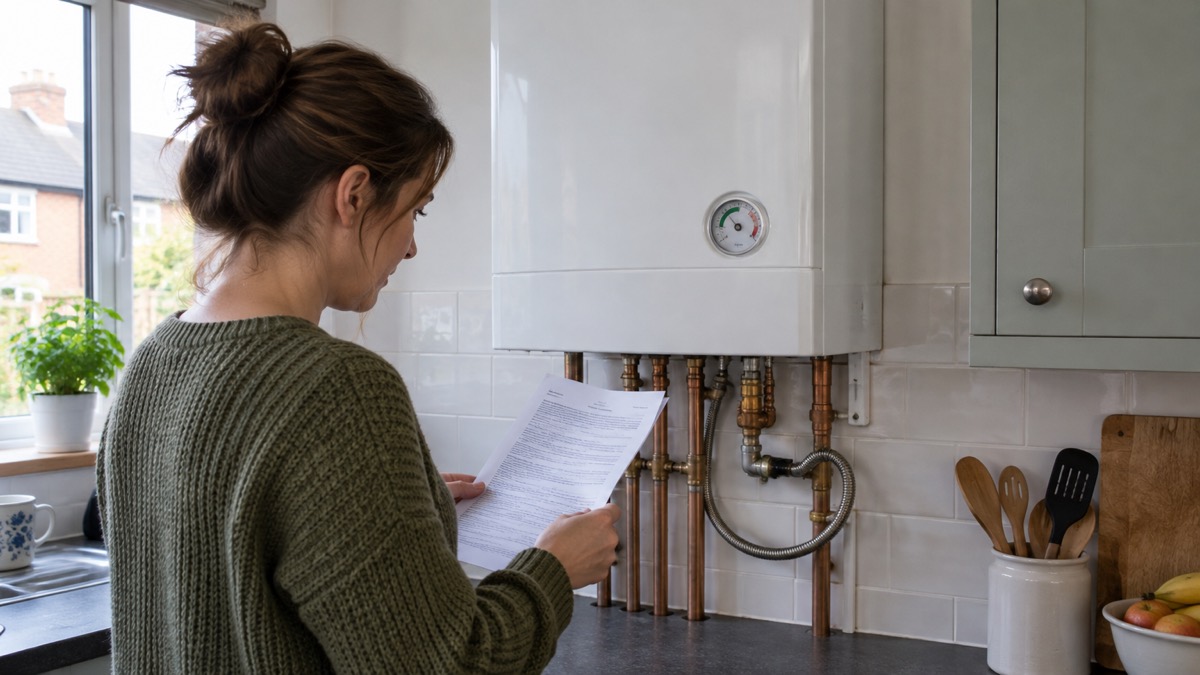
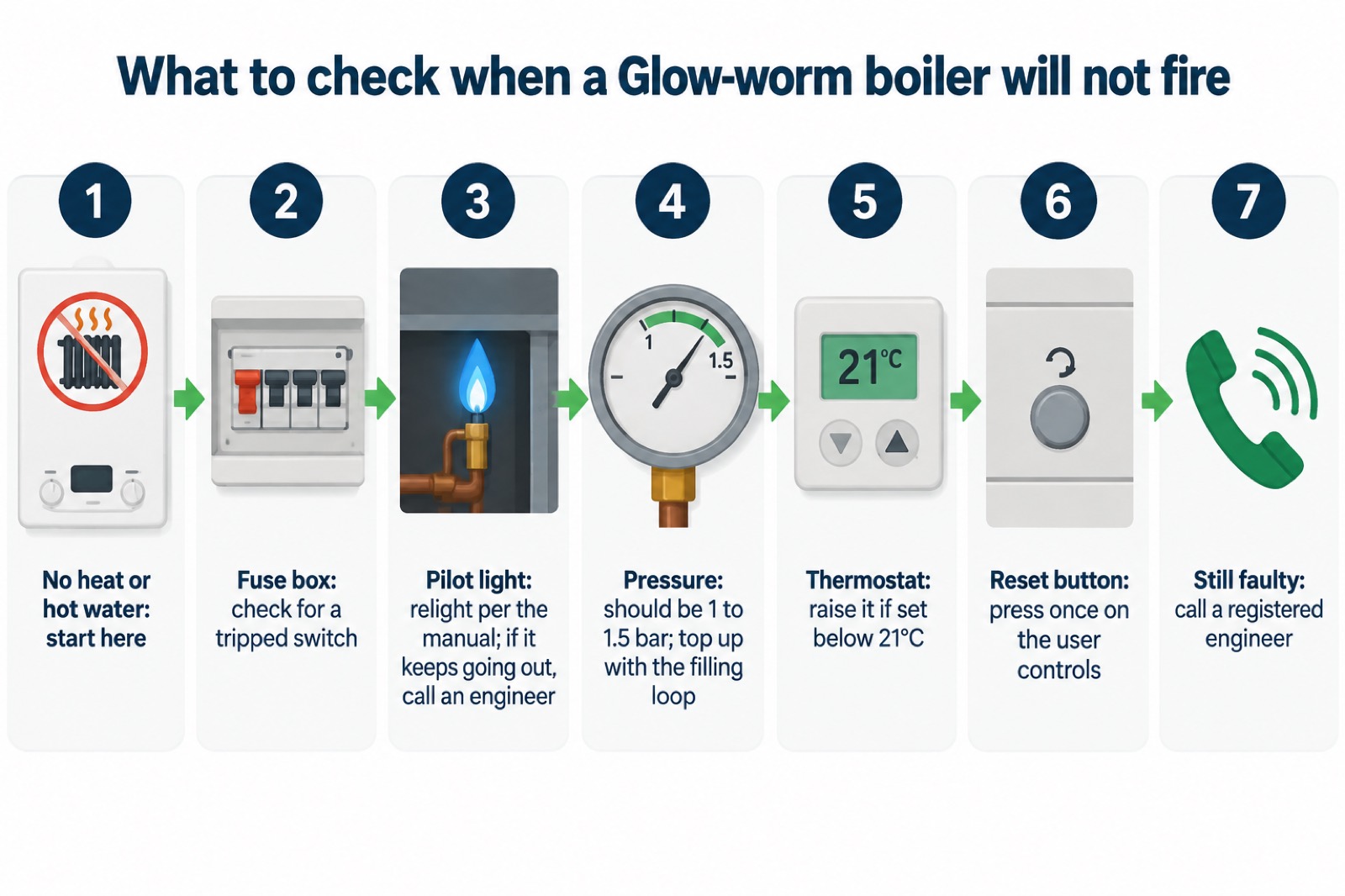
Most no-heat or no-hot-water calls come down to a handful of things a household can check safely. The maker's own sequence is: check the fuse box for a tripped switch; check the pilot light and relight it as the manual describes; check the water pressure is between 1 and 1.5 bar and adjust it using the filling loop; and check the thermostat is not set below 21℃1. If the pilot light keeps going out, get it checked by an engineer1.
Most Glow-worm boilers have a reset button on the user controls, and pressing it resets the boiler; if you cannot find it, the manual will show you where it is1. Manuals can be downloaded from the Glow-worm website1.
If the pressure is high, the maker says this can be caused by high water levels or by the failure of internal boiler components1. Bleeding radiators is the household remedy, and the maker's steps are: switch off the boiler and let it cool; turn the radiator valve anti-clockwise with a radiator key or screwdriver; listen for hissing as air escapes; catch water in a container when it starts coming out; re-tighten the valve and move to the next radiator1. Afterwards the pressure should be around 1.3 bar1.
Replacing a Glow-worm boiler: speak to a local installer
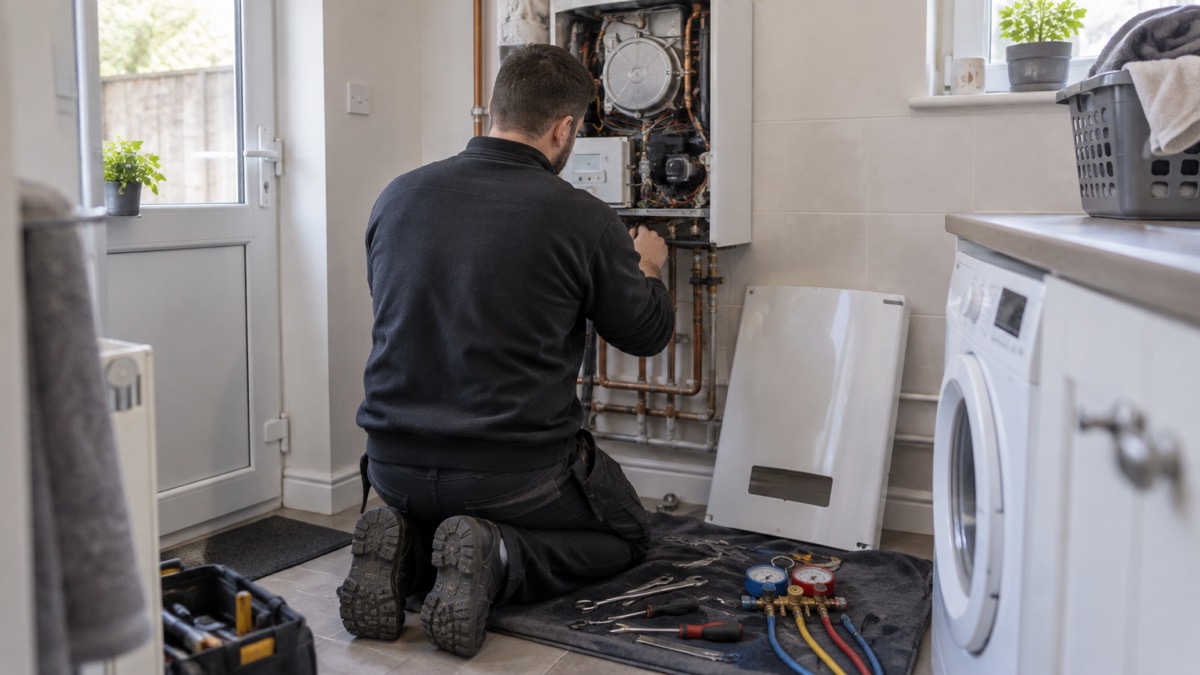
When a boiler reaches the end of its life, the decision is not really about the badge on the front. It is about which type suits your hot water use and your space, and who installs it. The maker's guidance is that a Glow-worm combi can be quicker to install and cheaper to maintain than other Glow-worm types, while a regular boiler can serve several taps at once even at low pressure1.
Whoever you choose, the official advice is to pick someone registered with a competent person scheme, which lets them self-certify that their work complies with building regulations3. The fire and rescue service adds that a boiler should be installed by a competent person following the manufacturer's instructions and building regulations4.
Who owns Glow-worm, and where it started
Glow-worm first began manufacturing boilers in 1934 at the Derwent Foundry in Derbyshire, having been founded as The Glow-worm Boiler and Fireplace Co Ltd1. The company describes itself as one of the leading heating manufacturers in the UK today1.
For a household, ownership is mostly about continuity: manuals, fault code lists and technical support sit with the maker, and the maker's guidance points you to its website for manuals1. The maker's guidance does not name a trademark holder or a former company name, so if you need either for a warranty or conveyancing query, ask the company directly.
Where this fits your household plan
A Glow-worm boiler is not emergency kit, and it should not be treated as such. It is a gas appliance that stops in a power cut and needs a registered engineer for anything beyond the checks above1. What a household can do is keep the manual to hand, know where the reset button and pressure gauge are, keep the pressure in range, and have a plan for warmth and hot water that does not depend on it. The power cuts guide and the home emergencies guide cover the rest.
Sources (4)
- Glow-worm boilers guide, British Gas, 2026-10-29
- Carbon monoxide safety, Devon and Somerset Fire and Rescue Service
- Oil storage regulations and safety: home, GOV.UK
- Wood-burning stoves safety, Cheshire Fire and Rescue Service, 2026-05-20