
ELPINE is a brand name that turns up in the UK's product safety system rather than in the shops' emergency kit aisles. The one ELPINE product recorded in official safety notices is a small circular black room heater with a remote control, made in China, which was recalled from end users on 19 December 2024 because it presents a serious risk of electric shock1. If you own one, stop using it now and contact the distributor you bought it from1.
That matters for a household preparing for a power cut or a cold snap, because a mains plug-in heater is exactly the sort of thing people reach for when the central heating fails. A heater that has been recalled cannot be part of that plan. This page sets out what the brand makes, what the recall says, how to check your own model, and how to keep any electrical kit you rely on in safe working order.
What ELPINE makes for UK households
The official record describes a single ELPINE product: an electrical room heater, listed under electrical appliances and equipment, with China given as the country of origin1. It is a mains-powered appliance with a remote control, not a battery power station, torch or camping stove, so it does nothing at all once the power is off. That is the first thing to understand about it as preparedness kit: it depends entirely on a working mains supply.
For a household, that shapes where a plug-in heater fits. It can take the chill off one room while the heating is out, but only while electricity is flowing. It cannot be used during a power cut, and it should never be run from a generator or an inverter unless the maker's instructions say so. If you are building a plan for cold weather, the heating and cooking without mains power guide covers the options that do not depend on the socket, and the backup power guide explains what a home battery or generator can and cannot carry.
The site does not cover ELPINE products as emergency kit, and there are no product pages for them. What follows is what a household needs to know to use, check and maintain the brand's kit safely, and where to go when something goes wrong.
Safety notices and recalls
The ELPINE Plug-In Heater was recalled from end users on 19 December 2024, notified by Local Authority Trading Standards1. The notice states that the product presents a serious risk of electric shock due to access to live parts, and that the heating element could be accessed with minimal force1. It also records that the product does not meet the requirements of the Electrical Equipment (Safety) Regulations 2016 or the Plugs and Sockets etc. (Safety) Regulations 19941.
"Owners should stop using the product immediately. Contact the distributor you purchased from to request redress."
Checking for recalls is not a one-off job. The Office for Product Safety and Standards issue recalls and alert notices on their website, and fire and rescue services across the UK point households to that list and to the Electrical Safety First recalled items page, which explains what to do with a recalled appliance2. Registering an appliance with the manufacturer means they can contact you if a safety repair is needed, and Fire Kills advises registering appliances so you can be notified if your product is recalled2.
- Search the government's product safety alerts, reports and recalls list for the brand and model2.
- Check the Electrical Safety First recalled items list3.
- Register new electrical items with the manufacturer so recall notices reach you4.
- Check periodically, not once, because notices are added over time6.
Choosing ELPINE kit by what your household needs
There is no ELPINE emergency kit range to choose from in the official record. The sensible approach is to decide what your household needs first, then see whether any plug-in appliance fits, and treat it as a supplement to a plan rather than the plan itself.
Official guidance is clear that kit contents depend on who lives with you, where you live, your personal circumstances, and whether anyone has a disability, health condition or access need7. Every household is different, so tailor your kit to your needs, including babies, pets and anyone who needs medication or other essentials8. A household emergency kit and an emergency plan should be made before cold weather arrives9.
| Household need | What to plan for | Where it fits |
|---|---|---|
| Warmth during a heating failure | A room heater only works while mains power is on; plan a non-electric layer too | heating and cooking |
| Warmth during a power cut | A plug-in heater does nothing; plan lighting, layers and a safe alternative | power cuts |
| Anyone with a health condition or access need | A personal plan for leaving the building safely if needed | extra help |
| Pets | Pet care items if required, and the name of your veterinarian | pets and animals |
A smaller personal kit in a backpack, kept where everyone knows, is worth preparing alongside the household kit10. Spare keys for your windows, car and house belong in the household kit11.
Specifications to check before relying on it
Before you depend on any electrical appliance in an emergency, check three things: that it is not subject to a recall, that it is undamaged, and that you understand how it is meant to be used. The Health and Safety Executive advises arranging inspection and testing of fixed wiring installations by a competent person, usually an electrician, and considering whether portable appliances should be more formally inspected or tested, and at what intervals12.
For the ELPINE Plug-In Heater specifically, the recall notice gives the identifiers to compare against your own unit1:
| Detail | Value |
|---|---|
| Brand | ELPINE1 |
| Product description | Small circular black room heater with remote control1 |
| Item number | 31492N1 |
| Barcode | 50386733149211 |
| PSD case number | 2405-01151 |
| Country of origin | China1 |
Read and follow the manufacturer's instructions before use, whatever the appliance13. If you are registering an appliance, you will typically need the model name or number, the serial number and the purchase date, so note them down when the item arrives2.
Safe use during an emergency
Electrical fires are a real risk in the home, and fire and rescue services across the UK give the same core advice: check your appliances are not subject to a product recall, and register them so you are told about safety repairs2. Scotland's fire service gives the same message on electrical safety at home3.
If anyone in your household may need help to leave the building safely in an emergency, a Personal Emergency Evacuation Plan (PEEP) sets out how14. Specialist health equipment that runs on mains power needs its own plan for a power cut, and fire services advise households that depend on it to think through what happens when the supply fails13.
Charging, fuelling and storage
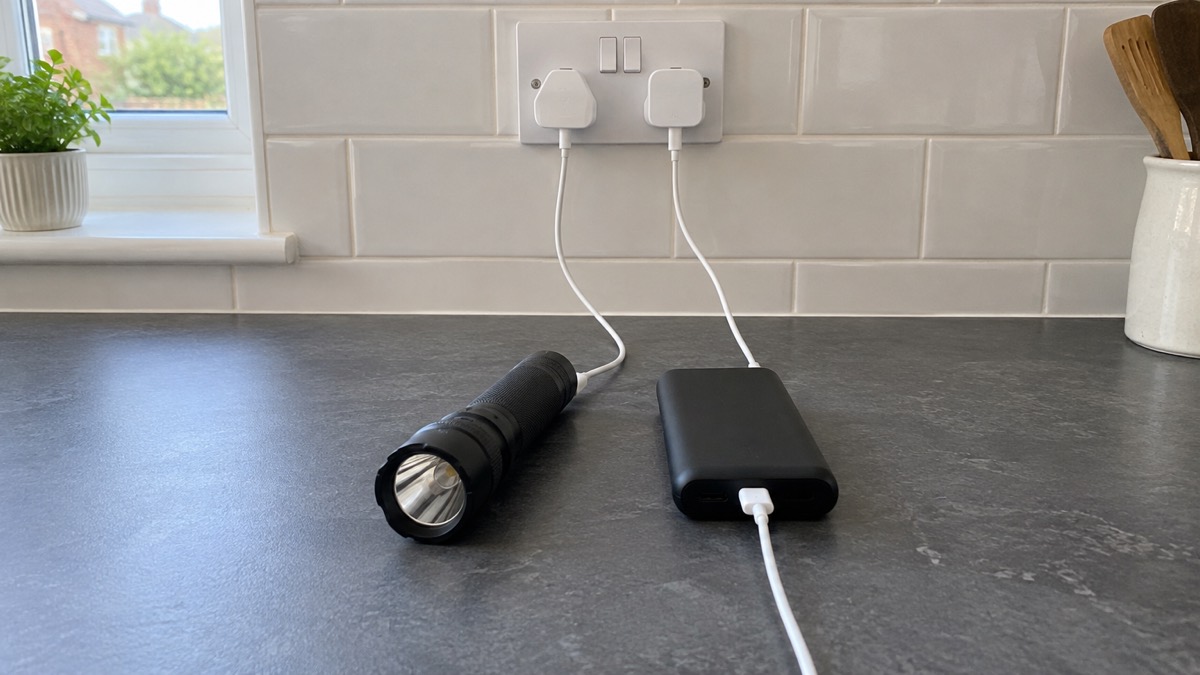
The ELPINE Plug-In Heater has no battery and no fuel, so storage is simple: keep it dry, keep it out of use if it is the recalled model, and keep the cable and plug undamaged. The wider lesson applies to any rechargeable kit a household keeps for emergencies, such as torches, power banks and lanterns.
Fire and rescue services advise charging batteries in a safe, visible location, away from flammable materials or escape routes15. Charge on a hard, flat, heat-resistant surface, away from extreme heat, cold, direct sunlight and flammable materials16. Always follow the manufacturer's instructions for using, charging, storing and disposing of rechargeable batteries16. Avoid storing or charging batteries in very hot or cold areas17.
Lithium-ion batteries are found in phones, e-bikes, e-scooters, mobility scooters, laptops, vapes and power tools, and they can be recharged many times18. If you own an electric vehicle, keep its battery topped up19.
Testing and maintaining your kit
A preparedness plan only works if the kit in it works when you reach for it. For electrical items, that means checking for recalls, checking for damage, and having the wiring in your home inspected by a competent person at sensible intervals12. Fire services advise checking appliances against recall lists periodically rather than once6.
- Check the plug, cable and casing for damage before each winter.
- Confirm the item is not on a recall list2.
- Register it with the manufacturer so safety notices reach you4.
- Have fixed wiring inspected and tested by a competent person, usually an electrician12.
- Keep the instructions and the purchase details together with the appliance.
Support and warranty
The recall notice gives the route for owners of the affected heater: contact the distributor you purchased from to request redress1. That is the first call for anything to do with a recalled unit, and it is worth keeping your order confirmation.
For other electrical goods, registering the appliance with the manufacturer is the practical step that keeps you in the loop, because it ensures manufacturers can contact you if a safety repair is needed2. Keep the model name or number, serial number and purchase date to hand, as these are typically needed when registering2.
Where to get help if your kit fails
If an electrical appliance fails, stops working safely, or you discover it has been recalled, stop using it and take it out of the emergency kit. Check the government's product safety alerts, reports and recalls list and the Electrical Safety First recalled items list to confirm what applies to your model2. Then contact the distributor you bought it from, as the recall notice directs1.
For a fire risk in the home, get everyone out and call 999. For help with heating, power cuts or a cold home, your local council and the guides on this site are the place to start: power cuts, gas and heating failures, and home emergencies. Households with someone who needs extra support should look at extra help in an emergency.
Sources (19)
- Product recall: ELPINE Plug-In Heater (2405-0115), GOV.UK, 19 December 2024
- Maintain appliances and recalls, Greater Manchester Fire and Rescue Service, 2026
- Electrical safety at home, Scottish Fire and Rescue Service, 27 February 2025
- Electrical items, London Fire Brigade, 25 October 2026
- Fire safety prevention, Fire Kills, 25 March 2026
- White goods, Cheshire Fire and Rescue Service, 20 May 2026
- Emergency kit, Ready Scotland, 29 October 2026
- Storm preparation, Cornwall Council, 29 October 2026
- Cold, snow and ice, Ready Scotland, 25 March 2026
- Preparing for emergencies, North Hertfordshire District Council, 12 January 2015
- Planning for an emergency kit, Wiltshire Council, 29 October 2026
- Electricity and electrical equipment hazards, Health and Safety Executive, 2026
- Specialist health equipment, London Fire Brigade, 25 October 2026
- Digital easy read fire safety booklet, London Fire Brigade, 2026
- Lithium-ion batteries, South Wales Fire and Rescue Service, 29 October 2026
- Battery safety, Greater Manchester Fire and Rescue Service, 29 October 2026
- OPSS safety awareness leaflet, Armagh City, Banbridge and Craigavon Borough Council, 2024
- Lithium battery fire safety, Tandridge District Council, 29 October 2026
- 12 tips to prepare for a power cut, Horsted Keynes Parish Council, 2026