
Dimplex is a British maker of domestic heating and hot water equipment, and its name is most often searched for by people who own one of its appliances and want to know whether it is safe, how to use it properly, or who to ring when something goes wrong. If you have arrived here because you have heard about a safety notice on a Dimplex A Class water cylinder, the first thing to do is find the model and serial number on your cylinder's label and check it against the notice. Do not drain the cylinder or disconnect it yourself while you check.
If you are here for a different reason, the same principle applies across the range: find the label, note the model and serial number, and keep the appliance registered so that any future recall reaches you directly rather than waiting to be found. Registering your products with the manufacturer, or on the AMDEA website, means the company can contact you in the event of a recall or repair programme1.
This page sets out what to do now, how to check your model, what the safety notice covers, how to keep hot water and heating running safely while you check, the warning signs of a fault, and who to contact. It also covers the wider Dimplex range for UK households, with links to the relevant household guides.
Product safety notice: Dimplex A Class Water Cylinders
A product safety notice is issued when a maker or regulator identifies a risk that owners need to act on. The pattern is consistent across consumer appliances: the maker or the Office for Product Safety and Standards publishes the notice, owners are told to stop using the affected units, and a route to repair, replacement or refund is set out. For an example of how this works in practice, an official recall of Ebac Limited air dehumidifiers advised that owners stop using the product immediately and contact the distributor they purchased it from for a refund2.
The same principle applies to any Dimplex appliance covered by a notice. The notice will identify the affected model range, the serial number range or date of manufacture, the nature of the risk, and the action required. Read it in full before doing anything, and keep a copy. If your cylinder is listed as affected, follow the maker's instructions exactly rather than improvising a repair.
Safety notices are not limited to one product type. Official recalls have covered environmental alarms, where the products presented a risk of serious harm and owners were directed to a named support team for a replacement unit5. The lesson for any household is the same: when a notice names your model, act on it, and use the contact route the notice gives rather than a general enquiry line.
What owners should do now
Work through these steps in order. They take about ten minutes and cover the checks that matter most.
- Find the label. Locate the rating plate on your Dimplex appliance and write down the model number and serial number. Keep them somewhere you can find again, such as with your household documents.
- Check the notice. Compare your model and serial number against the affected range in the safety notice. If you cannot tell, contact Dimplex support with the details.
- Stop using anything affected. If your unit is listed, stop using it and follow the notice's instructions for repair, replacement or refund2.
- Register the appliance. Register your product with the manufacturer or on the AMDEA website so that future recalls reach you directly1.
- Tell others in the household. Make sure everyone who lives with you knows what to do and which appliance is affected6.
- Service your appliances regularly. Make sure that all gas and electric appliances are serviced regularly, as fire services advise7.
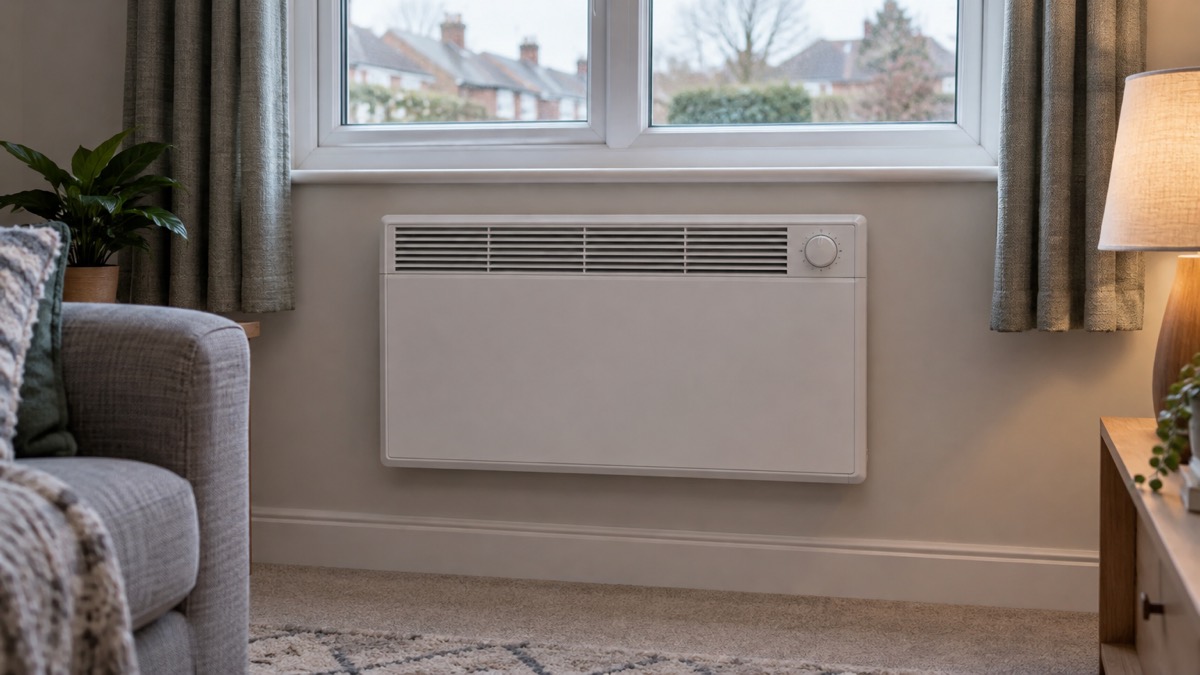
For a heater, the maker's own instructions are clear: always keep the unit on a stable, level surface, clear of curtains and furnishings, and never leave it running unattended1. Those three rules prevent the most common causes of heater fires and apply whatever the model.
Check whether your cylinder is an A Class model
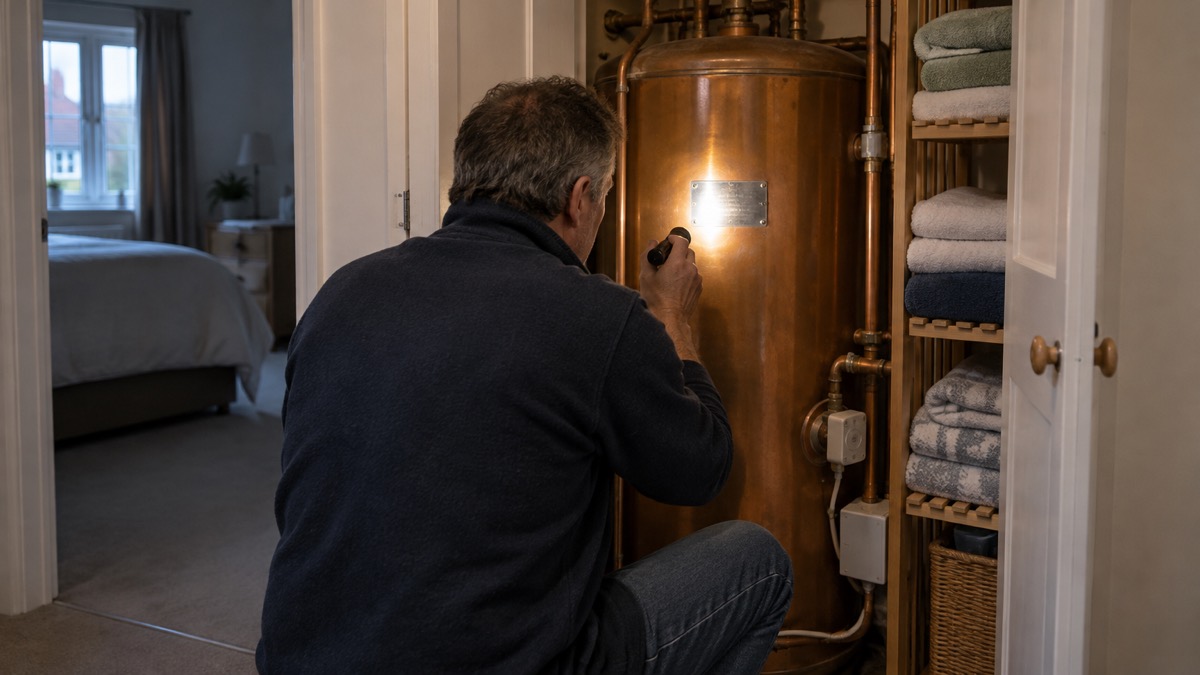
The model and serial number are the only reliable way to identify your cylinder. They are printed on the rating plate, which on a cylinder is usually on the casing near the top or on the side facing into the airing cupboard. Take a photograph of the plate with your phone so you have the details to hand when you ring or email.
The checking process used for other recalled appliances shows the pattern. For tumble dryers subject to a safety modification programme, owners were told that a green "dot" sticker in the door area or on the back meant the machine already had the necessary safety modification and no further action was required; without the sticker, they were asked to find the model and serial number on the back of the dryer door or in the recess of the dryer door and enter the details on the maker's website8. A water cylinder notice works the same way: a model and serial number check against a published list, and a clear instruction on what to do if your unit matches.
If the label is missing, painted over or illegible, contact Dimplex support directly. Do not guess the model from the age of the property or the colour of the casing.
What the safety notice covers
A safety notice for a water cylinder will set out the affected models, the date range of manufacture, the fault and the risk it creates, and the remedy. Read each of those parts, because the remedy depends on the fault. Some notices require the unit to be replaced; others require a modification by an approved engineer.
The notice will also tell you who is responsible for carrying out the work and whether there is any cost to you. Keep the notice, your proof of purchase and any correspondence with the maker together in one place. If you sell or let the property, pass the notice and the remedy record to the new owner or tenant.
Using your hot water while you check
You may still need hot water while you wait for a check or a repair. Use the cylinder as normal unless the notice tells you to stop, and keep an eye on it. If the notice requires the cylinder to be isolated, follow that instruction and use kettles, an immersion heater if you have one, or a temporary alternative arranged by the maker.
Water supply interruptions are a separate but related problem, and the advice is straightforward. If your water is discoloured after an outage, try running the cold tap nearest to your stopcock, which is usually under your kitchen sink, for a while to see if it clears the discolouration, and contact your water provider if problems continue9. The same advice applies in Greater Manchester, where households are told to run the cold tap nearest the stopcock and to contact their water supplier if problems persist10.
If a heatwave coincides with a hot water problem, keep drinking plenty of fluids and check on anyone who is frail or living alone11. Heat is a genuine hazard for older people, and a broken cylinder in summer is more than an inconvenience.
Warning signs of a water cylinder fault
A water cylinder that is failing usually gives warning before it floods. Watch for these signs and act on them early.
- Water where it should not be. Damp patches, drips from the lagging or water pooling at the base of the cylinder.
- Discoloured water. Brown or cloudy hot water can indicate corrosion inside the cylinder. Run the cold tap nearest the stopcock to see whether the discolouration clears, and contact your water provider if it continues9.
- Strange noises. Rumbling, banging or kettling can indicate scale or a failing immersion element.
- Tripping breakers or blown fuses. Look out for warning signs such as flickering lights, tripping breakers or blown fuses, which can point to an electrical fault13.
- A smell of burning or scorching. Isolate the appliance at the consumer unit and call a qualified engineer.
For gas appliances, the warning signs are different and should be treated as urgent. Lazy yellow flames instead of crisp blue ones, black marks or stains on or around the appliance, and lots of condensation in the room all point to a gas appliance that is not burning correctly14. Turn the appliance off, open windows, and call the National Gas Emergency Service on 0800 111 999.
If your cylinder leaks or fails
A leak from a water cylinder is a home emergency, and the priority is to stop the water and protect the electrics. Turn off the water at the stopcock, switch off the immersion heater and any associated electrics at the consumer unit, and move valuables and electrical items clear. If water is near sockets or a consumer unit, do not touch anything electrical; call an electrician.
If you rent your home, report the leak to your landlord or letting agent immediately. Tenants are advised to report any damage or defects to their landlord or letting agent as soon as they see it, for example damaged fire doors or a faulty alarm3. Keep a written record of when you reported it and what was said. If the property becomes uninhabitable, landlord-provided alternative accommodation should be similar to your original home in terms of size, location and affordability, with no extra rent or bills, and you should be able to return once it is fixed unless the tenancy has ended9.
If your home has been flooded, whether from a cylinder or from a burst pipe, contact your council's housing options team. Somerset Council, for example, offers housing help if your home is flooded9. The same principle applies across England: your local authority is the first point of contact for housing support after a flood.
Who to contact for support
Start with Dimplex support for anything to do with the appliance itself: the model check, the safety notice, a repair or a replacement. Have your model and serial number ready. If you are vulnerable or need additional support, contact your provider directly and ask to be recorded as needing additional support16. That applies to energy and water suppliers as well as to appliance makers, and it means you are contacted first when something goes wrong.
For gas emergencies, call the National Gas Emergency Service on 0800 111 999. For electrical faults, use a qualified electrician registered with a competent person scheme. For unsafe products, report them to the Citizens Advice Consumer Service, which passes the information to Trading Standards4.
If you have a health concern related to carbon monoxide, contact NHS 111 or your GP. Carbon monoxide is colourless and odourless, and symptoms such as headaches, dizziness and nausea can be mistaken for other illnesses17. If you suspect carbon monoxide, get everyone out into fresh air and call the gas emergency line.
The wider Dimplex range for UK households
Dimplex makes heating and hot water equipment for UK homes, and the household guides on this site cover how to use each type safely in an emergency.
Portable electric heaters
Portable electric heaters are the simplest way to heat one room when the central heating is off. The maker's own instructions for the DXUC2BS ceramic fan heater are a good model for any portable heater: keep it on a stable, level surface, clear of curtains and furnishings, and never leave it running unattended1. The unit has a tilt switch that cuts the power if it is knocked over, and overheat protection built in for peace of mind1. It is fully portable with a built-in handle and needs no fixed installation: it is a plug-in appliance1.
Fire services across the UK give the same advice for any portable heater: keep it clear of furniture and fabrics, never dry clothes on it, and never leave it on overnight or when you leave the room18. For the wider picture on heating without mains gas, see Heating and Cooking Without Mains Power or Gas.
Water heating and hot water cylinders
A hot water cylinder stores hot water so that taps run hot without waiting for a combi boiler to fire. The safety notice on A Class cylinders is the reason this page leads with a model check. If your cylinder is affected, follow the notice; if it is not, keep it serviced and watch for the warning signs above. For water storage and supply in an emergency, see Water in an Emergency.
What to do in a power cut
A power cut stops a cylinder reheating and a heater working. The first steps are to check whether neighbours are affected, report the outage to your network operator, and keep warm with layers and blankets rather than opening the fridge or running a generator indoors. For the full sequence, see Power Cuts: A Household Guide.
Registering your product and finding a qualified installer
Registering your appliance is the single most useful thing you can do after buying it. Register your products with the manufacturer or on the AMDEA website, which means that in the event of a recall or repair programme the company can contact you directly1. It is also strongly recommended that you register your appliances so that if a safety issue comes to light, the company can contact you4.
For installation and repair work, choose someone registered with a competent person scheme, which allows them to self-certify that their work complies with building regulations20. For gas work, the installer must be on the Gas Safe Register. Ask for the registration number before work starts and keep the certificate.
If you rent, your landlord has legal obligations under the Fire Safety Order as well as the Housing Act for areas shared by other tenants3. Report any damage or defect to your landlord or letting agent as soon as you see it3. If you rent business premises, check the terms of your tenancy or lease agreement and seek legal advice if you are unsure3.
Sources (20)
- DXUC2BS Ceramic Fan Heater, Dimplex, 2026-10-29
- Product recall: Ebac Limited Air Dehumidifiers, Office for Product Safety and Standards, 2026-04-21
- Tenants, Devon and Somerset Fire and Rescue Service, 2026
- Product safety campaigns, Peterborough City Council, 2026-10-29
- Product recall: Deltronic Security AB Environmental Alarm, Office for Product Safety and Standards, 2025-11-18
- Prepared personal resilience, Scottish Borders Council, 2026-10-29
- Camping and caravanning, Devon and Somerset Fire and Rescue Service, 2026
- How to check if your tumble dryer is a fire risk, London Fire Brigade, 2026-10-25
- Housing help if your home is flooded, Somerset Council, 2026-06-04
- Water supply interruptions or outages, UK Government Be Ready campaign, 2026-10-12
- Stay safe in extreme heat, Met Office, 2026-10-29
- Stay safe as temperatures rise this week, Wiltshire and Swindon Prepared, 2026-10-25
- Electrical fire safety, Cheshire Fire and Rescue Service, 2026-07-17
- Fire safety at home, Surrey County Council, 2026-10-15
- Power cuts, Scottish Fire and Rescue Service, 2026-10-25
- Phone and broadband outages, UK Government Prepare campaign, 2026-10-12
- Carbon monoxide, Doncaster and Bassetlaw Teaching Hospitals NHS Foundation Trust, 2026-10-25
- Portable heaters, Mid and West Wales Fire and Rescue Service, 2026-10-29
- AED, Northern Ireland Ambulance Service, 2026-10-29
- Oil storage regulations and safety, GOV.UK, 2026-10-29