
Avocet makes practical home safety and emergency preparedness kit for ordinary UK households. The range covers the things a household reaches for when the power goes off, when water comes through the door, when a storm keeps everyone indoors, or when a health outbreak means staying put for a few days. Each item is designed to be stored, checked and used without specialist training.
If you are building a household emergency plan, Avocet kit fits into the same structure as any other preparation: what you need to get through the first hours, what keeps you going for a few days, and what helps you stay safe while you wait for help or for services to return. The sections below take each kit type in turn, explain what it does in an emergency, and link to the relevant guide on this site.
The short answer
Avocet is a maker of home safety and emergency preparedness kit for UK households. Its range covers backup power, lighting, water storage and flood protection, heating and cooking alternatives, and home security. The kit is intended for the situations that disrupt ordinary homes: a power cut, a flood, a storm, a gas failure or an outbreak that keeps people at home.
The most useful way to think about Avocet kit is by what it lets your household do when normal services fail. A power station keeps a phone charged and a light on. A flood barrier buys time at a doorway. A water container means you are not dependent on the tap. A security item protects the home when you are away or when the power is off. None of it replaces a plan, but it makes the plan workable.
What to do
The first thing to do with any Avocet kit is to read the maker's instructions before you need it. Kit that stays in its box until an emergency is kit you cannot rely on. Set aside an hour to unpack each item, read the manual, and try it in controlled conditions: charge the power station, switch on the torch, test the flood barrier in dry weather.
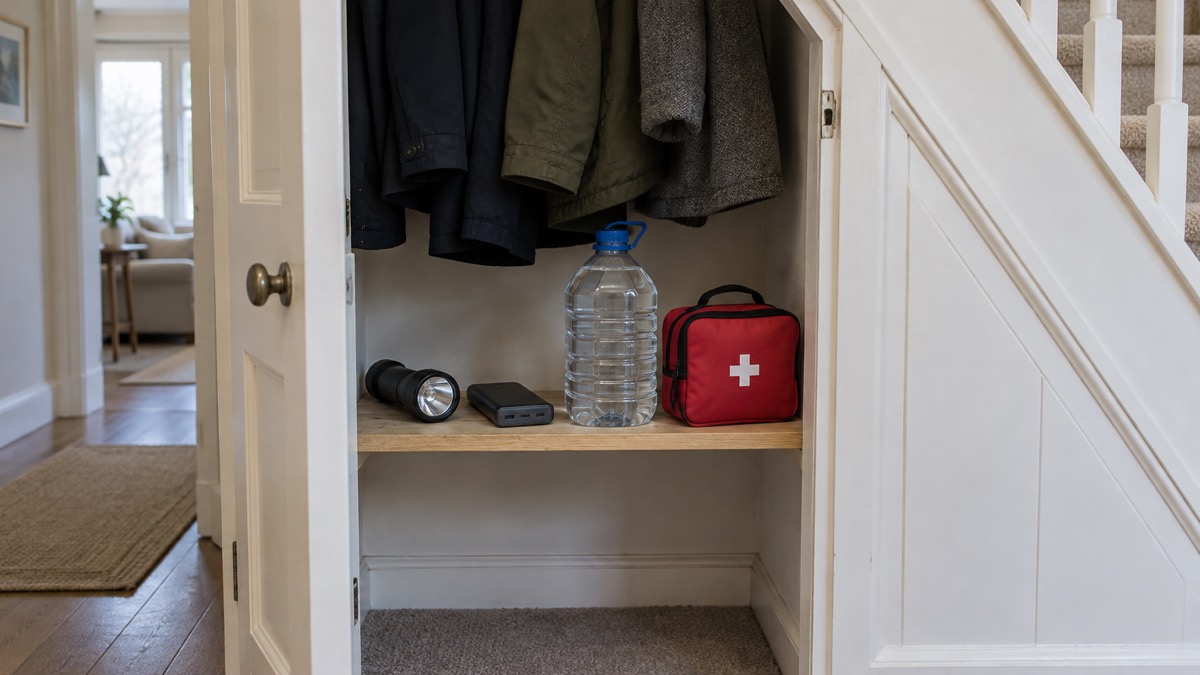
The second thing is to store it where you can reach it. A power station in a locked shed or a flood barrier at the back of a full garage is no use when the water is rising. Keep the items you would need in the first hour in one place that everyone in the household knows about.
The third thing is to build the kit into a household plan. The government's Be Ready campaign sets out the principle: prepare before an emergency so you can respond calmly when one happens1. That means knowing who does what, where the kit is, and how you would leave the house if you had to.
A simple routine helps:
- Read the manual for each Avocet item and note anything that needs charging, fuelling or assembling.
- Test it in dry, safe conditions before you need it.
- Store it together with your grab bag and emergency kit, in a place everyone can reach.
- Check it at the same time each year, ideally before winter.
- Tell the household where it is and how to use it.
If you are evacuating, official guidance says to turn off electricity, gas and water supplies if it is safe to do so, unplug appliances, lock doors and windows, and take your grab bag, bottled water and blankets if leaving by car5. Take pets with carriers or leads, tune in to local radio, and tell the emergency services where you have gone5. Take all health aids, including glasses, hearing aids, ability aids and prescribed medication5.
What you need
Avocet's range is best understood by kit type. Each type does a different job in an emergency, and each has its own guide on this site. The table below sets out what each type does and where to read more.
| Kit type | What it does in an emergency | Where to read more |
|---|---|---|
| Backup power | Keeps phones, lights and small devices running during a power cut | Backup Power at Home |
| Lighting | Provides safe light without naked flames | Emergency Lighting at Home |
| Water and flood protection | Stores water and holds back floodwater at doorways | Water in an Emergency and Flooding |
| Heating and cooking | Provides warmth and hot food when mains gas or power fails | Heating and Cooking Without Mains Power or Gas |
| Home security | Protects the home when you are away or when the power is off | Home Security |
Backup power
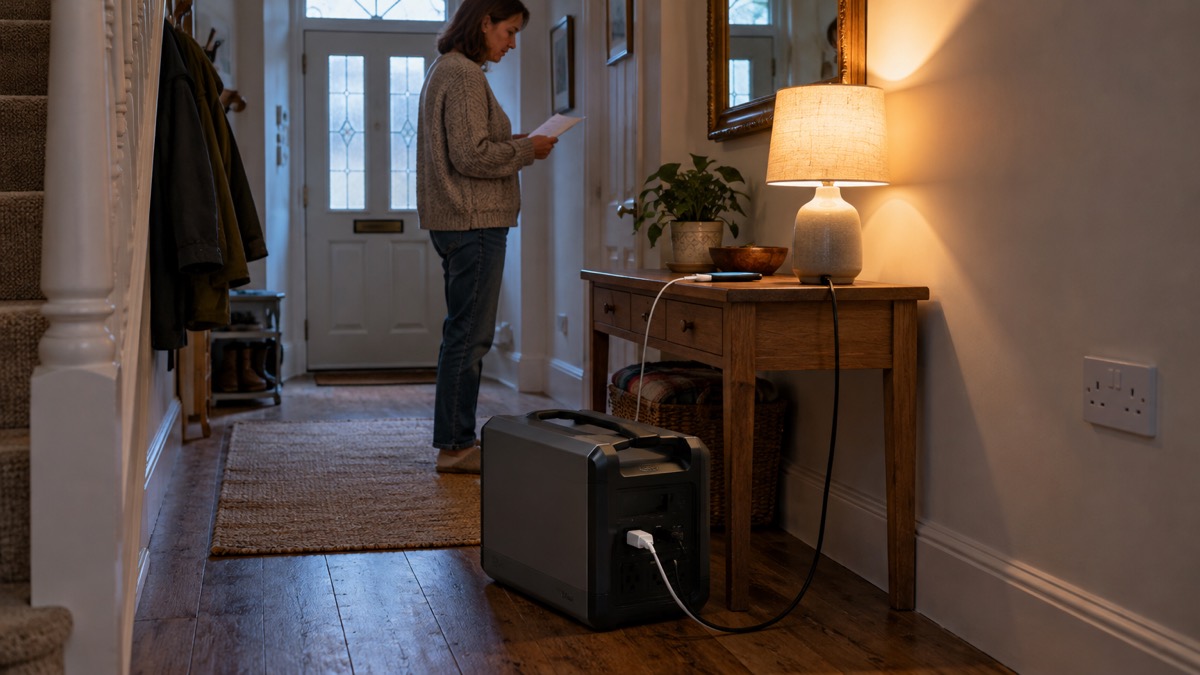
A backup power station or power bank keeps the things that matter running when the mains goes off: a phone for updates, a light for the room, a radio for information. The limit is capacity. A power station sized for a phone and a lamp will not run a fridge or a heater. Read the maker's stated capacity and match it to what you actually need.
The safety rule is firm. Never connect a backup power station or generator to your home's wiring unless a qualified electrician has installed a proper changeover switch. The Health and Safety Executive and fire and rescue services warn that back-feeding a home's circuits can endanger you and the people working to restore power. Use extension leads from the unit to the appliance, and keep fuel-burning generators outdoors.
Lighting
Torches, lanterns and wind-up lights are safer than candles. Keep a torch handy6, by the bed and in the kitchen, and check the batteries each year.
Water and flood protection
Water storage containers and flood barriers do different jobs. A water container means you have drinking water if the supply is interrupted. A flood barrier or sandbag holds back water at a doorway. Official guidance on sandbags notes that they are cheap and easy to obtain, and explains how to use them properly for flood protection7. Store barriers flat and inspect them before the flood season.
Heating and cooking
When mains gas or power fails, a household needs a safe way to keep warm and to heat food. Avocet's heating and cooking alternatives are designed for that gap. The safety rules are the same as for any fuel-burning appliance: use outdoors or in well-ventilated spaces, never in a bedroom, and fit a carbon monoxide alarm. The fire and rescue service advises that open fires and woodburners need their chimneys swept regularly3.
Home security
Home security kit matters most when the house is empty or when the power is off and alarms or lights fail. Avon and Somerset Police advise residents to protect themselves and others, and the local resilience forum's aim is to support and enable communities8. Keep doors and windows locked, use timer lights when away, and check that your security kit has a battery backup.
Staying safe
Safety is the part of preparedness that matters most, and it is where official advice is clearest. The fire and rescue service, the Health and Safety Executive and the NHS all give instructions that apply whatever kit you own.
- Carbon monoxide: never run a generator, barbecue or fuel-burning heater indoors. Fit a carbon monoxide alarm: install one in your home, make sure it works, and change the batteries when needed4.
- Fire: keep flames away from curtains and furniture, put cigarettes out right out, and make sure embers are under control before you go out or go to bed6. If clothes catch fire, stop, drop to the floor, cover your face and roll three times each way until the flames are out11.
- Electrical safety: do not overload sockets, do not daisy-chain extension leads, and do not connect a generator to your home's wiring without a qualified electrician.
- Water safety: floodwater can be contaminated. Wear waterproof gloves and a face mask if helping others or pets, keep cuts covered, and wash hands, face and uncovered body parts afterwards12.
- Medical: for minor sunburn, heat rash or hay fever, a pharmacist can help13. For urgent medical advice, NHS 111 online can direct you to the right service14.
"Stay calm"
A safe and well visit from the fire and rescue service can provide advice on preventing slips, trips and falls, giving up smoking, winter warmth, home security, and hydration and healthy eating16. If you or someone in your household would benefit, ask your local fire and rescue service about a visit.
Where Scotland, Wales and Northern Ireland differ
Avocet kit is designed for UK households and works across all four nations. What differs is the emergency arrangements around it. Power disruption plans, travel information services and local resilience arrangements vary between England, Scotland, Wales and Northern Ireland, and knowing the difference helps you use your kit in the right context.
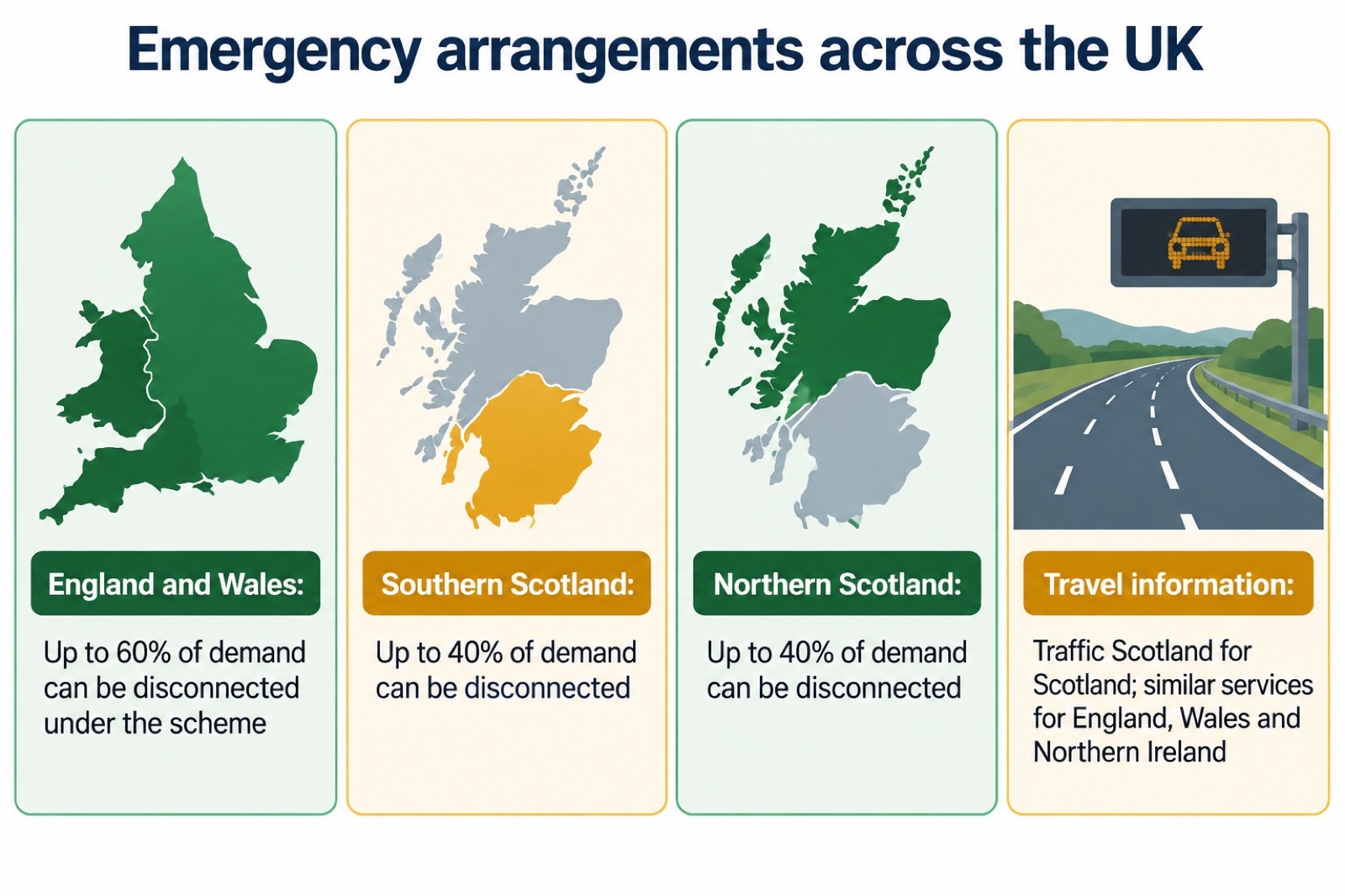
The Low Frequency Demand Disconnection scheme, which protects the electricity system in a severe event, sets different thresholds for different parts of Great Britain. In England and Wales, the scheme can disconnect up to 60% of demand; in Southern Scotland and Northern Scotland, the figure is 40%17. At Stage 6, the scheme disconnects 7.5% of demand in England and Wales, and 10% in Southern Scotland and Northern Scotland17. That means a serious power event may play out differently depending on where you live, and your backup power plan should assume the outage could be longer than you expect.
Travel information also differs. Traffic Scotland provides information for Scotland, and similar information is available for England, Wales and Northern Ireland via their own websites18. Red X overhead signs on motorways carry similar rules in England, Wales and Northern Ireland18. If you are travelling in winter, check the relevant national service before you set out.
Local resilience forums co-ordinate the response in England and Wales. In Northern Ireland, the arrangements are set out by the Northern Ireland Executive. In all four nations, the advice is the same: have a plan, have kit, and check it before winter.
Sources (18)
- Be Ready for Emergencies, GOV.UK, 2026
- Reduce the Risk of Wildfire Damage to Your Property, Hampshire Fire and Rescue Service, 2026
- Stay Safe and Warm This Winter, Dorset & Wiltshire Fire and Rescue Service, 2020
- Product Recall: Cavius 4002/CV4002 Carbon Monoxide Alarm, GOV.UK, 2024
- Protecting Yourself, West Northamptonshire Council, 2024
- Don't Let Fire Ruin Your Christmas, Dorset & Wiltshire Fire and Rescue Service, 2025
- Sandbags and How to Use Them Properly for Flood Protection, GOV.UK, 2009
- Protect Yourself and Others, Avon and Somerset Police, 2026
- Community Risk Register, Avon and Somerset Police, 2026
- 12 Top Tips for Staying Safe at Home This Christmas, Dorset & Wiltshire Fire and Rescue Service, 2018
- Stop, Drop and Roll, Devon and Somerset Fire and Rescue Service, 2026
- How to Remove Radioactive Material from Your Skin and Clothes, GOV.UK, 2024
- Ambulance Chiefs Issue Advice on Staying Well in Hot Weather, London Ambulance Service, 2019
- The NHS 111 Online Service Is Here to Help You and Your Family, University Hospitals of Derby and Burton NHS Foundation Trust, 2021
- What to Do When the Ambulance Is Coming, South Western Ambulance Service NHS Foundation Trust, 2026
- Apply for a Safe and Well Visit, Warwickshire County Council, 2026
- GB Power Disruption 9 August 2019: Final Report, GOV.UK, 2020
- Drive Safely in Winter Weather, Met Office, 2026