
Alpha Heating Innovation is a maker of gas boilers for UK homes, and if you have one of its boilers on your wall this page is for you. It covers the things that matter to an ordinary household with a combi or system boiler: the annual gas safety check, what to do when the boiler shows a fault code or stops in cold weather, how to keep safe from carbon monoxide, and how to find an engineer who is properly registered to work on gas.
Most of what follows applies to any modern gas boiler, because the safety rules and the common faults are the same across makers. Where the details differ, such as the exact meaning of a fault code or the pressure your system should run at, the answer is always in your boiler's own manual and the maker's support pages, so keep those to hand.
What Alpha Heating Innovation makes for UK homes
Alpha Heating Innovation's products for households are gas boilers: the wall-mounted units that provide central heating and hot water in most UK homes. A boiler sits at the heart of two of the household systems that matter most in an emergency, hot water and heating, which is why this page sits alongside our guides to gas and heating failures, heating and cooking without mains power or gas and home emergencies.
A gas boiler depends on two utilities to work: gas for the flame and electricity for the pump, controls and ignition. That means a gas supply problem or a power cut will stop your heating and hot water, and it is worth knowing in advance what you would do in each case. Our power cuts guide covers the electricity side, and this page covers the gas side.
If you rely on your boiler for warmth and you or someone in your home is older, disabled or medically dependent on heat, read our extra help in an emergency guide as well, because there are registers and services designed for exactly that situation.
Gas boilers: what to know if you have one
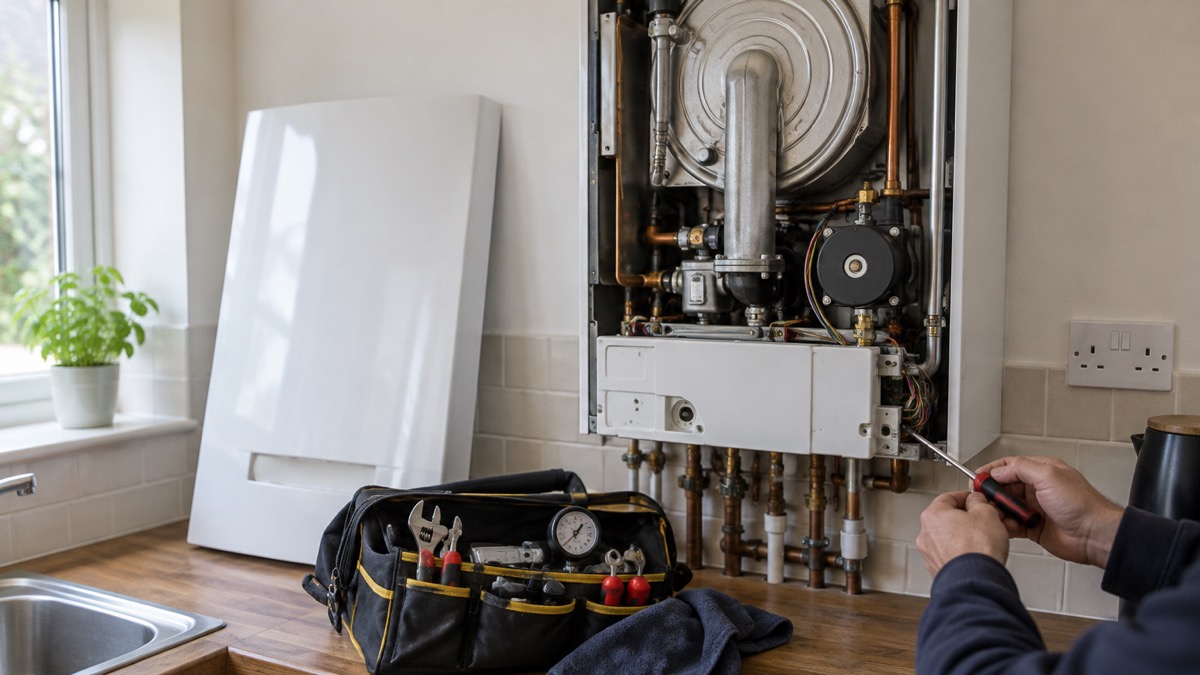
The single most important habit with any gas boiler is the annual gas safety check. Fire and rescue services across the UK give the same advice: ensure you have a gas safety check each year for your boiler or appliances7. The check covers boilers, gas cookers, heaters and any other gas-fired appliances in your home1, and it must be carried out by an engineer on the Gas Safe Register, the official list of engineers legally allowed to work on gas in the UK.
There are also rules about where gas appliances may be installed. The Health and Safety Executive advises that a gas fire, gas space heater or gas water heater, including a gas boiler, of 14 kilowatts gross input or less, or any instantaneous water heater, must be room sealed or fitted with an atmosphere-sensing device if it is in a room converted to sleeping accommodation8. Since 31 October 1998, any room converted to sleeping accommodation should not contain one of these appliances over 14 kilowatts gross input unless it is room sealed8. If your boiler is in a bedroom or a converted loft, check that it meets these rules, and ask a registered engineer if you are unsure.
Alongside the boiler itself, many households use portable gas heaters as backup in cold weather. The Health and Safety Executive advises ensuring any such heater has an atmosphere sensing device, which will shut the appliance off if the air quality is poor, and that the correct size and type of gas bottle is being used6. The Northern Ireland Fire and Rescue Service adds: ensure good ventilation in the room where the heater is being used, change cylinders in the open air if possible, do not use the heater if you suspect a leak, and have the heater serviced regularly by a qualified engineer9.
Hot water and heating controls
Your boiler's controls decide when the heating comes on and how hot the water gets, and a few small settings make a real difference in cold weather. The Met Office advises insulating your hot water cylinder and pipes, so the heat your boiler produces is not lost on the way to the tap10. If you have a hot water cylinder rather than a combi boiler, a cylinder jacket and lagged pipes are straightforward improvements you can make.
In very cold weather, the fire and rescue service advice is to set the heating to come on earlier rather than turning the thermostat up, so you are not cold while you wait for your home to heat up11. This matters for the boiler as well as for you: a system that runs gently for longer is under less strain than one asked to heat a cold house quickly.
One part of the heating system worth knowing about is the circulating pump, the component that pushes water around the radiators. Pumps have been the subject of product recalls: a 2025 government recall notice covered Tucson circulating pumps for heating systems12. If your heating runs but the radiators stay cold, a failed pump is a likely cause, and it is a job for an engineer.
What to do if your boiler stops working
When a boiler stops, work through the common causes before calling anyone, because several of them are things you can safely check yourself.
Fault signs that mean turn it off and call an engineer. Cheshire Fire and Rescue Service lists the warning signs: strange noises, leaks, a yellow flame (it should always be blue), unusual smells, the boiler turning itself on and off, low pressure or no hot water, or soot or staining around the boiler. If you see any of these, turn the boiler off and call a Gas Safe engineer13.
Low pressure. Low water pressure is one of the most common faults and usually shows as a code on the display. One maker's guidance is that the system "will require topping up to between 1 and 1.5 BAR"2, using the filling loop described in your manual. If topping up does not clear the fault, or the pressure keeps falling, there is probably a leak and you need an engineer.
Frozen condensate pipe. If your boiler has stopped working in the cold, the chances are you have frozen boiler condensate pipes3. The condensate pipe is the white plastic pipe that carries waste water from the boiler to an outside drain, and in a hard frost it can freeze and shut the boiler down. Warm it gently along its length with hot water or a heat pack, then reset the boiler. If the boiler fires up it should work normally; if not, try again. If the pipe remains frozen or the boiler will not fire, call a Gas Safe Registered engineer or your gas supplier3.
Banging noises. If the heating system fails or makes a loud banging noise, this could indicate that a pipe is freezing. Turn off the system and call a plumber immediately14.
Fault codes. Boilers display a code when they lock out, and the code tells you or an engineer what went wrong. The exact codes differ by maker, so use your own manual or the maker's support pages. To show how these lists work, one maker, Ideal Heating, publishes a fault code guide that includes F1 for low pressure, F2 for flame loss or ignition lockout, F4 for a flow thermistor fault, F6 for an outside sensor fault, F0 for no water flow, F7 for low voltage and L5, which you can clear yourself by turning the power to the boiler on and off again to reset2. For F2, F3 and F4 the maker's advice is to contact them quoting the code, as these require a visit from an engineer; for F7 it advises contacting a local electrician to inspect the electrics of the property2. Treat your own boiler's codes the same way: some you can reset, and some mean a phone call.
Boiler safety and carbon monoxide
Carbon monoxide is the danger that makes gas boiler safety worth taking seriously. You cannot see it or smell it, and faulty or damaged heating or cooking appliances are a listed cause of carbon monoxide poisoning15. Many household appliances can produce it, including boilers, gas fires, central heating systems, water heaters and cookers16, and using gas heaters and boilers more in winter can raise the risk, which is why the fire services repeat the same advice every year17.
The defences are simple and the same from every official body:
- Fit a battery-operated carbon monoxide detector and smoke alarms, and test them every week, especially if using portable heaters, open fires or stoves5
- Have regular gas safety checks on your boiler and other gas appliances17
- Make sure your heating is safe and your house is properly ventilated, to reduce the risk of carbon monoxide poisoning18
- Never use cooking appliances for heating, a listed cause of carbon monoxide buildup19
Barbecues, camping stoves and patio heaters are designed for use outdoors in well-ventilated areas, and Devon and Somerset Fire and Rescue Service warns that indoors they pose a fire risk and a risk of carbon monoxide poisoning21. Never bring them inside during a power cut or heating failure; use the safer methods in our heating and cooking without mains power or gas guide instead.
Keeping warm while the heating is off
If your Alpha boiler is off, whether for a fault, a service or a power cut, the priority is keeping the household warm while it is fixed. Greater Manchester's resilience guidance is to keep warm by using blankets and layered clothing, and to shut the curtains and doors of unused rooms to keep the heat in4. Heat one room rather than the whole house and stay in it.
A power cut will stop most boilers, because the pump and controls need electricity. When that happens, turn off items such as irons, ovens, electric fires and fryers, and unplug the TV and computer, as they can be damaged if there is a surge when power goes back on4. Our power cuts and lighting guides cover the rest of what a household needs for an outage.
If the heating is off for longer, in very cold weather, Ready Scotland and the UK fire services advise keeping portable heaters away from curtains and furniture and never drying clothes on or near heaters22. Check any heater you have not used for a while is not subject to a product recall or repair before putting it into service23. For planning ahead, our storms, snow and ice guide sets out what to have ready before cold weather arrives.
Servicing and looking after your boiler
Never attempt to install or service appliances yourself: use a reputable, registered engineer for your boiler, cooker, heating system and other fuel-burning appliances24. Get the boiler serviced at the start of winter so you know it is working efficiently and ready for the cold weather11. An annual service by a qualified professional catches faults before they become emergencies and keeps the boiler burning cleanly, which is itself protection against carbon monoxide.
Never attempt to install or service gas appliances yourself; Devon and Somerset Fire and Rescue Service's advice is to use a reputable, registered engineer to install and service your boiler, cooker, heating system and appliances16. Solid fuel appliances, such as stoves, are a separate trade: Public Health Wales directs households to HETAS for solid fuel appliances and to the Gas Safe Register for gas appliances24.
If your home has a biomass or wood pellet boiler rather than gas, the Health and Safety Executive has specific advice: if problems are encountered with the unit, such as the system not heating correctly or flue gas flowing into the boiler room, turn the unit off and seek assistance immediately25.
Warranty and support
To get support, a warranty repair or the right replacement parts, you will need to identify your boiler. Typically you will need the model name or number, the serial number and the purchase date to register an appliance26. Note these down when the boiler is installed and keep them with your paperwork.
North Yorkshire Fire and Rescue Service advises registering your products with the manufacturer or on the AMDEA website, the UK trade body for home appliances, because this means you will be contacted in the event of a recall or repair23. Registration is free and it is the one reliable way to hear about a safety problem with your own boiler rather than reading about it later.
When you contact the maker or an engineer about a fault, quote the fault code from the display. Makers' own support guidance, such as Ideal Heating's, is built around customers quoting the exact code, because it tells the engineer what to bring2. Never source and fit gas-carrying parts yourself; that is work for a registered engineer16.
Safety notices and recalls
Safety notices for heating products are published on the government's product safety alerts, reports and recalls pages, and Manchester Fire and Rescue Service advises checking the Office for Product Safety and Standards website to ensure your heater is not subject to a product alert or recall7. Two examples show the kind of products that get recalled:
| Recall | What it covers | What is happening |
|---|---|---|
| Tucson pumps (2025) | Circulating pumps for heating systems | Government product recall notice12 |
| Bull and Cygnus Fire Alarm Detection System (2026) | Fire alarm detection system units | Phased replacement programme covering all affected units, including those that have not exhibited failures27 |
The second example is a reminder that recalls are not limited to the appliance itself: pumps, alarms and controls in and around the heating system are all covered by the same system of notices. If a recall affects a product in your home, follow the notice's instructions, which usually mean stopping use and contacting the maker for a repair or replacement.
Where to get help with heating costs and repairs
If your boiler fails and you cannot afford a repair or replacement, help exists, and it varies by area. In London, the Mayor's Warmer Homes programme offers homeowners and private tenants grants for heating and insulation to make your home more energy efficient and improve your heating28. In Suffolk, Warm Homes Suffolk can help with fuel payments, lend electric heaters, assess you for financial assistance towards the cost of repairs or replacements if your boiler or heater stops working, and help you access grants for insulation and basic draught proofing11. In Oxfordshire, the Welcome the Warmth scheme provides funding to help some homes get better heating and save energy29. Your local council or energy supplier can tell you what runs in your area, and households that need it should also join the Priority Services Register, covered in our extra help guide.
Sources (29)
- Safe home heating, Warwickshire County Council, 2026
- Boiler fault codes, Ideal Heating, 2026
- Winter safety: frozen condensate pipes, Wales & West Utilities, 2026
- Loss of essential services, Greater Manchester Combined Authority, 2026
- Keep warm in winter, Derbyshire County Council, 2026
- Gas safety FAQs for consumers, Health and Safety Executive
- Stay fire safe, Manchester Fire and Rescue Service, 2026
- Gas appliances in sleeping accommodation, Health and Safety Executive
- Home fire safety, Northern Ireland Fire and Rescue Service, 2026
- Keeping your home warm in winter, Met Office, 2026
- Seasonal winter safety advice, Suffolk County Council, 2026
- Product recall: Tucson 5m, 6m and 8m pumps, Office for Product Safety and Standards, 2025
- Safe and well booklet, Cheshire Fire and Rescue Service, 2026
- Adverse weather events, Llangattock Community Council, 2026
- Carbon monoxide safety at home, Dorset and Wiltshire Fire and Rescue Service, 2025
- Carbon monoxide, Devon and Somerset Fire and Rescue Service, 2026
- Cold, snow and ice: severe weather advice, Ready Scotland, 2026
- Staying warm in winter, nidirect, 2026
- Carbon monoxide awareness, Warwickshire County Council, 2026
- Carbon monoxide, Cornwall Fire and Rescue Service, 2026
- Stay warm safely this winter, Devon and Somerset Fire and Rescue Service, 2026
- Fire safety prevention advice, Fire Kills campaign, 2026
- Heating your home safely, North Yorkshire Fire and Rescue Service, 2026
- Cold weather advice, Public Health Wales, 2026
- Wood pellet fuels safety, Health and Safety Executive
- Electrical safety at home, Scottish Fire and Rescue Service
- Product recall: Bull and Cygnus Fire Alarm Detection System, Office for Product Safety and Standards, 2026
- Keeping warm, healthy and safe in cold weather, Greater London Authority, 2026
- Keeping warm at home guidance, Oxford Health NHS Foundation Trust, 2026